















Can the RV and Glamping Crew Share Power? Check Before You Book
A booking-level checklist for mixed RV, cabin, yurt and tent groups to confirm site compatibility, outlet limits and appliance rules before arrival.


Confirm who may share the site, what each outlet is for, and which appliances the operator allows before anyone packs a cord.
Can the RV and glamping crew share power? Check before you book
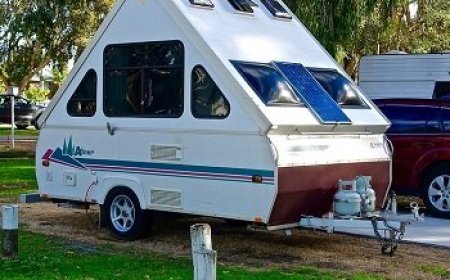
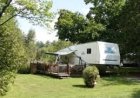
A cabin listing that says "electricity" does not promise a spare circuit for a kettle, portable heater, CPAP, e-bike battery and the tent next door. An RV site's 30- or 50-amp hookup does not automatically become group power, either. For a mixed RV-and-glamping trip, the useful electrical check happens before payment: confirm that the group may occupy the site as planned, learn which outlet belongs to which camping unit, and match every appliance to the host's rules.
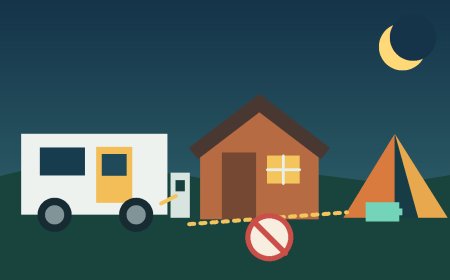
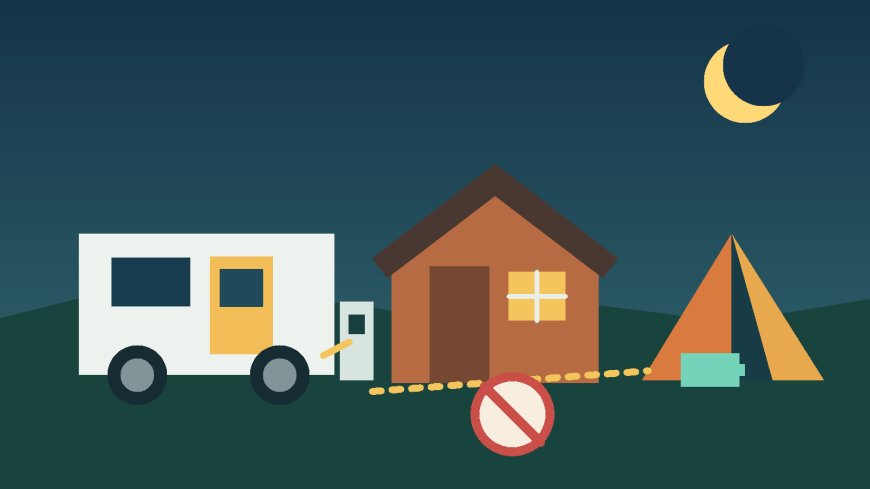
The safest default is simple. The RV uses only its assigned RV hookup. Cabin or yurt guests use only the outlets and appliances the operator expressly allows there. Tent campers assume they have no power until the operator says otherwise in writing. Nobody runs a cord from a restroom, another accommodation or across the site to "make it work."
This is a booking-compatibility check, not a pedestal inspection. If the answers are vague, reserve separate nearby units with the right service rather than building a homemade site-wide electrical system.
First confirm that the group can sleep there
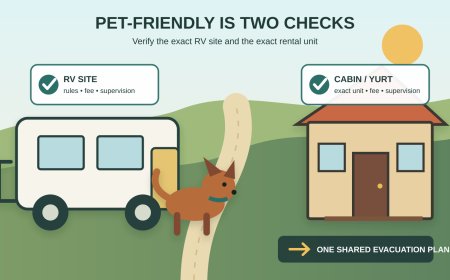
Electrical planning starts with the reservation type. A site can have enough physical room and still prohibit the proposed mix of equipment.
Rules vary enough that a general assumption is useless. Lake Perris State Recreation Area says tents are allowed at all of its RV hookup sites, subject to an eight-person limit.[6] Wallowa Lake State Park takes a different approach: its yurt sites have outlets for small devices, prohibit appliances and cooking inside, and do not allow RVs.[5] Big South Fork limits an electrical pedestal to one plugged-in camping unit even though tents and other equipment may occupy the designated pad.[2]
Before booking, send the operator a single description of the whole setup:
- one RV, including its length and 30- or 50-amp plug;
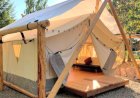
- the number and type of tents, cabins, yurts or furnished tents;
- every overnight guest and vehicle;
- any medically necessary powered equipment;
- the portable cooking, heating, cooling and charging devices the group hopes to use.
Ask the operator to identify the exact reservable units that fit that description. "We have RV sites and cabins" does not answer whether both can share one reservation, one pad or one electrical supply.
"Electricity included" is not an appliance policy
Read the amenity description and the house rules together. Oregon State Parks says its rustic cabins and yurts have electricity, heat and lights, but cooking is not allowed inside them. Its deluxe units include a microwave, and indoor cooking is limited to that provided microwave; outside appliances are not allowed.[4] That distinction turns a vague amenity into a usable plan: lights and installed heat are included, but guests may not add a hot plate or bring another countertop cooker.
Wallowa Lake is narrower still. The yurt description says its outlets are for small devices and separately bans appliances and cooking inside.[5] The word "outlet" therefore does not mean "bring any plug-in appliance that fits."
Power can also be reserved for a specific purpose. Great Smoky Mountains National Park says three campgrounds have 5-amp outlets for medical equipment only, while only some Look Rock sites provide electric and water hookups.[3] A nearby receptacle is not general guest power when the park says otherwise.
Capture five answers for each glamping unit:
- Does the unit have power on the dates booked?
- Is the service for installed lights and heat only, small-device charging, medical equipment, or general appliance use?
- Which guest-owned appliances are allowed inside? Which are allowed outside?
- Is the circuit shared with another unit, bathhouse or site?
- Are portable heaters, air conditioners, coffee makers, kettles, induction burners, e-bike batteries or EV charging prohibited?
Save the confirmation email or a screenshot of the dated rule page. Online amenity filters can flatten "power for lights" and "a guest-usable receptacle" into the same icon.
Assign each load to one approved source
Make a load sheet before anyone packs. Use the electrical nameplate or manual for the exact device, not a typical wattage from a shopping page. Include equipment that cycles on and off; a refrigerator, cabin heater or RV air conditioner still occupies capacity when it starts again.
A useful sheet has four columns:
| Device | Nameplate input | Planned location | Approved supply |
|---|---|---|---|
| RV air conditioner | Record exact label | RV | RV hookup |
| Cabin's installed heater | Operator-provided | Cabin | Cabin circuit |
| Guest kettle | Record exact label | Cabin or table | Written approval required |
| CPAP or other medical device | Record adapter label | Sleeping unit | Confirm dedicated overnight plan |
| Phone charger | Record adapter label | Yurt | Small-device outlet, if allowed |
Do not add unlike service ratings into one imaginary group budget. A 50-amp RV connection, a cabin receptacle and a tent-site outlet may be separately protected, shared upstream, or restricted by policy. Only the operator can tell you how its facilities may be used. Your arithmetic cannot grant permission.
Also ask whether the RV hookup must match the RV plug. Some parks provide specific 30- and 50-amp sites; Lake Perris, for example, identifies which sites have 50-amp service and notes an adapter requirement when an RV does not use 50 amps.[6] Record the exact site number and the operator-approved connection. Do not assume every pedestal in a loop has the same configuration.
Keep the RV hookup dedicated to the RV
A mixed group often gets into trouble by treating the RV pedestal as a distribution panel for the entire campsite. The RV is connected, then a tent heater, outdoor kitchen and charging station are added to any receptacle that remains open. That can violate the campground's occupancy or electrical rules before the load calculation even begins.
Big South Fork's rule allows no more than one camping unit on the pedestal.[2] Pinnacles National Park permits electrical cords only in RV sites and specifically forbids connecting extension cords to restroom outlets.[1] Those are operational boundaries, not suggestions about cord quality.
Unless the host gives a clear alternative, use this separation plan:
- RV loads stay inside the RV's listed electrical system and assigned hookup.
- Installed cabin or yurt equipment stays on the accommodation's circuit.
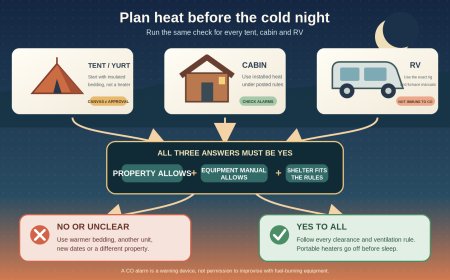
- Guest appliances remain unplugged unless the accommodation rules allow that device in that location.
- Tent sleepers use battery-powered lighting and charging packs when the booking includes no approved tent supply.
- EVs and e-bikes use only locations and charging methods the operator approves.
If a medical device needs overnight power, do not improvise after arrival. Tell the operator the device's input rating and required runtime, ask whether the approved outlet remains energized overnight, and carry the backup recommended by the device provider. A "medical use" outlet can have a much smaller rating than an RV hookup, as the Smokies' 5-amp example shows.[3]
Extension cords do not create capacity
An extension cord only moves an approved load to an approved location. It does not increase circuit capacity or turn a cabin outlet into tent service.
The U.S. Consumer Product Safety Commission advises using extension cords only when necessary, matching the cord rating to the appliance, using a three-wire cord for a three-prong appliance, and choosing a cord labeled for outdoor use outdoors. It also recommends GFCI protection in outdoor use and warns against running cords under rugs, where heat cannot escape.[7]
For this trip, ask the property whether guest extension cords are allowed at all. If they are:
- use a cord listed by a recognized testing laboratory and rated for the device and environment;
- keep every connection dry and out of standing water;
- protect the route from feet, tent stakes, doors and vehicle tires without covering the cord with a rug;
- keep the grounding pin intact;
- plug in only the approved appliance;
- stop using a cord that is damaged, loose or hot.
Heat-producing appliances deserve a harder line. NFPA's RV safety sheet says to use only one heat-producing appliance at a receptacle at a time and to plug major appliances directly into a wall receptacle.[8] If a cabin's only way to reach a heater, kettle or cooker is through a power strip or long cord, that is a reason to change the meal or lodging plan, not to add another adapter.
Use a booking call that produces clear answers
Read this script to the campground or send it by email:
We are booking one RV plus [number] cabin, yurt or tent guests. The RV has a [30/50]-amp plug. May these exact sleeping units share one site, or do we need separate reservations? Which outlet is assigned to each unit? May any tent equipment connect to power? The guest appliances are [list each device and its nameplate input]. Which are allowed, and where? Is any outlet limited to lights, small devices or medical equipment? Are extension cords, power strips, adapters, portable heaters, cooking appliances, battery charging or vehicle charging restricted?
Then ask the employee to point to the rule page or add the approval to the reservation notes. Write down the name or department and date. Verbal permission at a central booking line may not override a park-specific rule, so check the exact property page too.
Recheck at arrival before plugging in
Rules, burn restrictions and available services can change between reservation day and check-in. Give one adult the job of reviewing the plan with staff. That person should confirm the assigned sites, approved appliances, cord routes and medical-power arrangements before the group unloads.
If the assigned unit differs from the confirmation, pause. Do not borrow an outlet from an empty site or bathhouse. Pinnacles' restroom-outlet prohibition shows why a convenient building receptacle cannot be treated as overflow campsite power.[1]
During the stay, unplug optional loads if breakers trip, plugs loosen, lights flicker, connections discolor, or a cord or receptacle becomes hot. Report the condition to staff. Do not repeatedly reset protection, alter the pedestal, defeat a grounding pin or substitute a larger protective device.
Mixed-group electrical checklist
Before paying:
- The exact RV, tent and glamping-unit combination is allowed.
- Every person, vehicle and sleeping unit fits the reservation limits.
- The RV site matches the RV's connection without an unapproved adapter.
- Staff identified what "electricity" includes in each cabin, yurt or furnished tent.
- Staff confirmed whether circuits or receptacles are shared.
- Every guest appliance is listed by exact input rating and location.
- Cooking, heating, cooling and battery-charging restrictions are documented.
- Medical equipment has an approved overnight source and backup plan.
- Tent guests have a battery plan if no tent power is authorized.
- Extension-cord and power-strip rules are documented.
At check-in:
- The assigned units and service match the confirmation.
- Staff approved any cord route before setup.
- The RV alone uses its assigned hookup unless staff documented otherwise.
- Cabin and yurt guests use only permitted appliances.
- No cord runs to a restroom, neighboring unit or unassigned pedestal.
- Optional loads come off if any warning sign appears.
The best mixed-group setup is usually the least clever one: correct reservations, separate approved supplies and fewer high-draw appliances. If the trip only works after adding splitters, long cords or exceptions, it does not yet have a safe electrical plan.
Sources
What's Your Reaction?