












After a trailer wheel comes off: plan the lug-nut rechecks before you tow
A wheel removal starts a new torque-check sequence. Record the exact specification and map safe stops for the required cumulative-mile rechecks.
By Romana | Information checked 2026-10-27 UTC
A wheel change, bearing service, brake job, or roadside tire replacement creates one more job: a sequence of lug-nut checks after the trailer starts moving again. The useful decision is not whether the shop says it torqued the wheel. It is whether you have the exact specification, a capable torque wrench, and safe places to complete the post-service checks.
The wheel-removal clock starts at zero
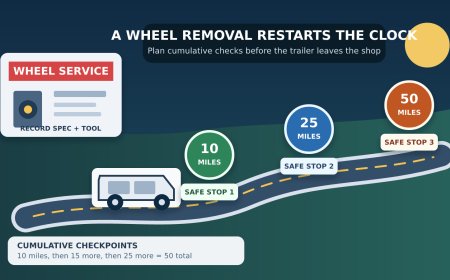
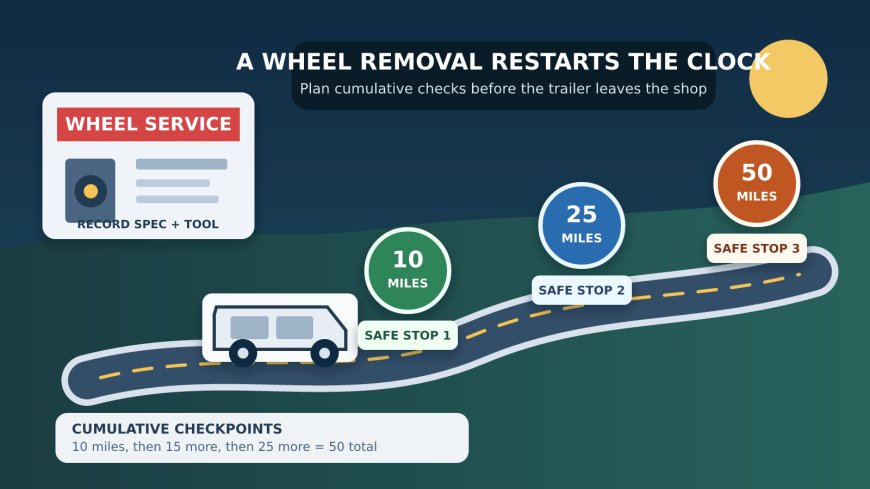
Lippert's current 2K-7K trailer-axle manual treats both initial use and every wheel reinstallation as fresh torque events. It then specifies rechecks after 10, 25, and 50 miles.[1] Dexter's light-duty service manual lists the same 10-, 25-, and 50-mile checkpoints for new axles.[2]
Treat those as cumulative odometer marks after the wheel was installed, not three new intervals. The gaps are 10 miles, then 15 more, then 25 more. If a tire shop is 72 miles from home, the job is not "drive home and check later." The route needs three workable stops.
That distinction matters on an ordinary service day. A driver who reads 10, 25, and 50 as separate legs would make the third check at 85 miles. A driver who waits until home on the example route would pass every listed checkpoint before making the first check.
Do not borrow a torque number
The familiar number from another trailer may be wrong for this one. Forest River's general towable manual says wheel-nut torque varies with wheel size and manufacturer, directs owners to the wheel manufacturer's recommendation, and gives 85-95 ft-lb only when the wheel manufacturer has not specified otherwise.[3] Lippert's manual shows why identification matters: its final values vary by wheel size, stud size, and nut design, ranging from 85-95 ft-lb for one demount-wheel entry to 275-325 ft-lb for one 5/8-inch flange-nut application.[1]
Before the wheel goes back on, ask the service writer to put four items on the invoice or work order:
- the exact final torque value and unit;
- the manual, label, or component record used for that value;
- which wheel or wheels were removed; and
- the odometer reading when the trailer leaves.
A generic chart, a verbal "about 100," or a shop's impact-wrench setting does not settle the question. Forest River tells owners to use a torque wrench rather than guess.[3] If the wheel, stud, or lug-nut type cannot be identified, keep the trailer parked until the servicing shop or RV manufacturer resolves it.
Build the route before leaving the counter
Use the tow vehicle's trip meter and write down cumulative targets. Then choose legal pull-offs near those targets where the full combination can get clear of traffic. A narrow shoulder is not a maintenance bay.
For a 72-mile trip home, an original service-to-road card could read:
| Check | Cumulative miles after service | Additional miles since prior check | Planned safe stop |
|---|---|---|---|
| Shop handoff | 0 | 0 | Service lot |
| Recheck 1 | 10 | 10 | Large fuel plaza at mile 11 |
| Recheck 2 | 25 | 15 | Rest area at mile 27 |
| Recheck 3 | 50 | 25 | Travel center at mile 51 |
The planned locations do not have to land on the exact tenth of a mile. They need to avoid carrying the trailer well beyond a checkpoint while you search for somewhere safe. If no suitable stop exists, change the route, arrange a mobile check, or leave the trailer with the shop. Do not improvise beside fast traffic.
At each stop, park out of the traffic flow on firm ground, secure the combination, and follow the wheel or trailer procedure with the specified sequence and calibrated range. Dexter's trip checklist calls for checking wheel fasteners with a torque wrench, in the proper sequence, to the manual's specified level.[2] If the required torque exceeds your wrench's range, the socket does not fit fully, a stud is damaged, a nut will not seat normally, or a wheel shows movement, stop towing and get qualified service.
Keep one small record
Record the actual mileage, target torque, wrench used, and result for every serviced wheel. A nut that requires movement at a recheck is useful information; mark the wheel position and tell the shop. The card also prevents a common handoff failure when one person collects the trailer and another assumes the checks were done.
After the 50-mile mark, continue with the periodic inspection interval in the exact trailer, axle, and wheel instructions. Lippert recommends periodic checks during regular service, while its trip-preparation list says the lug nuts or bolts should be at specification before a trip.[1] A completed 50-mile sequence does not replace later inspections.
The go/no-go rule is simple: tow only when the specification is traceable, the tool can apply it, and the route includes safe recheck locations. Wheel service ends at the last required road check, not when the invoice prints.
Source credit: RVCamping.info reviewed the linked Lippert, Dexter, and Forest River manuals on 2026-10-27. The cumulative-mile interpretation, worked 72-mile route, and service-to-road record are original editorial analysis.
Sources
What's Your Reaction?