






One burner, six bowls: size a bulgur dinner before camp
Scale a campsite bulgur dinner for four, six, or eight servings, check the pot's usable capacity, and choose when one burner becomes free.
One burner, six bowls: size a bulgur dinner before camp
By Romana | October 28, 2026

Six people, one saucepan, one burner. The awkward part of this dinner is not cooking bulgur; it is discovering too late that the grain and water reach the rim or that the topping has nowhere to cook.
Bulgur gives a campsite cook two workable schedules. Utah State University Extension says to simmer it, covered, for 10 to 12 minutes. Its alternate method adds boiling water and leaves the covered grain to stand for 30 minutes.[1] That second route gives the burner back while dinner finishes in the pot.
Run the pot check at home
The Extension recipe uses 1 cup bulgur and 3 cups water for four servings.[1] We turned that ratio into a small group worksheet:
dry bulgur = planned servings ÷ 4
water = dry bulgur × 3
starting volume = dry bulgur + water
planning pot volume = starting volume × 1.25
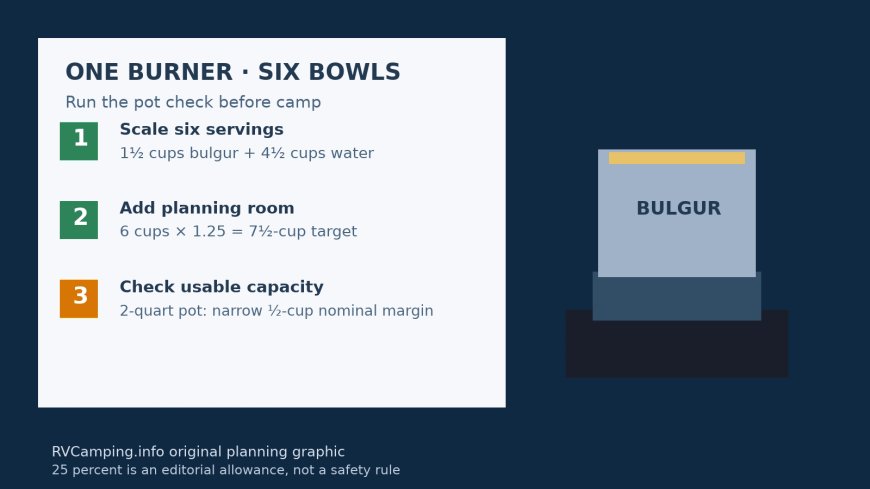
That last line is an RVCamping.info allowance, not a rule from Utah State and not a food-safety standard. It reserves 25 percent above the ingredients' measured starting volume. Foaming, wind, burner control, and the shape of the pan can still change how a pot behaves.
For six servings, the math gives 1½ cups of bulgur and 4½ cups of water. Together they occupy 6 cups before heating. With the allowance, the pot target is 7½ cups. A 2-quart saucepan holds 8 cups by nominal capacity, so it clears the worksheet by only ½ cup.
That is a narrow pass. A lid that drops below the rim or a lower usable-fill mark can erase the margin. Check the cookware instructions; use a larger pan or split the batch if the full capacity is not usable.
Eight servings fail the 2-quart test outright. Two cups of bulgur plus 6 cups of water already equal 8 cups. The allowance raises the target to 10 cups, which sends the gear choice to a 3-quart pot.
Give the flame a schedule
Keep the pan on the burner for the 10-to-12-minute simmer when bulgur is the only hot job.[1] If another pan needs the flame, use the covered 30-minute method from the Extension handout: boil the measured water, combine it with the bulgur, cover the pot, then move it to a stable heat-safe spot.[1] The meal takes longer by the clock, but the burner becomes available sooner.
A simple order of work prevents the usual shuffle:
- Read the bulgur package and measure its stated grain-to-water ratio.
- Scale that ratio for the number of servings, then test it against the pan's usable capacity.
- Choose the simmer or covered-stand schedule before lighting the stove.
- Set out shelf-stable seasonings and ready-to-use toppings while the grain cooks.
- Fluff the grain and portion every bowl before offering seconds.
For a six-serving batch, each bowl starts with one-sixth of the finished pot. Serving all six first matters. Otherwise, three generous scoops can quietly wreck a calculation that was supposed to feed the whole table.
Let the package overrule the worksheet
The Extension ratio is a baseline, not a universal specification. If your package calls for a different amount of water, substitute its ratio in the worksheet. A product that uses 2 cups of water per cup of bulgur gets a × 2 water line, followed by the same capacity check.
A passing result only means the ingredients fit the planning model. It does not make an overfilled pan safe to ignore. Attend the stove and follow the instructions for the burner, cookware, and food package.
Decide whether the last bowl is dinner or leftovers
Small RV refrigerators punish vague plans. Before cooking, choose between six dinner portions and a batch that deliberately includes a saved portion.
USDA FSIS says leftovers must go into shallow containers for quick cooling and be refrigerated at 40°F or below within two hours.[2] Its time limit drops to one hour when the temperature is above 90°F.[2] If there is no shallow container and verified cold space, scale the batch to what the group intends to eat instead of hoping a crowded refrigerator can take the extra.
The package includes the three worked sizes and a fillable CSV. Count the bowls, copy the package ratio, check the pan, and choose when the burner becomes free. Those four decisions take less time at home than an emergency pot swap at camp.
Primary source credit: Utah State University Extension cooking guidance and USDA Food Safety and Inspection Service food-safety guidance.
Sources
- Cooking Wheat — Utah State University Extension; accessed October 28, 2026.
- Danger Zone (40°F - 140°F) — USDA Food Safety and Inspection Service; primary page evidence saved from a September 8, 2026 live retrieval and rechecked by current search discovery October 28, 2026.
What's Your Reaction?