







Coffee creamer at an RV campsite: a cold-chain plan for dairy and plant-based cartons
Sort dairy and plant-based creamers by the package label, protect the 40°F cold chain, and treat shelf-stable cartons differently after opening.

Coffee creamer at an RV campsite: a cold-chain plan for dairy and plant-based cartons
By Romana | September 25, 2026 | Cooking
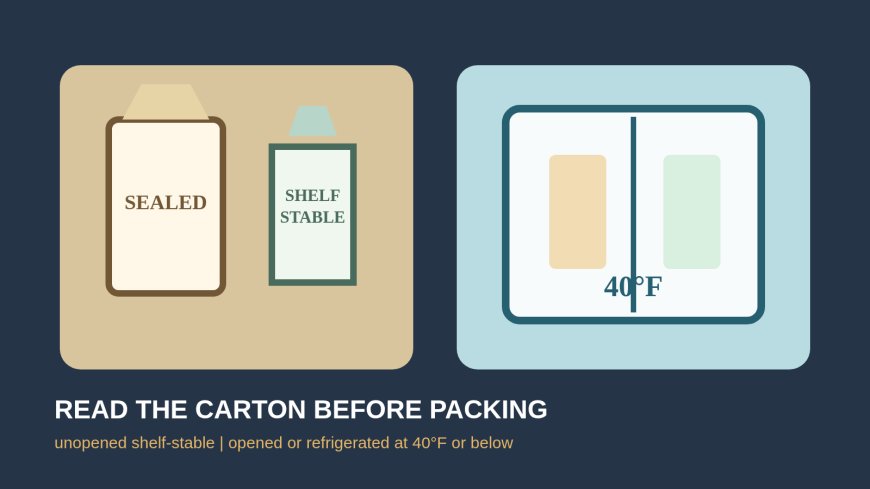
Quick answer: Read the carton before packing it. A product sold from a refrigerator or labeled “keep refrigerated” belongs in a 40°F-or-below cold chain from store to cup. An unopened carton that the manufacturer labels shelf-stable may ride in a cabinet, but once opened it follows the label’s refrigeration and use directions. “Ultra-pasteurized” does not automatically mean shelf-stable: USDA defines ultra-pasteurized milk as having extended life under refrigeration, while aseptically processed and packaged milk can maintain commercial sterility under normal non-refrigerated conditions.[1][2][3]

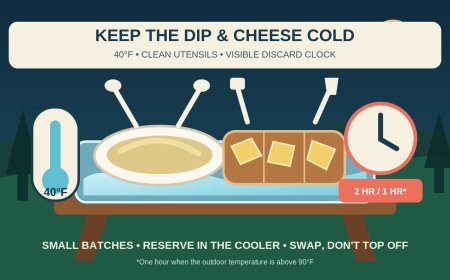
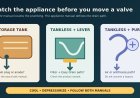
The storage lane comes from the package, not from whether the carton contains dairy, oats, almonds, or soy. Original illustration by RVCamping.info.
Sort by label and package state
The coffee aisle can put look-alike cartons in different storage lanes. One plant-based creamer may be sold cold; another may be shelf-stable until opened. A dairy product may say “ultra-pasteurized” yet still require refrigeration. The ingredient category does not settle the storage question.
USDA’s fluid-milk specification draws a useful processing boundary. It describes ultra-pasteurized products as having an extended shelf life under refrigerated conditions. It separately defines aseptically processed and packaged products as able to maintain commercial sterility under normal non-refrigerated conditions.[1] That is why “ultra-pasteurized” alone is not a cabinet pass.
FDA advises consumers to check storage directions on labels.[2] For this campsite plan, put every carton in one of three lanes:
| Carton at packing time | Storage lane |
|---|---|
| Sold refrigerated or labeled “keep refrigerated” | Cold from purchase onward at 40°F or below |
| Labeled shelf-stable and still unopened | Cabinet storage only within the manufacturer’s stated conditions and date |
| Previously shelf-stable but now opened | Refrigerate and follow the opened-carton directions on that exact label |
Do not infer shelf stability from a foil seal, screw cap, box shape, “non-dairy” wording, or a long printed date. FDA’s refrigeration-label guidance explains that newer flexible and cardboard packages can look shelf-stable even when their handling needs differ.[3]
Photograph the carton before it enters the RV
Small print becomes hard to read after condensation, a torn panel, or a dark arrival. Photograph the front, storage statement, date code, and opened-use instructions while shopping. Keep the cap and carton together; do not decant creamer into an unlabeled squeeze bottle.
FDA’s guidance distinguishes food that must stay refrigerated from shelf-stable food that needs refrigeration after opening.[3] The useful campsite question is not “Is this dairy or plant based?” It is “What does this package require in its current state?”
Write the opening date on the carton. Use the manufacturer’s opened-use period if one is printed. Federal sources provide general temperature and time rules, but they do not supply one universal after-opening day count for every dairy and plant-based creamer formulation. Do not invent one. The label controls that product-specific deadline.
Give refrigerated creamer an unbroken trip
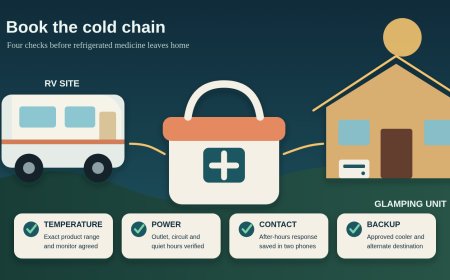
FDA says the refrigerator should stay at or below 40°F and recommends using an appliance thermometer.[2] For outdoor storage, the agency calls for surrounding cold food with ice or frozen gel blocks while the cooler remains at that same temperature or colder.[4]
Start with a cold carton and a pre-chilled cooler. Mount the thermometer display near the lid for a quick reading. Keep the creamer upright in a sealed bin or bag so cooler meltwater does not reach the cap. If space allows, use a separate beverage cooler; FDA notes that a drink cooler is opened frequently and suggests separating drinks from perishable food.[4]
The trip clock matters during resupply. FDA’s general rule is no more than two hours out of refrigeration for food that needs it, shortened to one hour when the air temperature is above 90°F.[2][4] Time in the shopping cart, a warm tow vehicle, check-in line, and campsite setup belongs to the same trip.
An unopened shelf-stable carton does not need cooler space while it remains within its labeled unopened storage conditions. Protect it from puncture, direct sun, and the hottest cabinet near the range. Once the seal is broken, move it to the refrigerator promptly according to the package direction.
Build a coffee station that does not warm the whole carton
Morning coffee often creates repeated door openings and a carton that sits beside the brewer. Stage cups, coffee, spoons, and sweetener first. Bring out refrigerated creamer last, pour what is needed, recap it, and return it to cold storage.
For a group, pour a small service amount into a clean cup and keep the main carton cold. Do not top that cup up with fresh creamer after it has sat warm; the oldest time controls the mixture. Do not pour unused table creamer back into the carton.
FDA says cold perishable food should stay at 40°F or below until serving. Once served, it should not remain out longer than two hours, or one hour when outdoor temperature is above 90°F.[4] Write the service start time on a small card if breakfast will stretch through a slow campsite morning.
Plant-based does not erase the cold chain. In its dairy outage section, FoodSafety.gov includes soy milk alongside conventional milk and cream for discard decisions after refrigeration fails.[5] For other plant-based creamers, follow the label and apply the same conservative cold-chain logic once the package requires refrigeration.
Plan for an RV refrigerator shutdown
At the first sign of a cooling failure, record the time and leave the refrigerator closed. FDA says an unopened refrigerator keeps food cold for about four hours.[2] This closed-door allowance is not extra time to add after a carton has already been warm; it describes the protected refrigerator during the outage.
If the outage will continue, prepare an iced cooler before opening the refrigerator. Make one quick transfer and keep the cooler at 40°F or below. A thermometer reading taken after an unknown outage cannot reconstruct the missing hours.
FoodSafety.gov’s refrigerated-food outage table says to discard milk, cream, and soy milk after they have been above 40°F for more than two hours.[5] A flavored creamer may have a different formulation, so identify the product first and use its label alongside the federal chart. When the package history is unknown, do not taste it to decide.
Shelf-stable unopened is a temporary status
Shelf stability belongs to the sealed package and the conditions on its label. Opening the cap changes the product state. So can a puncture, swollen carton, broken seal, leak, or missing storage panel.
FDA’s labeling guidance describes shelf-stable foods that may become hazardous after opening and recommends wording that makes post-opening refrigeration clear.[3] Treat “refrigerate after opening” as an action, not trivia. Before the first cup, confirm that the RV refrigerator is already at 40°F or below and that there is space for the carton.
This matters when boondocking. Shelf-stable single-serve cartons can reduce pre-opening refrigerator demand, but only when the specific package says it is shelf-stable. A large shelf-stable carton opened on the first morning becomes another refrigerated item for the rest of its labeled opened life. If the refrigerator capacity is uncertain, choose package sizes the group can finish without leaving an opened remainder.
A label-first discard check
Discard or decline to use the creamer when:
- a carton that requires refrigeration exceeded the two-hour limit, or the one-hour limit above 90°F;[2][4]
- milk, cream, or soy milk was above 40°F for more than two hours during an outage;[5]
- the cold-chain time or temperature cannot be established;
- the carton is swollen, leaking, punctured, or has a broken seal;
- an opened product was not refrigerated as its label directs;
- the opened-use date or package date has passed;
- cooler water or a dirty serving utensil reached the opening; or
- the product shows spoilage.
Do not use smell or a test sip to overrule failed time and temperature controls. FDA notes that food can cause illness even when it does not look, smell, or taste spoiled.[2]
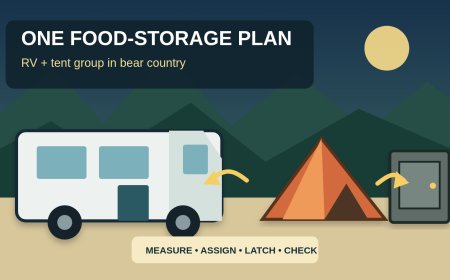
The cabinet-door plan
Keep this four-line card beside the coffee supplies:
- READ: storage statement, package date, and after-opening direction.
- SORT: refrigerated now, or shelf-stable only while unopened.
- MEASURE: 40°F or below for every carton in the cold lane.
- MARK: opening date and the exact label deadline.
A plant-based carton and a dairy carton may end up in the same refrigerator for different formulation reasons. The practical control is the same: preserve the package instructions, measure the cold storage, and reset the plan the moment the seal opens.
Evidence note: USDA defines the processing distinction between ultra-pasteurized refrigerated milk and aseptically packaged milk. FDA and FoodSafety.gov supply the label, cold-storage, outdoor-service, outage, and discard guidance. The three-lane sorting table, label photographs, opening-date mark, and coffee-station workflow are original RVCamping.info planning tools. No universal after-opening duration is claimed for all creamers.
Sources
- Fluid Milk and Milk Products, Commercial Item Description A-A-20338A | USDA Agricultural Marketing Service — Federal definitions separating ultra-pasteurized extended life under refrigeration from aseptically processed commercial sterility under normal non-refrigerated conditions.
- Are You Storing Food Safely? | FDA — Label checks, 40°F refrigeration, time limits, thermometers, outage handling, and sensory limits.
- Guidance on Labeling of Foods That Need Refrigeration by Consumers | FDA — FDA guidance distinguishing continuously refrigerated foods from shelf-stable foods that require refrigeration after opening.
- Handling Food Safely While Eating Outdoors | FDA — Cooler temperature, cold sources, drink-cooler separation, service limits, and hot-weather rule.
- Food Safety During Power Outage | FoodSafety.gov — Federal item-by-item outage decisions for milk, cream, soy milk, and related refrigerated foods.
What's Your Reaction?