













Ground beef safety at an RV campsite: cooler to skillet
Keep ground beef cold, contain raw juices in a small RV galley, verify 160°F with a thermometer, and chill campsite leftovers on time.

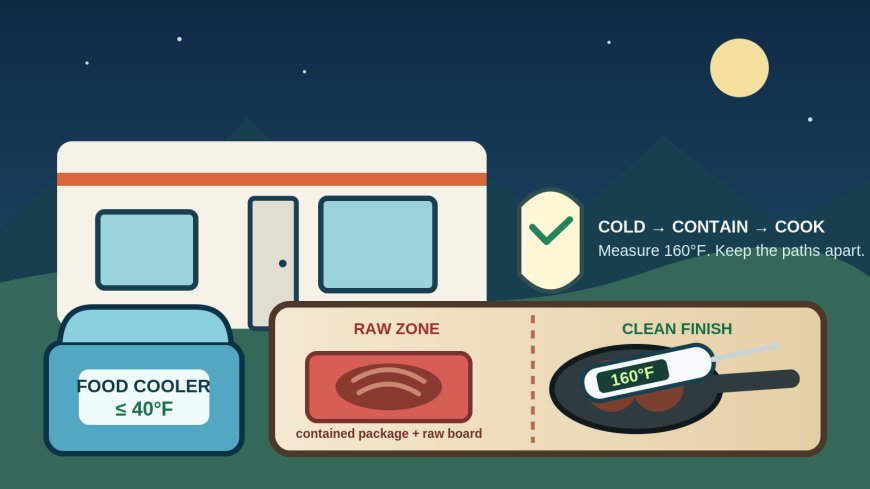
Ground beef safety at an RV campsite: cooler to skillet
By Romana
Category: Cooking
Ground beef is easy campsite food, but the package touches a surprising number of places between the grocery case and dinner plate. A safe RV routine keeps it cold in transit, gives raw meat its own work zone, cooks every portion to 160°F, and gets leftovers chilled on time.
The short answer: Carry ground beef at 40°F or below in a cooler with a thermometer.[3] Keep the sealed package separate from cooked and ready-to-eat food. After handling it, wash hands and clean the tools and surfaces it touched.[2] Cook the meat to 160°F as measured with a food thermometer, not by color.[1] Refrigerate leftovers within two hours, or within one hour when the outdoor temperature is above 90°F.[4]

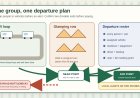
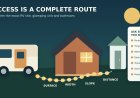
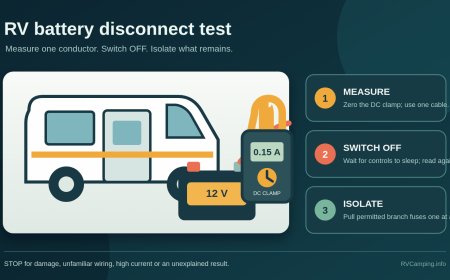
One route, four checkpoints: keep it cold, keep raw meat contained, measure 160°F, then chill leftovers on time. Original illustration by RVCamping.info.
Pack the cooler as if the lid will open all day
Start with cold or frozen ground beef, not a room-temperature package that needs the cooler to pull its temperature down. FoodSafety.gov advises packing perishables directly from the refrigerator or freezer, using enough ice or freezer packs to hold 40°F or below, and placing a food thermometer inside the cooler.[3]
A practical loading order for an RV travel day:
- Put the beef in a sealed secondary bag or lidded container. The store wrap is not a spill plan.
- Set it low in the food cooler, away from fruit, sandwich fixings, cheese and anything that will be eaten without more cooking.
- Surround it with frozen packs or ice rather than dropping one pack on top.
- Place the cooler thermometer where you can read it quickly.
- Put drinks and road snacks in another cooler if possible. FoodSafety.gov recommends two coolers on long trips so the supply for later meals is not opened whenever someone wants a drink.[3]
Raw meat and poultry should remain wrapped separately from cooked or ready-to-eat foods during the trip.[3] A hard-sided tub adds useful protection when the cooler may be tilted on a rough road. It also gives you one item to lift out and disinfect if a package leaks.
At camp, move the food cooler into shade. FoodSafety.gov suggests covering it with a light-colored blanket, tarp or poncho to reduce heat exposure.[3] Keep checking the thermometer. Shade, ice and a closed lid support the 40°F target; none replaces the reading.
If the ground beef has been above 40°F, the decision depends on time as well as temperature. FoodSafety.gov says perishable food should not be left out of refrigeration longer than two hours, or one hour when exposed to temperatures above 90°F.[2] When you cannot establish how long the package was warm, do not rely on smell or color to reconstruct the trip.
Build a two-zone RV galley before opening the package
An RV counter rarely has enough room for casual prep. Clear it first. Put buns, lettuce, sliced cheese, seasonings that will stay clean, and serving plates on one side. Reserve the other side for the raw package, a dedicated board or tray, raw-meat utensils and a lined trash container.
FoodSafety.gov recommends separate cutting boards and plates for raw meat and foods that will not be cooked, plus separate utensils and plates for raw and cooked food.[2] In a small galley, the easiest version is a sequence rather than a sprawling setup:
- Finish the ready-to-eat toppings first and move them out of the raw zone.
- Set the skillet or grill, clean serving plate, thermometer, soap and paper towels within reach.
- Open the beef only after the cooking surface is ready.
- Shape patties or transfer crumbles with one raw-only utensil.
- Put the empty wrapper directly into the lined trash container.
- Wash your hands before touching the stove knob, seasoning containers, refrigerator handle or clean plate.
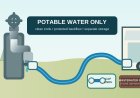
FoodSafety.gov calls for handwashing with soap and water for at least 20 seconds, including after contact with raw meat or its juices.[2] If the picnic table is the prep counter, use a potable-water handwashing setup with soap and a catch basin. The same clean-to-raw sequence still applies outdoors.
Shared objects are where a tidy-looking campsite kitchen can fail. Do not grip the pepper mill with a raw-meat hand. Portion seasonings into a small clean dish before opening the package, or have a clean-handed cook add them. Keep the food thermometer off the raw board once its probe has been cleaned.
Treat the thermometer as cooking equipment
USDA's safe minimum temperature chart sets 160°F (71.1°C) for ground meats, measured with a food thermometer before the food leaves the heat source.[1] A brown center, clear juices, firm texture or a certain number of minutes on the flame does not document that endpoint.
For burgers, place the probe in the thickest part without touching the skillet or grill grate. Check more than one patty, especially if their thicknesses differ or one sits over a cooler part of the cooking surface. For loose ground beef, check several of the thickest areas rather than aiming at a bare patch of pan. Continue cooking any portion that has not reached 160°F.
The order matters:
- Keep the clean thermometer ready before raw beef enters the work area.
- Take the reading while the food is still over the heat.
- Clean the probe after it touches undercooked meat and before putting it back into food.
- Move fully cooked beef to a clean plate, never the plate or tray that held it raw.[2]
A folding instant-read thermometer is easier to store in an RV drawer than a bulky unit, but compact size does not excuse a hard-to-read display or an uncleanable hinge. Pack spare batteries if the model uses them. Those are equipment-planning choices; the federal food-safety requirement is the measured 160°F endpoint.[1]
Keep the raw route from crossing the cooked route
Think of dinner as two paths. The raw path runs from cooler to package to board to pan. The clean path runs from toppings and clean plates to the table. They should meet only after the beef reaches 160°F.
A few RV-specific controls make that separation easier:
- Mark one small board for raw meat and store it apart from the board used for fruit and bread.
- Use a rimmed tray beneath the package in the refrigerator and cooler.
- Keep a second spatula available for serving, or thoroughly wash the cooking utensil after its last contact with raw meat.
- Clean the faucet handle, refrigerator latch and stove control if a raw hand touched them.
- Do not set the cooked platter in the raw-meat zone just because that counter space has opened up.
FoodSafety.gov notes that germs can remain on hands, utensils, cutting boards and countertops, and it directs cooks to wash tools and surfaces after food preparation.[2] In an RV, that also includes the edges of a sink cover or removable counter insert used as extra workspace.
Do not let cleanup consume the water reserved for drinking. Budget enough potable water before starting, or use a campground dishwashing station if its rules allow food cleanup there. Disposable liners can contain drips, but they do not replace handwashing or cleaning a contaminated surface.
Serve now, or control the holding time
Cook only the batch you can manage. When patties come off the heat, send them to the clean plate and assemble the meal with clean hands and utensils. If dinner will not be served right away, FoodSafety.gov says cooked food should be held at 140°F or above to stay out of the 40°F-to-140°F range where germs grow rapidly.[2]
A covered pan set aside on an unlit RV stove is not verified hot holding. Neither is a plate beside the fire. If you cannot maintain safe hot holding, serve promptly and start the cooling clock for anything left.
The same time limit applies across the meal, not separately to each location. Time on the picnic table, beside the grill and during cleanup all counts toward the two-hour limit, shortened to one hour above 90°F.[2][4]
Handle leftovers by the clock, not appetite
USDA says leftovers must be refrigerated within two hours after cooking or after removal from hot holding. Above 90°F, perishable food left out for more than one hour should be discarded.[4] Divide cooked ground beef into shallow containers so it cools quickly, then place those containers in a refrigerator holding 40°F or below.[2][4]
Label the container with the meal and date. USDA's refrigerator window for leftovers is three to four days. Reheat leftovers to 165°F as measured with a food thermometer.[4] These are sourced limits, not estimates based on how the meat looks the next morning.
A small RV refrigerator can warm when packed with one large, steaming container. Split the food before chilling rather than saving one deep mound. Leave room around the shallow containers for cold air, and verify the appliance thermometer after the door closes. The USDA guidance permits either placing hot food straight into refrigeration or cooling it rapidly first in an ice or cold-water bath.[4]
Discard cooked beef that passed the time limit. Reheating does not turn an excessive campsite hold into a documented safe history.
The cooler-to-skillet card
Keep this version inside a galley cabinet:
- Cold: Load ground beef straight from cold storage; cooler at 40°F or below with a thermometer.[3]
- Contained: Secondary bag or lidded tub, low and separate from ready-to-eat food.[2][3]
- Ready: Prep toppings first; stage the clean plate, thermometer, soap and trash.
- Separate: Raw board and utensil stay on the raw route. Wash hands for 20 seconds after handling beef.[2]
- Cook: Measure 160°F in the thickest part before removing the beef from heat.[1]
- Serve: Use a clean plate and clean serving utensil.[2]
- Chill: Shallow containers within two hours, or one hour above 90°F.[2][4]
- Label: Refrigerated leftovers are a three-to-four-day food; reheat to 165°F.[4]
The useful campsite habit is staging the clean finish before the raw package opens. With the cooler, clean plate and thermometer already in place, a cramped galley has fewer chances to send raw juices backward through dinner.
Evidence note: The temperature and timing rules in this guide come from the cited USDA FSIS and FoodSafety.gov pages. RVCamping.info created the compact-galley sequence, object-touch check, loading order and cabinet card as planning aids. They are not government protocols, and no product test is claimed.
Sources
- Safe Minimum Internal Temperature Chart | USDA FSIS (USDA FSIS page, archived September 12, 2026)
- 4 Steps to Food Safety | FoodSafety.gov (FoodSafety.gov page, archived September 5, 2026)
- Seasons Change, but Food Safety Steps Shouldn't | FoodSafety.gov (FoodSafety.gov page, archived June 14, 2026)
- Leftovers and Food Safety | USDA FSIS (USDA FSIS page, archived September 12, 2026)
What's Your Reaction?