












How to keep seafood safe at an RV campsite
Choose, chill, prepare and cook fish or shellfish safely at an RV campsite with a measured cooler plan, clean galley sequence and exact doneness checks.

How to keep seafood safe at an RV campsite
By Romana
Category: Cooking
Seafood can work well for a campsite dinner, but it leaves little room for a warm cooler, a leaky package or a dirty pair of tongs. Buy it cold, keep it at 40°F or below, separate it from food that will not be cooked, and use a thermometer at the grill or stove.
The short answer: Shop for seafood at the end of the grocery stop and move it straight into a cold cooler. Keep the cooler at 40°F or below, with raw packages sealed and separated from ready-to-eat food. Cook most seafood to 145°F. For shellfish, use the FDA's specific visual checks described below, and discard clams, mussels or oysters that do not open during cooking.[1][2]

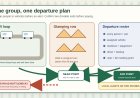
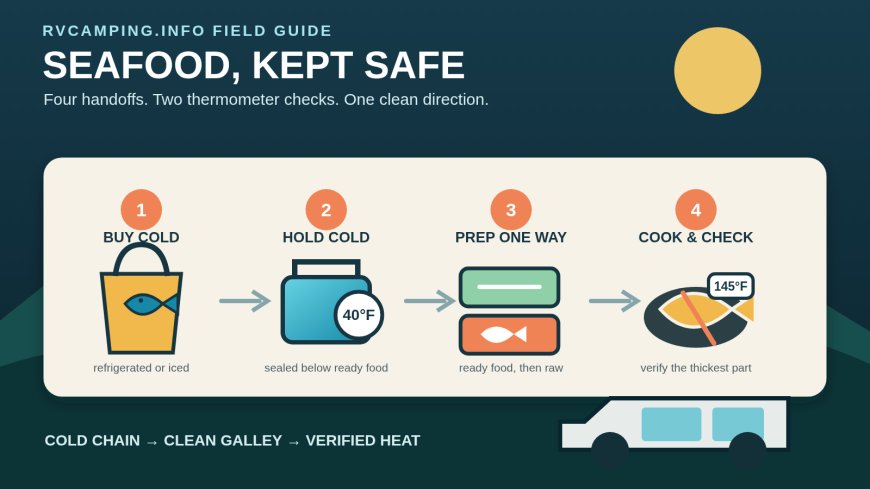
The cold chain has four handoffs: store, vehicle, RV storage and cooking. Original illustration by RVCamping.info.
Buy seafood that has stayed cold
Make seafood the last stop before checkout. FDA advises choosing fresh fish from a refrigerated case or a covered display with plenty of fresh ice beneath it. Fresh fish should smell mild rather than fishy, sour or ammonia-like. Whole fish should have firm flesh, clear shiny eyes and red gills without odor; fillets should have firm flesh without darkening or drying at the edges. Shrimp, scallop and lobster meat should appear clear to pearl-like and have little or no odor.[1]
Color by itself is not a freshness test. FDA notes that diet, environment and some packaging processes can change a fish's color. Previously frozen fish may also lack some of the visual traits of never-frozen fish, but it should still smell fresh and mild.[1]
For frozen seafood, leave behind a package that is open, torn or crushed at the edges. Heavy frost or ice crystals may indicate long storage or thawing and refreezing. The contents should be hard, not bendable.[1]
Shellfish needs its own purchase check:
- Look for the harvest or processor tag on sacks and containers of live shellfish and the label on packages of shucked shellfish. FDA says the certification number indicates handling under national shellfish safety controls.
- Reject clams, oysters and mussels with cracked or broken shells.
- Tap a live clam, oyster or mussel. Do not select one that fails to close.
- Select live crabs and lobsters only when they show leg movement, because they spoil quickly after death.[1]
These cues help reject a bad purchase. They do not prove that raw seafood is free of harmful bacteria, so the cold and cooking steps still matter.[3]
Protect the ride from store to campsite
Set up the food cooler before entering the store. It needs enough ice or frozen gel packs to hold 40°F or below, plus an appliance thermometer that you can read without digging through the load. FDA allows meat, poultry and seafood to be packed while still frozen so they stay cold longer.[2]
A two-cooler setup is worth the space on a seafood day. Put drinks in one cooler and perishables in the other; repeated drink runs expose the food cooler to warm air.[2] If there is room for only one, give raw seafood a sealed secondary container at the bottom. Ready-to-eat salad, fruit, bread and cooked food belong above it, never where meltwater or package leaks can reach them.
Use this loading order:
- Pre-chill the cooler and load frozen packs or ice.
- Put the sealed seafood in a rigid, watertight tray.
- Add more cold source around and over the tray.
- Load ready-to-eat foods in separate sealed containers above it.
- Place the thermometer where it can be checked quickly.
- Keep the cooler shaded and open it only when necessary.
Do not treat a cold-looking bag of ice as a temperature reading. If the thermometer rises above 40°F, track how long the seafood has been out of safe cold holding. FDA's outdoor limit is two hours in the 40°F-to-140°F range, or one hour when the outdoor temperature is above 90°F. Food that exceeds that limit should be discarded.[2]
Store it in the RV without losing the cold chain
Move seafood into the RV refrigerator or freezer as soon as you arrive. FDA says seafood intended for use within two days can be refrigerated at 40°F or below; otherwise, wrap it tightly and freeze it.[1]
An RV refrigerator dial does not confirm the food temperature. Keep an appliance thermometer inside and check it after towing, leveling, changing power sources or loading warm groceries. If the refrigerator has not reached 40°F or below, leave the seafood in the properly iced cooler rather than moving it into a warmer box.
Inside the refrigerator, keep raw seafood wrapped and inside a leak-catching container on the lowest practical shelf. Do not put it above drinks, produce, condiments or cooked leftovers. For live shellfish, follow the seller's package and storage directions rather than sealing or submerging it in a way the supplier did not intend.
Frozen seafood can thaw overnight in the refrigerator. For a faster thaw, FDA permits a sealed plastic bag in cold water. Microwave defrosting is another option only when cooking follows immediately; end the cycle while some ice remains but the fish can bend.[1] Countertop and picnic-table thawing are not safe campsite shortcuts.
Run a small-galley prep line
The tightest RV galleys often have one cutting board and little landing space. Sequence matters more than trying to work on every part of dinner at once.
Prepare foods that will be eaten raw first. Wash and cut salad vegetables, fruit, herbs and garnishes, then seal them and move them away from the raw-seafood zone. Only then open the seafood package.
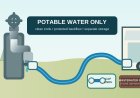
FDA calls for at least 20 seconds of handwashing with soap and warm water after handling raw food. Cutting boards, dishes, utensils and counters need hot, soapy water between raw seafood and cooked or ready-to-eat food.[1] If the campsite lacks running water, FDA's outdoor guidance calls for a water jug, soap and paper towels or moist disposable towelettes for hand cleaning.[2] Bring enough potable water to complete the job rather than planning to rinse with lake or creek water.
Set out two plates before cooking: one for raw seafood and one clean plate for the finished food. The same rule applies to tongs, spatulas and brushes. A utensil that touched raw seafood does not return to the cooked food until it has been washed in hot, soapy water. Reserve any marinade intended as a finishing sauce before raw seafood enters it; do not brush cooked food with used raw marinade.[2]
Cook fish and shellfish to the right endpoint
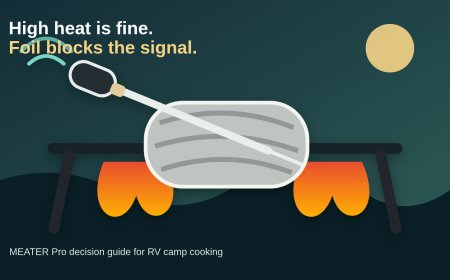
A compact digital food thermometer is the clearest doneness tool. FDA's general target for most seafood is an internal temperature of 145°F.[1] Insert the probe into the thickest part of a fillet from the side when the piece is too thin for a top-down reading. Check more than one piece when thickness varies, and keep the probe away from the hot pan or grill grate.
FDA also provides product-specific visual guidance for situations where a thermometer is not practical:
- Fish is done when the flesh is opaque and separates easily with a fork.
- Shrimp, crab and lobster meat should be firm, pearly and opaque.
- Scallops should be opaque and firm.
- Clams, mussels and oysters should open during cooking. Throw away any that remain closed.
- Shucked clams and oysters should be opaque and firm.[1][3]
Do not partially cook seafood at the RV and carry it to a distant campsite grill for later. FDA says partial cooking is safe only when the food moves immediately to the hot grill.[2]
Cooking is not a fix for spoiled seafood. Do not eat raw or cooked seafood with sour, rancid, fishy or ammonia odors. If cooked seafood gives off even a fleeting ammonia smell, FDA says not to eat it.[1]
Shellfish and high-risk travelers need a stricter plan
Previously freezing fish can kill some parasites, but FDA warns that freezing does not kill all harmful germs. Thorough cooking remains the safest route.[1]
Pregnant travelers should avoid raw or undercooked finfish and shellfish, including oysters, clams, mussels and scallops.[3] FDA's broader seafood guidance extends the avoid-raw advice to children, older adults and people with weakened immune systems, including people with cancer, diabetes, HIV/AIDS or an organ transplant. Those groups should also avoid raw oysters even after post-harvest treatment. Refrigerated smoked fish belongs only in a cooked dish for these travelers; a canned or otherwise shelf-stable version is the alternative FDA allows.[1]
If anyone in the group falls into one of those categories, build the menu around fully cooked seafood from the start. Raw-bar or ceviche service does not belong in the plan, and lime juice is not a substitute for cooking.
Serve promptly and make leftovers a deliberate choice
Hold cold seafood at or under 40°F until it is time to serve. Keep cooked seafood hot until the plates are ready. Once food comes out, the same two-hour limit applies, shortened to one hour when outdoor temperatures exceed 90°F.[1][2]
Start the clock when the platter leaves temperature control, not when everyone sits down. Put out a small portion and refill from cold storage if dinner will stretch. Return leftovers to a verified 40°F-or-below refrigerator or cooler within the limit. Divide a large amount into shallow containers so it cools faster.[2]
Discard seafood when its cold history is unknown or the time limit has passed. Smelling and tasting cannot reconstruct a missing temperature record.
The five-minute campsite setup
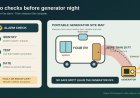
Before opening the package, confirm five things:
- The food cooler or RV refrigerator reads 40°F or below.
- Raw seafood has a leakproof tray below ready-to-eat food.
- Potable water, soap and paper towels are ready.
- Raw and cooked plates and utensils cannot be confused.
- The food thermometer is clean, working and within reach.
That short setup protects every handoff that follows. At an RV campsite, seafood safety is mostly logistics: a measured cold chain, a one-way prep line and a verified cooking endpoint.
Source note: RVCamping.info adapted FDA consumer guidance into an original RV cooler and galley workflow. The cooler-loading order, small-galley prep sequence and five-minute setup are editorial planning tools, not federal standards or claims based on hands-on equipment testing.
Sources
- Selecting and Serving Fresh and Frozen Seafood Safely | FDA Purchase, storage, cooking and at-risk-group guidance; FDA content current March 5, 2024.
- Handling Food Safely While Eating Outdoors | FDA Cooler, outdoor preparation and serving guidance; FDA content current March 5, 2024.
- Meat, Poultry & Seafood (Food Safety for Moms-to-Be) | FDA Pregnancy-specific seafood guidance; FDA content current September 27, 2018.
What's Your Reaction?