















Congaree RV camping: why the park campground is not an RV site and how to choose a nearby base
Congaree has tent-only, walk-in campgrounds. Compare nearby public RV bases by hookups, rig length, restrictions and accessibility.


Congaree RV camping: why the park campground is not an RV site and how to choose a nearby base
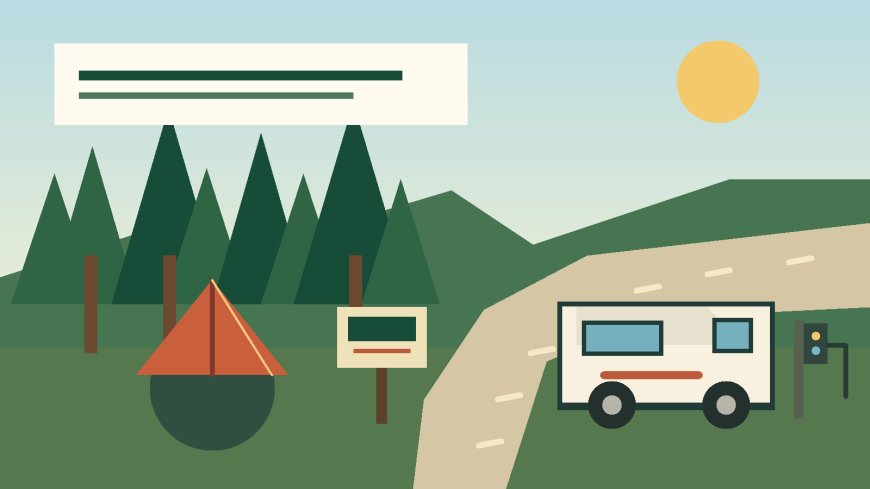
Congaree National Park has campgrounds, but it does not have an RV campground. That distinction matters before you follow a campground pin down the entrance road with a trailer behind you.
The National Park Service says RVs and trailers are not accommodated in either park campground. Only tents and hammocks are allowed, and overnight stays in vehicles are prohibited.[1] Longleaf and Bluff are places to carry camping gear to a site, not places to park a motorhome, travel trailer, camper van or truck camper for the night.
For RV travelers, the practical plan is to reserve a public campground outside Congaree and visit the national park during the day. Three South Carolina state parks make sensible bases for different reasons: Sesquicentennial for the strongest hookup menu, Poinsett for a smaller campground with a published 40-foot ceiling on some sites, and Santee for the largest pool of electric-and-water sites. None should be treated as an automatic fit. Match the reservation listing to your rig, amp requirement and accessibility needs before paying.
The confusing phrase: Longleaf is walk-in, not first-come
The NPS camping page says Longleaf sites are "walk-up only," but the same page requires a reservation before setting up camp. In context, "walk-up" describes how campers reach the site: vehicles stay in the gravel lot and campers walk as far as approximately 100 yards. It does not mean you can arrive without a reservation and claim an open pad.[1]
Bluff requires a more substantial carry. Campers park at Longleaf or the Harry Hampton Visitor Center and hike approximately one mile to the campground. Bluff has no vehicle access, no restroom and no running water. Longleaf has two vault toilets near the front of the campground, but no running water at the sites; potable water is available at the visitor center.[1]
That rules out more than conventional travel trailers. A camper van is still a vehicle, and NPS explicitly says visitors may not stay overnight in a vehicle. A rooftop tent also depends on the vehicle being at the campsite, which is impossible at these walk-in sites. If you genuinely want to split the trip, you could leave the RV at a legal off-site campground and carry a ground tent into Longleaf or Bluff under a separate reservation.
Longleaf is the only reasonable frontcountry choice here for many visitors with mobility limitations, and even it needs a close look. NPS identifies Site 1 as the park's one accessible campsite. The routes to Longleaf sites are packed dirt and fine gravel, the parking lot is gravel, and accessible vault toilets sit directly off that lot.[2] "Accessible campsite" does not mean a paved pull-through or an RV pad. It remains a tent/hammock site separated from the vehicle.
Nearby public RV bases compared
The comparison below sticks to amenities the managing agency publishes. It intentionally omits drive times. Traffic, road work, route choice and the exact campsite can change them, and none of the campground pages promises a travel time to Congaree.
| Public campground | Published RV utility picture | Published size or stay limits | Best fit |
|---|---|---|---|
| Sesquicentennial State Park, Columbia | 69 electric-and-water sites, 9 full-hookup sites, dump station; sites 1-29 have 20/30/50-amp service and sites 36-84 have 20/30 amp | Two-night reservation minimum; up to 14 consecutive nights, followed by at least 7 nights vacant | Travelers who want sewer at the site or need a clearly identified 50-amp group |
| Poinsett State Park, Wedgefield | 24 water-and-electric sites, dump station, hot showers | Some sites accommodate RVs up to 40 feet; two-night reservation minimum | A smaller campground when your chosen pad explicitly fits the rig |
| Santee State Park, Santee | 146 electric-and-water sites, 48 listed as 50 amp, dump station, hot showers | Many sites accommodate RVs up to 40 feet; two-night reservation minimum | More inventory and a 50-amp option, without a full-hookup claim |
Sesquicentennial: choose it for hookup choice
Sesquicentennial's official camping page lists 69 standard sites with electricity and water plus nine full-hookup sites with electricity, water and sewer. It also lists a dump station. Sites 1-29 have 20/30/50-amp electrical service, while sites 36-84 have 20/30 amp. The pads are packed sand or gravel, and the campground has restrooms with hot showers.[3]
This is the clear pick of the three if a sewer connection at the campsite is important. It is also the easiest shortlist for a 50-amp rig because the agency identifies a block with 50-amp service. Do not turn those block-level facts into a promise that any available site fits any RV. The public page does not publish one campground-wide maximum RV length. Open the individual reservation record and verify pad length, back-in or pull-through configuration, and the utilities attached to that exact site.
Sesquicentennial requires a two-night minimum for camping reservations. Its page limits a stay to 14 consecutive nights and requires a seven-night vacancy between reservations.[3] Those rules make it a touring base rather than a long-term place to live.
Poinsett: smaller, with a useful length warning
Poinsett publishes 24 sites with individual water and electrical hookups and 26 tent sites with individual water. The RV sites are near restrooms with hot showers, and the park has a dump station. All sites include water, a picnic table and a fire ring.[4]
The important wording is "some sites accommodate RVs up to 40 feet."[4] That is not a blanket 40-foot guarantee. A 38-foot fifth wheel may fit one reservable pad and fail another once the tow vehicle, slide clearance and site geometry enter the picture. Filter the inventory, read the site description, and call the park when the listing does not settle the question.
Poinsett's published reservation minimum is two nights.[4] It can suit travelers who prefer a smaller campground and do not need sewer at the site. The official page lists a dump station but does not label any campsite as full hookup, so arrive prepared to manage tanks accordingly.
Santee: the inventory play
Santee spreads camping across two areas: the 50-site Cypress View Campground and the 108-site Lakeshore Campground. Its amenity summary lists 146 standard electric-and-water sites, including 48 with 50-amp service, plus a dump station. Pads are packed sand, and both campground areas are near restrooms with hot showers.[5]
The park says many sites accommodate RVs up to 40 feet.[5] Again, "many" is not "all." Santee is the option to check when availability is the main problem or when you want a broader 50-amp pool, but the official page does not claim sewer at individual sites. Do not book it expecting full hookups.
Santee also requires at least two nights on a camping reservation.[5] Decide whether its Lake Marion setting and larger campground inventory suit the rest of your trip rather than assuming that the largest campground is automatically the best Congaree base.
Accessibility needs a site-level check
South Carolina State Parks' statewide rules say two sites designated for disabled visitors are available at each park, and that designated campsites exist at all state park family campgrounds.[6] That is useful screening information, not a complete accessibility description. The rule does not tell you the slope of a specific pad, the path surface to the bathhouse, whether the picnic table works for you, or which shower configuration is available.
Reserve the designated site you need rather than assuming any vacant site will work. Before booking, ask the park about the exact campsite number, parking surface, route to the restroom, shower access, grade and utility reach. For Congaree itself, NPS gives unusually specific information: Longleaf Site 1 is the accessible site, the lot is gravel, site routes are packed dirt and fine gravel, and the accessible vault toilets are directly off the parking lot.[2]
Rules that can change the reservation decision
South Carolina's statewide rules allow either one trailer/RV and one tent or two tents per campsite. Occupancy is capped at six people or one family, check-in is 2 p.m., check-out is noon, and the maximum stay on one site is 14 nights. Pets must remain on a leash or under physical restraint.[6] Individual parks can add details, and the reservation system controls what is actually available for your dates.
At Congaree, a frontcountry reservation is mandatory and payment cannot be made in person at the park. Longleaf and Bluff campers must use the site they reserved. The park limits a person to 14 consecutive camping days and 28 days within a six-month period.[1]
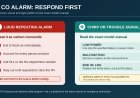
Flooding and weather can alter a Congaree visit even when the RV is safely parked elsewhere. Check the park's current conditions before leaving your base, then recheck your campground reservation for alerts. Those are two separate operating systems run by different agencies.
A booking sequence that avoids the common mistakes
- Decide whether you need full hookups, electric and water only, or merely a legal place to park the RV overnight.
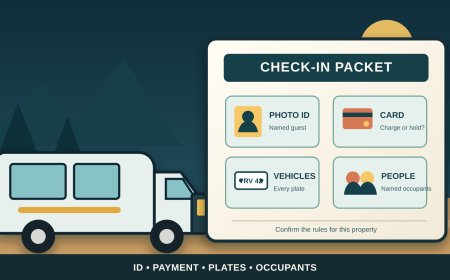
- Record total RV length and height, including the tow vehicle when the reservation system asks for it. Do not use the trailer box length alone.
- If you need 50 amp, start with Sesquicentennial's identified 50-amp block or Santee's 48 listed 50-amp sites.[3][5]
- If sewer at the campsite is required, focus on Sesquicentennial's nine published full-hookup sites. Poinsett and Santee publish dump stations, not full-hookup campsite counts.[3][4][5]
- Match the exact site record to the rig. "Some" or "many" sites fitting a 40-foot RV is not permission to put a 40-footer on every pad.[4][5]
- For disability access, reserve a designated site and call about the route and facilities that matter to you.[6]
- Treat Congaree as a day-use destination from the RV base. Make a separate park campground reservation only if you intend to carry a tent or hammock to Longleaf or Bluff.[1]
The short version is simple: a campground symbol at Congaree does not mean an RV campsite. Keep the rig at a campground built for it, then enter the national park without the stress of discovering at the gate that your "site" is across gravel or a mile down a trail.
Sources
- National Park Service: Camping at Congaree National Park (accessed October 12, 2026).
- National Park Service: Accessibility at Congaree National Park (accessed October 12, 2026).
- South Carolina State Parks: Sesquicentennial camping (accessed October 12, 2026).
- South Carolina State Parks: Poinsett camping (accessed October 12, 2026).
- South Carolina State Parks: Santee camping (accessed October 12, 2026).
- South Carolina State Parks: Rules and regulations (accessed October 12, 2026).
What's Your Reaction?