






Buffalo National River RV Camping: Buffalo Point vs. Tyler Bend vs. Ozark
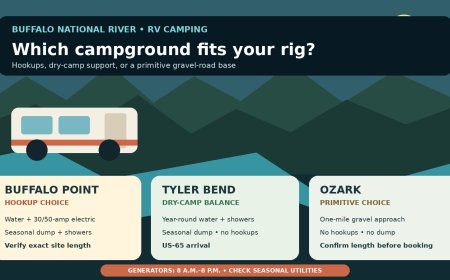
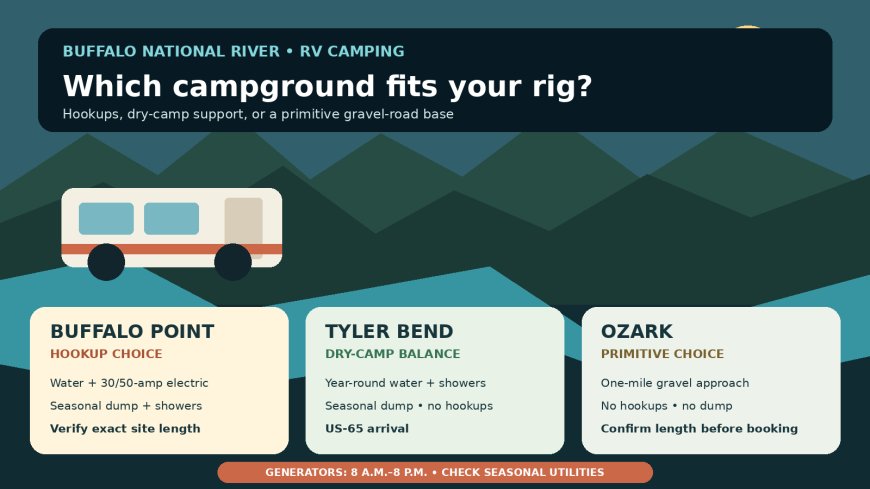
Buffalo Point wins for hookups, Tyler Bend for supported dry camping, and Ozark for a primitive small-rig stay after a manual site-fit check.

Buffalo National River RV Camping: Buffalo Point vs. Tyler Bend vs. Ozark
By Romana | Updated October 11, 2026
Buffalo National River does not have three interchangeable RV campgrounds. Buffalo Point is the utility choice, with 30/50-amp electric and water connections, showers, and a seasonal dump station. Tyler Bend is the easier dry-camping base, with straightforward US-65 access, year-round water and showers, and a seasonal dump. Ozark is the small-rig, primitive option, reached over a mile of gravel with no hookups or dump station and incomplete length data on some RV-capable listings.[1][4][7]
Quick comparison
| Decision factor | Buffalo Point | Tyler Bend | Ozark |
|---|---|---|---|
| Best for | RVers who want campground utilities | Dry campers who want showers, water, dump access, and US-65 convenience | Compact, self-contained rigs prioritizing a quieter upper-river base |
| RV sites | More than 80 drive-in sites across loops A–E | 27 drive-in sites | Some of 30 sites suit primitive RV camping; check exact listing |
| Hookups | Water plus 30/50-amp electric at drive-in sites; no sewer hookup | None | None |
| Dump | Seasonal, about 1.5 miles from campground | Seasonal at campground | None |
| Generator rule | 8 a.m.–8 p.m.; often unnecessary when seasonal electric is on | 8 a.m.–8 p.m. | 8 a.m.–8 p.m. |
| Access | Highway 14 via Highway 268 | Two miles off US 65 on Ranger Road | One-mile graded gravel approach from Highway 7 |
| Winter reality | Loop B primitive, first-come; utilities off | Primitive, first-come; water and showers remain available, dump closes | Primitive, first-come; water and flush systems off |
The table is a campground-level screen, not a promise that a particular rig fits. Buffalo Point publishes site lengths ranging from the low 20s to more than 60 feet. Tyler Bend’s current Site 21 record allows equipment up to 56 feet. Ozark Site 4 allows an RV but reports a maximum vehicle length of zero, meaning the database provides no usable numeric fit answer for that site.[4][8][10]
Buffalo Point: the clear choice for hookups
Buffalo Point is the only one of these three that behaves like a basic public-land RV campground rather than a dry camp. NPS says drive-in sites in loops A through E have water and 30/50-amp electric hookups. There is no sewer connection at the pad, but hot showers, flush restrooms, and a dump station about 1.5 miles away are part of the seasonal setup.[1][4][6]
That service package matters in humid Arkansas weather. Electric service can support the RV’s normal branch circuits without organizing the day around generator hours, subject to the rig’s load management and the pedestal’s condition. Water at the site also removes the need to arrive with a full fresh tank. Waste still has to be carried to the dump station, so a full-hookup expectation would be wrong.
Vehicle fit varies sharply by site. NPS’s length chart lists examples from A-loop spaces in the 20-foot range to B23 at 55 feet and D65 at 61 feet. Recreation.gov lists C50 as a paved back-in site with a 47-foot maximum for an RV, trailer, fifth wheel, pickup camper, or camper van, plus a water hookup and two-vehicle allowance.[4][9] Those numbers describe individual parking spaces, not an invitation to book any loop with a 47-foot combination. Open the exact listing and compare the published equipment limit with the complete parked arrangement, including tow vehicle or towed car.
The main seasonal catch is utilities. NPS says water, showers, flush restrooms, dump service, and hookups operate from roughly mid-March through mid-November. During winter, Loop B remains available for primitive camping, but electricity and water hookups are off.[1] A winter reservation should therefore be planned like dry camping, not like a discounted hookup stay.
For the 2026 season, B, C, and D loops and five walk-in sites accept reservations; A and E remain first-come, first-served. NPS has announced that all Buffalo Point campsites will require reservations beginning March 15, 2027, but that future rule should not be applied early.[1][2]
Tyler Bend: the strongest dry-camping compromise
Tyler Bend sits just off US 65, about two miles down Ranger Road, and avoids the gravel approach that defines Ozark. NPS lists 27 drive-in sites suitable for trailers, motorhomes, RVs, camper vans, and tents. Ten walk-in sites and five group sites are tent-only choices, so an RVer must reserve in the main drive-in loop rather than assuming any Tyler Bend listing works.[1][5]
There are no campsite hookups. The trade is unusually good shared infrastructure for a dry campground: NPS lists year-round water, showers, and flush restrooms, while the dump station operates from mid-March through mid-November.[1] That makes Tyler Bend practical for a smaller fresh tank or a multi-night stay, but shared water is not a hose connection. Fill the onboard tank legally, disconnect, and carry waste to the dump.
Recreation.gov’s Site 21 illustrates why exact listings matter. It accepts RVs, trailers, fifth wheels, pickup campers, pop-ups, and camper vans up to 56 feet and publishes a 56-foot site length with a two-vehicle maximum.[8] That is evidence about Site 21 only. Other sites may be shorter, more curved, or less level. A 56-foot field also does not answer every clearance question, so use photos and notes before committing a tall or long rig.
Tyler Bend is open year-round. Reservations are required during the fee season from mid-March through mid-November, and the 2026 NPS change allows individual sites to be reserved from six months ahead through the same day. Outside that season, camping is free and first-come, first-served.[1][2] Download the confirmation before arrival because NPS warns that cell service is not necessarily reliable at the campground.[1]
Ozark: primitive and scenic, but not the place to guess about length
Ozark Campground is three miles from Highway 7 and the final mile is a graded gravel road. NPS says some sites work for primitive RV camping while others are walk-in tent sites; Recreation.gov describes 31 drive-up sites but labels many as tent-only.[1][7] This is not a campground where “drive-up” automatically means “motorhome-ready.”
Facilities are the simplest in this comparison. Water spigots and flush restrooms operate approximately March 15 through November 14, but there are no campsite electrical or water hookups and no dump station.[1][7] The pavilion’s electricity does not turn nearby campsites into electric sites. Arrive with enough battery, fresh water, and waste capacity for the stay, and identify a legal dump stop before entering the park.
Site 4 shows the booking-data problem clearly. Recreation.gov calls it a standard nonelectric site, permits an RV, trailer, pickup camper, pop-up, or camper van, and warns that its terrain is uneven. Yet the same page lists “Max Vehicle Length: 0” rather than a usable dimension.[10] For that site, the responsible move is to contact the park with the rig’s total length, width, height, and turning needs before booking. A blank or zero field is missing information, not unlimited capacity.
Ozark is open year-round. During the mid-March to mid-November operating season, reservations are required; the booking window opens six months before arrival and remains available on arrival day. Winter camping is free and first-come, but the water and flush systems are shut down; a vault toilet remains available with limited service.[1][2] The combination of gravel access, uneven sites, missing dimensions, and winter utility shutdown makes Ozark the least forgiving option for a large motorhome or long trailer.
Generator limits apply to all three
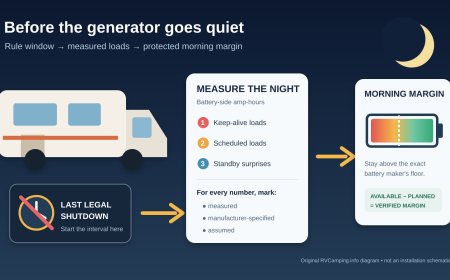
Buffalo National River’s campground rule is straightforward: generators may operate only from 8 a.m. to 8 p.m., while quiet hours run from 10 p.m. to 6 a.m.[3] Recreation.gov repeats the 8-to-8 generator limit for Tyler Bend and Ozark.[5][7] The twelve-hour allowance is not permission to run continuously when shore power is available or when noise affects nearby campers.
At Buffalo Point during utility season, use the pedestal rather than a generator. At Tyler Bend and Ozark, plan charging inside the allowed window and size the battery plan for overnight loads. Anyone who requires continuous powered cooling or medical equipment should confirm that the selected site and season provide an appropriate, reliable solution rather than treating generator hours as flexible.
Which campground should you choose?
Choose Buffalo Point when electric and water hookups, hot showers, and a seasonal dump are worth being farther east in the park. It is also the best option for longer rigs—but only after the exact site length and driveway type are verified.
Choose Tyler Bend when you can dry-camp electrically but want a paved, US-65-oriented arrival, year-round shared water and showers, and seasonal dump access. It offers the cleanest balance between primitive camping and useful RV support.
Choose Ozark for a smaller, self-contained rig when the upper river and a more primitive setting matter more than utilities. Treat every RV-capable site as a manual fit check because at least one current listing permits an RV without publishing a meaningful maximum length.
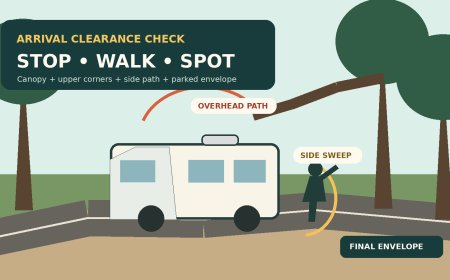
For all three, book the site—not the campground headline. Match equipment type, total parked length, vehicle count, driveway notes, terrain, hookups, and seasonal utility status before checkout. Then download the reservation and route while service is available.
Source credit: RVCamping.info compared current National Park Service and Recreation.gov campground, campsite, access, facility, generator, season, and 2026 reservation records retrieved October 11, 2026. The replacement decision framework and RV-fit analysis are original editorial work.
Sources
- Camping — Buffalo National River, National Park Service — Campground inventory, RV suitability, utilities, dump stations, seasons, access, and current reservation rules. Accessed October 11, 2026.
- Buffalo National River Implements Campground Changes for 2026 Season — National Park Service — 2026 reservation dates and same-day booking policy. Accessed October 11, 2026.
- Camping Rules — Buffalo National River, National Park Service — Generator and quiet hours. Accessed October 11, 2026.
- Buffalo Point Campground — National Park Service — Hookups, dump location, access, and published site-length chart. Accessed October 11, 2026.
- Tyler Bend Campground — Recreation.gov — Drive-in inventory, access, generator limit, and seasonal notice. Accessed October 11, 2026.
- Buffalo Point — Recreation.gov — Electric/water campground description and seasonal utility shutdown. Accessed October 11, 2026.
- Ozark Campground — Recreation.gov — Gravel access, site types, services, generator limit, and season. Accessed October 11, 2026.
- Tyler Bend Site 21 — Recreation.gov — Equipment limits, 56-foot site length, and vehicle allowance. Accessed October 11, 2026.
- Buffalo Point Site C50 — Recreation.gov — 47-foot equipment/vehicle limit, paved back-in, water hookup, and vehicle allowance. Accessed October 11, 2026.
- Ozark Site 4 — Recreation.gov — RV eligibility, uneven terrain, generator rule, and missing numeric maximum. Accessed October 11, 2026.
What's Your Reaction?