









Campground potluck hot-holding safety: keep the chili hot and the clock honest
Transport hot potluck food in an insulated carrier, verify 140°F at the campground, track the two-hour or hot-weather one-hour limit, and make clear discard calls.

Campground potluck hot-holding safety: keep the chili hot and the clock honest
By Romana
Category: Cooking
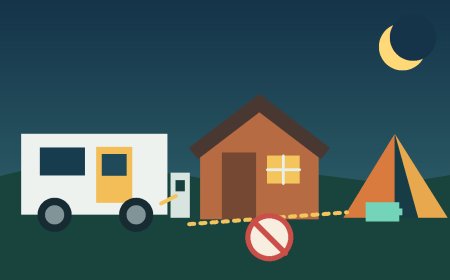
Campground potlucks run on friendly improvisation. Hot food does not. A foil-wrapped casserole can feel warm while its center has already slipped below a safe holding temperature, and a slow cooker plugged into a long extension cord may be doing less than anyone realizes.
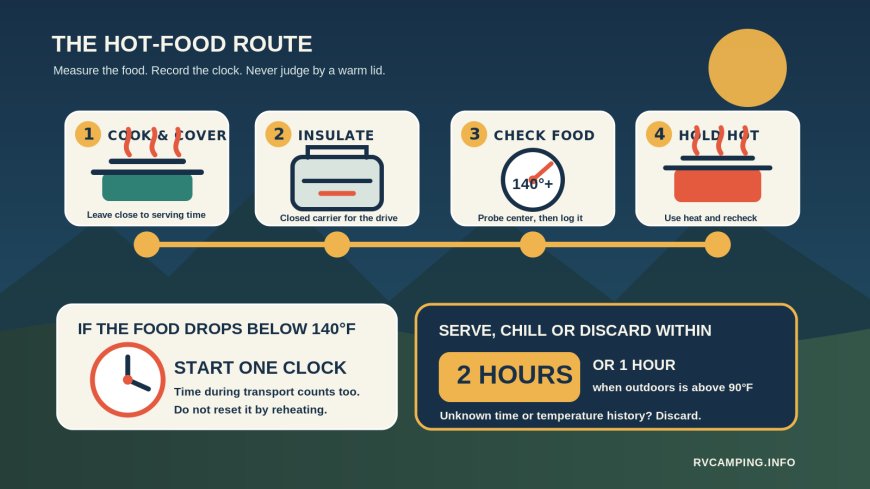
The short answer: Transport hot perishable food in a closed, insulated carrier, then verify it is still at least 140°F with a food thermometer. At the table, use a heat source that can keep the food at 140°F or warmer; insulation alone is not a serving plan.[1][2][3]
If the food is no longer being held at 140°F or warmer, start one shared clock. Serve, chill or discard it within two hours, or within one hour when the outdoor temperature is above 90°F.[2][3][4]
Give each dish its own clean utensil, replace nearly empty pans instead of topping them off, label ingredients, and discard perishable food when its time or temperature history is missing.

The carrier gets the dish to the table. A verified heat source and an honest clock get it through service. Original illustration by RVCamping.info.
Choose a route before the dish leaves the RV
A hot dish needs one of two plans. Either it stays at 140°F or warmer from the kitchen through service, or it travels cold at 40°F or below and gets reheated on site before going into a hot holder. USDA's consumer guide for group meals says hot food should travel well wrapped in an insulated container and remain at or above 140°F. For make-ahead food that was chilled, the guide calls for reheating to 165°F.[1]
The hot route works best for a short drive and a dish that can leave the stove just before departure. The cold route is usually easier when the gathering is far away, the arrival time is uncertain, or the campsite has a dependable way to reheat food quickly. Do not ask a chafing dish, warming tray or slow cooker to reheat a cold casserole. USDA warns that those devices may leave reheating food in the 40°F-to-140°F range too long.[1]
Write the route on a piece of tape stuck to the lid:
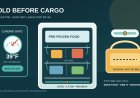
- HOT: packed at _ / checked at _ / result ____°F
- COLD: cooler check ____°F / reheat to 165°F / then hold at 140°F+
That scrap of tape is more useful than a general promise that the food was "just made."
Pack hot food for the drive, then measure it
Finish cooking close to departure. Put the food into a clean, lidded container that will not leak, wrap or bag it for insulation, and keep the carrier closed. FDA and USDA both recommend a well-wrapped hot dish in an insulated container for transport.[1][2]
An insulated carrier slows heat loss; it does not prove the food stayed hot. At the campground, open it at the serving station and check the center of the food with a clean food thermometer. For a deep pot of chili, stir first and check more than one place. For a casserole, probe the thickest central area without touching the pan. CDC notes that appearance and texture cannot tell you whether food reached a safe temperature; a thermometer is the check.[4]
If the reading is 140°F or warmer, move the dish straight into a preheated hot-holding setup. If it is below 140°F and you know exactly when verified hot holding ended, the food is on the time-control clock described below. If you cannot establish that time, do not guess from how warm the lid feels. Discard it.
For a chilled dish, keep it at 40°F or below during travel, then use a stove, oven or microwave to reheat it to 165°F before placing it in the holder.[1] Check the actual food, not the appliance dial.
A hot holder holds; it does not cook
FDA's buffet guidance sets the consumer hot-holding target at an internal temperature of 140°F or warmer and recommends checking with a food thermometer. Chafing dishes, slow cookers and warming trays can hold food, but FDA warns that some warmers only reach 110°F to 120°F.[3]
At a campsite, the setup needs more than a plug:
- Confirm power. Check the campground pedestal and the appliance instructions before running a slow cooker or electric warming tray. Avoid an improvised cord route through puddles or foot traffic.
- Preheat the holder. Have it hot before the food arrives. A room-temperature crock steals heat from the meal.
- Protect flame-based equipment. Use a stable, level surface and follow the equipment maker's clearance and fuel instructions. Do not enclose a flame or use it inside an RV unless the appliance is specifically approved for that use.
- Check the food. Stir soups, beans, sauces and chili before taking a reading. Check dense dishes in the middle. Record the time and temperature.
- Keep the lid on. Open for serving, then close it. Wind and repeated lid lifting cool the surface quickly.
Check often enough to catch a failing setup while there is still a documented decision to make. Thirty-minute checks are a practical host routine, not a federal interval. Use a small log: time / dish / temperature / action.
The two-hour rule is a clock, not a feeling
FDA says picnic food should not remain between 40°F and 140°F for more than two hours, or more than one hour when the outdoor temperature is above 90°F. Food left longer should be discarded.[2] FDA's buffet guidance repeats the two-hour rule and the one-hour hot-weather limit for perishable food that is not being kept hot or cold.[3] CDC gives the same two-hour and one-hour limits.[4]
For this potluck plan, start the clock when any of these happens:
- the dish leaves verified hot holding and is set out without heat;
- a thermometer first finds the dish below 140°F and the prior check was at or above 140°F;
- the heat source fails; or
- the dish arrives below 140°F and the cook can document when it left active heat.
Time is cumulative. Forty minutes during transport plus another fifty minutes on an unheated table equals ninety minutes under the federal time limit.[2][3] Moving the pan back onto a warmer does not erase that history.
If the outdoor temperature is 90°F exactly, federal consumer wording varies slightly by page: FDA's outdoor page says the shorter limit applies when temperatures are above 90°F, while a CDC page says exposure above 90°F.[2][4] This article therefore uses the officially supported wording "above 90°F." A host can choose the one-hour limit at 90°F as a more conservative house rule.
Do not stretch the clock because a dish still smells good. The rule concerns time and temperature, not spoilage clues. When the limit is reached, discard the food rather than offer one last round.
Serve small pans and swap them cleanly
One full steam-table pan encourages a host to keep the same food in service all afternoon. Smaller pans make temperature control easier and give late arrivals a fresh portion. FDA recommends small buffet portions and replacing serving dishes during the event; it also says not to add new food to an already filled dish.[3]
Keep reserve food under verified hot holding. When the serving pan is nearly empty, remove it and bring out a fresh hot pan. Do not pour a new batch over the scraps. USDA's group-meal guide likewise says to remove the old container and replace it with a fresh one.[1]
Give every dish its own clean ladle, spoon or tongs. Park the utensil on a clean rest with the handle out of the food. Bring spares in a covered bin. Replace a utensil if it falls, touches another dish or is handled by the food-contact end. USDA advises clean containers and utensils for service and warns against reusing a plate that held raw meat, poultry or seafood until it has been washed in hot, soapy water.[1]
Keep the thermometer clean too. Wash its probe with hot, soapy water before and after checking food, following the thermometer maker's cleaning instructions. Do not move directly from a raw burger to the chili pot with the same unwashed probe.
Give allergens one brief, useful card
Temperature control and allergen communication solve different problems. Keeping macaroni and cheese at 140°F does not remove milk or wheat, and a dedicated serving spoon cannot undo shared-kitchen cross-contact.
Put a simple card beside each dish with its name, the cook's name or campsite, and a complete ingredient list that includes sauces, seasoning blends and toppings. FDA identifies nine major food allergens in U.S. law: milk, eggs, fish, Crustacean shellfish, tree nuts, peanuts, wheat, soybeans and sesame.[5] Homemade potluck cards are voluntary communication, not substitutes for regulated packaged-food labels.
Use one utensil per dish and keep the card with the pan when it is swapped. If a utensil migrates between dishes, tell guests and update the risk assessment; do not quietly put it back. A guest with a food allergy decides whether the shared setup is acceptable. For a fuller cross-contact plan, see RVCamping.info's campground potluck allergy guide.
Make discard calls before cleanup gets busy
Discard a perishable dish when:
- it has been below 140°F or otherwise without temperature control for more than two hours, or more than one hour above 90°F;[2][3][4]
- nobody can establish when hot holding ended;
- the transport carrier opens below 140°F and departure time or temperature history is unknown;
- the holder cannot maintain 140°F and the remaining time cannot be tracked reliably;
- raw meat, poultry, seafood, their juices, or a utensil used on them contacts the ready-to-eat dish; or
- the dish has been exposed to dirt, insects, chemicals, floodwater or another contamination that cannot be removed safely.
A brief dip below 140°F with a known timeline is different from an unknown afternoon on the table. If the clock is still within the federal limit, choose promptly: serve the food now, chill it in shallow containers within the remaining time, or reheat it rapidly to 165°F with a stove, oven or microwave and return it to a verified hot holder.[1] Do not treat reheating as permission to restart an expired clock.
Leftovers inherit the event's history. Save them only when the dish stayed under active temperature control or remained within the applicable time limit. Divide them into shallow containers and refrigerate promptly. CDC recommends shallow containers for warm or hot food and repeats the two-hour limit, shortened to one hour above 90°F.[4]
The host's five-minute heat check
Before the buffet opens:
- Hot dishes read at least 140°F in the food, not on the appliance dial.
- Each dish has a working heat source, lid and its own clean utensil.
- The temperature log shows the first check and the next check time.
- Any unheated perishable dish has a visible discard time.
- Ingredient cards remain attached to the correct pans.
- A trash bag or closed discard container is ready, so an unsafe pan does not drift back to the table.
The useful question at a campground potluck is not, "Does this still seem warm?" It is, "What did it measure, when did we measure it, and what happens next?" A thermometer, a written clock and smaller serving pans make that answer easy even when the picnic table is crowded.
Evidence note: This article applies U.S. consumer guidance from USDA FSIS, FDA and CDC. The 140°F hot-holding target, 165°F reheating target, two-hour rule and one-hour limit above 90°F come from the cited agencies. The tape label, 30-minute host check, temperature log and five-minute checklist are original RVCamping.info planning tools, not agency-mandated intervals or forms. Commercial, charitable or permitted food service may be subject to state or local food codes; organizers should check with the relevant health department.
Sources
What's Your Reaction?