











Safe campground breakfast eggs: a cooler-to-cleanup plan
Keep campsite eggs cold, avoid risky pooled batches, cook them fully, clean up with limited water and put leftovers on a firm clock.

Safe campground breakfast eggs: a cooler-to-cleanup plan
Quick answer: Keep shell eggs at 40°F or below in their carton, discard cracked or leaking eggs, and crack only what you are ready to cook. At camp, skip a big bowl of pooled raw eggs unless you use a pasteurized egg product and can keep it cold. Cook until whites and yolks are firm and scrambled eggs are not runny; egg dishes should reach 160°F. Wash egg-contact tools with hot, soapy water, then rinse and sanitize them. Refrigerate leftovers within two hours, or within one hour when the air temperature is above 90°F.[1][2][3]
Egg safety gets harder at a campsite for mundane reasons. The cooler warms every time somebody hunts for creamer. The same small table holds raw ingredients and clean plates. Water may come from a jug, and the dish station may be a walk away. A safe breakfast therefore depends less on a fancy recipe than on the order of operations.
Pack the cooler around a measured 40°F limit
The FDA tells consumers to store eggs promptly at 40°F or below and keep them in the original carton.[1] FoodSafety.gov also recommends the main refrigerator compartment rather than the door, where temperatures change more often.[3] The campground equivalent is a food cooler with a thermometer, enough frozen packs or ice, and a lid that stays shut.
Place the egg carton in a rigid, dry spot where cans and ice blocks cannot crush it. A lidded food container can protect the carton, but it does not replace refrigeration. Keep raw eggs away from ready-to-eat foods and from loose ice used in drinks. If possible, put beverages in a second cooler; frequent drink runs then do not warm breakfast ingredients.
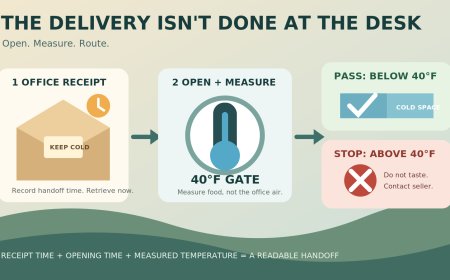
At the site, park the cooler in shade and open it only long enough to retrieve the next item. FDA picnic guidance specifically recommends shade, ample ice or frozen gel packs, and keeping the lid closed.[1] Read the thermometer rather than judging by whether a few cubes remain. If the cooler cannot stay at 40°F or below, eggs are a poor choice for the next morning.
Open the carton before packing and reject dirty, cracked eggs at purchase. If a shell breaks during travel, leaks onto the carton, or picks up cooler water, discard that egg rather than trying to wash it clean. FoodSafety.gov advises against washing eggs because splashing can spread germs around the work area.[3]
Set up a raw side and a cooked side
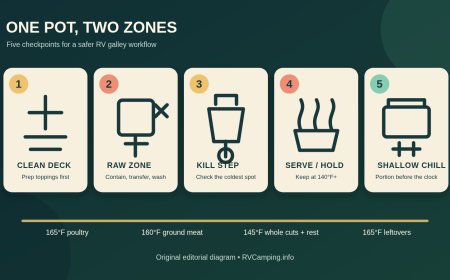
A picnic table has no built-in separation, so make one. Put the carton, cracking cup, raw-egg bowl and used utensils on one end. Put clean plates, toast, fruit and serving utensils on the other. Keep a small trash bag or rigid scrap container beside the raw side so shells do not travel across the table.
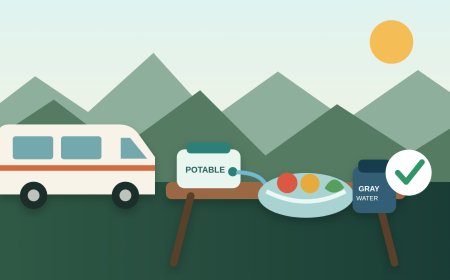
Wash hands with soap and water for at least 20 seconds before cooking and after handling uncooked eggs.[3] If the handwashing station is distant, reserve a clearly marked jug of potable water for hands and food-contact cleanup. A camp sink or wash basin should drain to an approved disposal point, not onto the campsite.
Crack each egg into a small cup before it reaches the skillet or mixing bowl. This campsite step limits the mess if one shell is broken or spoiled and keeps shell fragments out of the whole batch. Do not use the shell halves to separate eggs, and do not set a spoon that touched raw egg on a clean plate.
Do not pool breakfast eggs early
“Pooling” means breaking several shell eggs into one container. It is convenient for a crowd, but at camp it creates a larger raw mixture that must remain cold and clean until every portion is cooked. One contaminated egg can also expose the full batch.
For ordinary campsite service, crack eggs in small batches immediately before they go into the pan. If breakfast must be mixed in advance, use a pasteurized refrigerated egg product, keep it at 40°F or below, and pour out only the amount the pan can take. The FDA advises food-service operations to use pasteurized eggs or egg products for recipes that combine more than one egg when serving highly susceptible people, and for preparations held before or after cooking.[2] That guidance is a useful extra margin for campground groups, especially when children, older adults, pregnant people or anyone with a weakened immune system will eat.
Do not return unused egg mixture from a cup or squeeze bottle to its original container. Once a utensil, shell or hand has contacted it, treat the mixture as raw food that is already in service. Pack smaller containers if that helps the group avoid making more than the skillet can cook.
Cook for doneness, not for campfire color
A camp stove or griddle can run hot in the center and cool at the edges. Brown spots do not prove that the wet portions are done. FDA consumer guidance says to cook eggs until both white and yolk are firm; scrambled eggs should not be runny. Casseroles and other egg dishes should reach 160°F.[1]
For scrambled eggs, stir through the cooler edge zones and stop only when no liquid egg remains. For fried eggs, flip or cover the pan if that is what it takes to firm the yolk as well as the white. Use a food thermometer in thick egg dishes such as a skillet strata or breakfast casserole. Check more than one spot, avoiding the pan surface.
Pasteurized eggs reduce risk in recipes that would otherwise remain raw or undercooked, but they are not permission to ignore temperature control or dirty utensils. Guests at greater risk of severe foodborne illness should receive thoroughly cooked eggs made with careful separation and clean equipment.[1][2]
Serve each pan promptly. If a large group will eat in waves, cook smaller rounds instead of leaving one pan beside the fire. This shortens holding time and gives every batch a clear start and finish.
Use a limited-water cleanup sequence
Do not spend the last clean water discovering that the raw-egg bowl is still on the table. Budget the wash before lighting the stove. A compact setup needs potable water, soap, a wash basin, a rinse basin or controlled rinse bottle, an approved food-contact sanitizer used according to its label, clean paper towels or a drying rack, and a container for wastewater.
Use this order:
- Scrape food and shell pieces into trash.
- Wash raw-egg bowls, whisks, spatulas and work surfaces with hot, soapy water.
- Rinse away soap with clean water.
- Sanitize food-contact items according to the sanitizer label, including its concentration and contact time.
- Air-dry when practical. Keep cleaned gear on the cooked side of the table.
FDA guidance calls for hands, utensils, equipment and work surfaces to be washed with hot, soapy water before and after contact with raw eggs. Its food-service guidance adds a wash, rinse and sanitize sequence for utensils, equipment and work surfaces.[1][2] FoodSafety.gov likewise says to wash plates, utensils, cutting boards and counters that touched uncooked eggs.[3]
A paper towel can remove residue before washing, which saves water, but wiping alone does not clean or sanitize a whisk or bowl. Likewise, a quick cold-water swish leaves fat and egg film behind. If the site does not allow wastewater at the ground or fire ring, carry it to the campground's designated disposal point.
Put leftovers on a clock
Start the clock when cooked eggs leave active heat. FDA says cooked eggs and egg dishes should not remain unrefrigerated for more than two hours, or more than one hour when temperatures are above 90°F.[1] FoodSafety.gov gives the same limit for perishable food and recommends prompt refrigeration in shallow containers.[3]
At camp, the limit is a discard deadline, not a promise that a lukewarm cooler will rescue the food at the last minute. Portion leftovers into shallow containers and return them to a verified 40°F-or-colder cooler promptly. Label the container with the day if the trip lasts more than a night.
Refrigerated cooked egg dishes should be used within three to four days, and FDA says to reheat them thoroughly to 165°F.[1] Hard-cooked eggs have a one-week refrigerated quality window.[1] When storage temperature or elapsed time is uncertain, discard the food. Smell and appearance cannot reconstruct the temperature history.
A five-minute breakfast closeout
Before anyone leaves the table, one person should check five things: the raw carton is back in the cold zone, no pooled mixture remains, leftovers are cooling in shallow containers, egg-contact gear has entered the wash sequence, and the cooler thermometer still reads 40°F or below.
That routine fits campground constraints because it removes decisions. The cook does not have to remember which spoon was clean or when the skillet came off the flame. The safe path is built into the table layout, batch size and cleanup order.
Sources
- U.S. Food and Drug Administration: What You Need to Know About Egg Safety — consumer storage, preparation, serving, transport and leftover guidance; content current March 5, 2024.
- U.S. Food and Drug Administration: Assuring the Safety of Eggs and Menu and Deli Items Made From Raw, Shell Eggs — pooled-egg, pasteurization and cleaning guidance; content current March 7, 2022.
- FoodSafety.gov: 4 Steps to Food Safety — federal clean, separate, cook and chill guidance; reviewed September 18, 2023; archived official-page snapshot retrieved for this package.
What's Your Reaction?