



Safe foil-packet meals at an RV campsite
A campsite workflow for separating raw ingredients, checking foil packets with a thermometer, venting steam safely, chilling leftovers, and following fire rules.

Safe foil-packet meals at an RV campsite
By Romana
Category: Cooking
A foil packet hides the food at the exact moment a cook usually relies on sight. The shiny parcel may hiss, puff and smell done while a thick piece of chicken in the center is still below its safe temperature. Treat the packet as a small covered cooker: keep raw ingredients contained, build packets that can heat evenly, open one carefully, and use a food thermometer before serving anything.
The short answer: Make ready-to-eat items before opening raw protein. Build packets on a raw-only tray, mark different proteins, cook over equipment permitted at the campsite, then check the thickest pieces in more than one packet. Poultry needs 165°F; ground meat and sausage need 160°F; whole cuts of beef, pork, lamb and veal need 145°F followed by a three-minute rest; fish needs 145°F. Open hot foil away from faces and bare skin. Chill safe leftovers in shallow containers within two hours, or one hour when the outdoor temperature is above 90°F.[1][3]
This is a safety workflow, not a recipe collection. Seasoning, vegetables and packet shape can change. The raw-to-cooked handoffs should not.

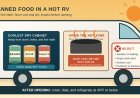
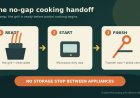
Foil conceals browning and traps hot liquid, so the thermometer check happens before the serving handoff. Original illustration by RVCamping.info.
Why foil packets need their own routine
Foil is useful at camp because it contains drips and reduces cookware. USDA's camping guidance even lists foil wrap and foil pans among campsite cooking options.[2] The tradeoff is poor visibility. Packet size, food thickness, coal depth, burner output, wind and placement on the grate can all change how quickly the center heats. A browned edge or tender potato does not prove that every piece of protein is ready.
Do not make cooking time the safety test. FoodSafety.gov says to use a thermometer for meat, poultry and seafood, and its chart supplies the minimum temperatures.[1] In practice, that means sacrificing one packet's tidy seal for a real measurement. A slightly rumpled dinner is better than an untouched parcel with an unknown center.
Step 1: make the clean side first
Set the picnic table before raw meat comes out of the cooler. One end is the clean side: plates, forks, bread, salad, garnishes, drinks and the container that will receive cooked food. The other end holds the raw-protein package, the packet-building tray and raw-contact tools.
Prepare vegetables and any ready-to-eat toppings on the clean side first. Close or cover them. Then move the board, knife and mixing bowl into the raw zone. FoodSafety.gov calls for separate plates and utensils for raw and cooked food, along with hot, soapy washing for equipment that touched raw meat, poultry, seafood or eggs.[3]
Keep raw packages in sealed bags below ready-to-eat food in the cooler. USDA recommends a separate cooler for raw meat or poultry when possible; in one cooler, raw food belongs beneath foods that will not be cooked.[2] Bring safe water for handwashing and cleanup rather than counting on a campsite spigot or nearby stream.
A workable two-tray system takes little room:
- The RAW tray holds opened packages, the building bowl, raw tongs and unfinished packets.
- The DONE tray stays covered and empty until a packet passes the thermometer check.
- The thermometer case stays on the clean side. Only the probe crosses the boundary, and it is cleaned between uses.
Wash hands after raw handling and before touching grill controls, cooler handles or clean foil. Do not carry uncooked packets out on the same platter that will bring dinner back.
Step 2: build for even heating
Make packets similar in size, but do not assume that makes them cook identically. Cut the protein into pieces of reasonably consistent thickness. Avoid hiding one thick chunk beneath a pile of faster-cooking vegetables. If two proteins require different minimum temperatures, give them separate packets and label the foil with a blunt utensil or an exterior tag before cooking.
Do not mix raw chicken into a packet that you intend to judge by a lower-temperature ingredient. A mixed packet must reach the highest minimum that applies to anything raw inside it. A chicken-and-vegetable packet therefore needs a 165°F poultry reading, not the 145°F target used for a whole pork chop or fish.[1]
Fold a packet securely enough to contain juices during normal handling, but leave room for heat to circulate around the food. Do not create a tight, swollen pressure pouch. Place every completed raw packet on the RAW tray. If the foil tears, rebuild it over that tray rather than patching it over the clean side of the table.
Label special packets before they become identical silver shapes. Mark poultry, ground meat, fish, vegetarian meals and allergen-controlled packets separately. The label is a routing tool, not proof of doneness.
Step 3: cook where flame is allowed
Check the current campground and land-manager rules before lighting anything. A fire ring at the site does not guarantee that wood, charcoal or a portable grill is allowed today. Joshua Tree's National Park Service guidance, for example, limits fires to designated metal rings and grills, tells visitors to check current conditions for restrictions, and requires someone to remain present until a fire is fully out.[5] Use that as a safety example, not as a rule for every campground.
Read the rule for the exact fuel and device. Wood, charcoal and a propane stove may receive different treatment under the same restriction. Follow campground directions, posted closures and the appliance maker's clearance and lighting instructions. If the answer is unclear, use a no-flame meal rather than improvising a cooker beside the RV.
Keep foil packets on a stable grate or grill surface, not loose among flames where they can split or disappear under coals. Stay with the cook. Keep dry paper plates, packaging, towels and spare foil away from the heat. Tongs should be long enough to turn a packet without putting a hand over the fire.
Wind and an uneven coal bed create hot and cool spots. Rotate packet positions as needed, but remember that rotation is a cooking technique, not a measurement. The thermometer decides when the protein is safe.
Step 4: check a packet without serving it
Move one packet to a stable, heatproof surface. Keep everyone else back. Use tongs to lift the upper fold or cut a small test opening on the side facing away from you. Pause while the first rush of steam escapes. Hot condensation and rendered juices can spill from the low edge, so keep the packet level and never hold it over a lap.
RVCamping.info recommends treating every newly opened packet as a burn hazard: wear a dry heat-resistant mitt, point the opening away from faces, and keep children and pets outside the work area. Steam can be hard to see in bright sun. Do not lean over the foil to smell it.
Insert a clean instant-read thermometer into the thickest piece of protein. With thin pieces, slide the probe in from the side so more of the sensing area sits in the food. Avoid measuring only the hot liquid pooled at the bottom or touching the foil with the probe tip. USDA notes that digital thermometers sense at the tip and that thin foods may need a sideways insertion.[2]
Check at least two of the thickest pieces in the test packet. Then test another packet from a cooler part of the grate. More packets deserve checks when portions differ in thickness or the heat source has obvious hot spots. Clean the probe before it goes into another packet and again before returning it to its case.[2]
Use these minimums:
| Food inside the packet | Safe minimum internal temperature |
|---|---|
| Chicken, turkey and other poultry, including ground poultry and poultry sausage | 165°F (74°C) |
| Ground beef, pork, lamb or veal; ground-meat sausage | 160°F (71°C) |
| Whole cuts of beef, pork, lamb, veal, bison or goat | 145°F (63°C), then rest 3 minutes |
| Fish, whole or fillet | 145°F (63°C) |
| Egg dishes | 160°F (71°C) |
| Leftovers being reheated | 165°F (74°C) |
These are minimum safety temperatures, not promises about texture. The FoodSafety.gov chart also gives appearance-based endpoints for shellfish: shrimp, lobster, crab and scallops should be pearly or white and opaque, while clams, oysters and mussels should open during cooking.[1] When packets contain shellfish, follow that chart and discard shells that remain closed.
If one reading is low, close the packet as well as practical and return it to heat. The fork, tongs, mitt and thermometer probe that touched undercooked food remain on the raw side until cleaned. Do not put the packet on the DONE tray just because someone has already opened it.
Step 5: open, serve and start the leftovers clock
Once a packet passes, move it to the DONE tray. Give each diner a plate or heatproof surface before opening the rest. Cut the top fold away from the body and let steam clear. Pour hot liquid deliberately; a tilted packet can send it across a picnic table.
Serve promptly. If packets must wait, keep the food at 140°F or hotter with equipment intended for hot holding.[3] A warm grill with fading coals is not automatically a safe holding setup. Either verify the food temperature or start the time limit.
Refrigerate perishable leftovers within two hours. Shorten that to one hour when the outdoor temperature is above 90°F. Transfer food out of the foil into shallow, covered containers so it can cool quickly, then hold it at 40°F or below.[3][4] Write the meal and date on the lid.
Do not stack a deep bundle of hot packets inside a small RV refrigerator and assume the foil will help them cool. Do not return cooked leftovers to the raw-food tray or tuck them beside a leaking raw package. USDA says a cooler-held leftover is safe only while the cooler still has ice; when the cold history is doubtful, discard the food rather than tasting it to decide.[2]
Reheat leftovers to 165°F and check the center with the thermometer.[1][2] Remove foil before microwave reheating unless both the appliance manual and packaging directions explicitly allow the setup.
Put out the heat source, not just dinner
Food cleanup does not end the fire watch. Follow the site's disposal instructions for coals and ash. National Park Service guidance says to apply water, leave no smoldering material and confirm a fire is cool to the touch; it also says not to bury or cover hot ashes with dirt.[5]
Turn off fuel at the appliance and cylinder as directed by the manufacturer. Let grills, grates, tongs and foil cool where they cannot be touched or ignite dry material. A greasy foil packet belongs in the trash only after it is cold. Never drop hot foil or coals into an RV trash bag, plastic campground bin or dry vegetation.
The packet handoff card
Before anyone eats, the cook should be able to answer six questions:
- Which tray and tools touched raw protein?
- Which packet contains which protein or allergen?
- Where are the thickest pieces?
- What temperatures did two packets from different heat zones reach?
- Which packets have passed and moved to the DONE tray?
- When did leftovers leave active heat, and where will they chill?
Foil packets work well at an RV campsite when the shiny wrapper is treated as a container, not a doneness signal. Build on the raw side, cook under the current fire rules, check the cold spots, vent away from people and move only verified packets to the clean tray.
Source note: RVCamping.info developed this original campsite workflow from USDA, FoodSafety.gov and National Park Service guidance. No third-party recipe was used or reproduced.
Sources
- Cook to a Safe Minimum Internal Temperature | FoodSafety.gov (FoodSafety.gov page reviewed November 21, 2024; source archived September 8, 2026)
- Food Safety While Hiking, Camping & Boating | USDA FSIS (USDA FSIS page archived September 4, 2026)
- 4 Steps to Food Safety | FoodSafety.gov (FoodSafety.gov page archived September 5, 2026)
- Grilling Food Safely | USDA FSIS (USDA FSIS page archived September 4, 2026)
- Fire Safety and Regime | Joshua Tree National Park (accessed September 11, 2026; location-specific rules presented as an example)
What's Your Reaction?