















Bagged salad at camp: protect the food that will not get a second chance
A compact-RV clean-zone workflow that keeps ready-to-eat bagged greens cold, separated from raw-food cleanup, and easy to discard when time, contact or a recall says they are unsafe.

Bagged salad at camp: protect the food that will not get a second chance
By Romana | October 12, 2026 | Cooking
Bagged greens can be the easiest part of an RV dinner. They can also become the item that picks up everything else happening in a cramped galley. The salad will not visit the grill after someone touches its leaves, sets its bag on the counter or drops the serving tongs beside a raw-chicken tray. That makes the clean side of the meal worth planning before the first package opens.
Quick answer: Keep unopened bagged salad cold at 40°F or below. Read the package: greens identified as pre-washed or ready to eat can be served without another wash.[1][3] Set up a clean salad station before raw-food cleanup starts. Wash hands with soap and running water, use clean utensils and a clean bowl, and keep the salad bag and toppings away from the sink, raw packages, used towels and the raw-food side of the table.[2][4] Once the meal begins, return the greens to cold storage promptly. Discard salad that has contacted raw meat or its juices, matches a recall notice, or has exceeded the applicable two-hour limit (one hour above 90°F).[3][5]

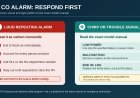
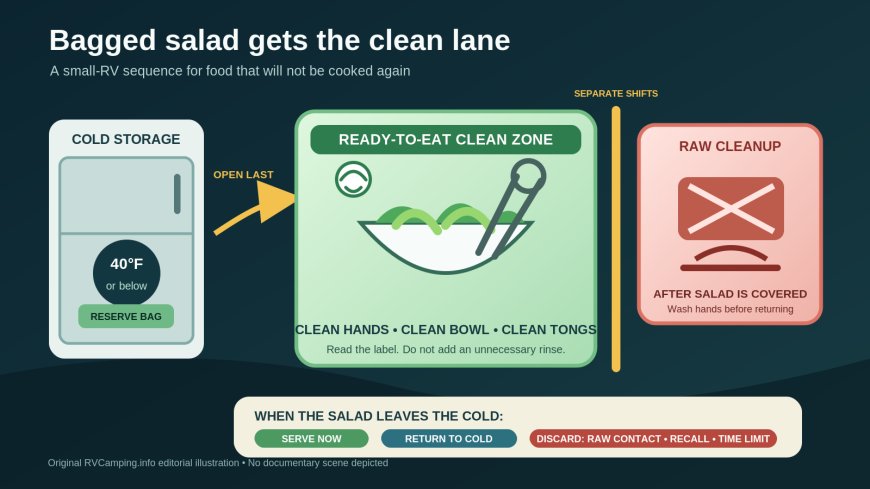
Give ready-to-eat greens their own clean route through the RV galley. Original RVCamping.info illustration.
The package label decides whether washing is a task
Do not treat every salad bag the same. Read the exact wording on the package while your hands and the bag are still clean. FDA says many packaged produce products state that they are pre-washed and ready to eat; those products can be used without another wash.[1] CDC says packages labeled ready to eat need no repeat wash; the agency also includes the terms "triple washed" and "no washing necessary."[3]
For those labeled products, skipping a campsite rinse is not cutting a corner. It avoids moving the greens through an RV sink or colander that may have just handled raw-food tools. USDA warns that if a person chooses to rewash pre-washed or ready-to-eat produce, the greens must stay away from unclean surfaces and utensils, especially anything exposed to raw meat, poultry, seafood or their juices.[4]
If the package does not say the greens are washed or ready to eat, follow the package instructions and current produce-washing guidance. That is a different workflow. This article is for salad sold as ready to eat, where the practical job is to preserve the clean condition of the food rather than run it through an uncertain wash station.
Never use soap, detergent or a produce wash as an improvised safety upgrade. USDA says those products are not approved or labeled by FDA for use on foods and may leave residues.[4] A rinse also cannot rescue recalled greens; CDC notes that no washing method removes every germ from leafy greens.[3]
Give the salad one clean square foot
A small RV rarely has a spare counter. It can still have a temporary clean zone. Choose one section of counter, a dinette placemat or a tray that can hold the salad bowl, clean tongs, toppings and the unopened bag. Clean the surface before those items arrive. Keep the station out of the sink splash path and beyond the reach of raw-food packaging.
This is an order-of-operations rule, not a claim that a particular number of inches creates safety:
- Put raw meat, poultry, seafood and eggs away or leave them sealed in their assigned prep area.
- Clear the salad zone of phones, keys, pet items, grocery bags and used towels.
- Wash hands with clean running water and soap. Lather the backs of hands, between fingers and under nails; scrub for at least 20 seconds; rinse and dry with a clean towel or air dry.[4]
- Bring out a clean bowl, clean tongs and only the toppings needed for this meal.
- Take the salad from cold storage last, open it over the clean zone and portion it.
- Close the bag or transfer unused greens to a clean covered container, then return them to refrigeration.
CDC says hands and surfaces should be washed often and riskier foods should be separated to prevent cross-contamination.[2] In an RV, sequence supplies the space that the galley lacks. The clean salad task happens as one short block, before the raw-food cleanup block begins.
Keep the outside of the bag on the dirty side
The leaves may be ready to eat; the package exterior is not a food-contact surface. Treat the bag like any grocery package. Do not lay its bottom inside the serving bowl. Do not use the bag as a temporary spoon rest. Do not grip the outside with a hand that will immediately reach inside.
A workable opening method is simple. Set the bag beside the bowl, open the top without touching the interior, and pour the greens into the bowl. If you must reach in, wash and dry your hands first. Use clean tongs for serving. Once raw-food handling begins, nobody touches the salad bowl, bag, toppings or tongs until they have washed again.
Pay attention to kit components. Dressing packets, cheese sachets and topping pouches travel inside some salad kits, but their exteriors still pass through hands during packing and meal prep. Open them without dragging them through the greens. If a packet leaks, looks swollen or is damaged, follow the manufacturer's directions and do not improvise a taste test.
The same rule applies to the package after it is empty. It goes to trash, not onto the cutting board as a scrap catcher. USDA notes that packaging from raw meat or poultry can carry contamination; keeping all disposable food packages out of the ready-to-eat zone removes an easy mix-up.[4]
Split prep and cleanup into separate shifts
The hardest moment is not serving. It is the few minutes after the burgers or chicken reach the grill and the RV counter is holding an empty raw package, a used board, a damp towel and a salad that somebody forgot to put away.
Use two shifts:
Shift 1: ready-to-eat prep
Prepare and cover the salad. Put unused greens and perishable toppings back into a refrigerator or cooler that is holding 40°F or below. FDA specifically tells consumers to refrigerate packaged produce and keep perishable produce at 40°F or colder.[1] Move the covered serving bowl to the dining table if it will be served immediately.
Shift 2: raw-food cleanup
Remove the salad station from the work path. Then collect raw packaging and raw-food tools. Wash hands after touching them. Clean the raw prep area and sink before either can return to ready-to-eat use. CDC identifies cross-contamination as germs moving from food to hands, surfaces or other foods; its prevention guidance separates raw items from foods that will not receive a cooking step.[2]
Do not make one damp dishcloth responsible for both shifts. A clean single-use towel for hand drying is easier to control at camp. If reusable towels are used, assign them deliberately and remove any towel that touched raw packaging, raw juice or the raw-work surface.
Start the clock when cold control ends
Bagged salad belongs in cold storage during transport and at camp. FDA advises buying bagged greens only when they are refrigerated or surrounded by ice and refrigerating packaged produce after purchase.[1]
For service, use the federal time limits as decision points rather than trying to judge by appearance. CDC's leafy-greens advice says to refrigerate greens within two hours, or within one hour when exposure is above 90°F, such as in a hot car or at a picnic.[3] The one-hour limit applies to the actual exposure conditions; it is not triggered merely because the campsite is outdoors.
Write the time on a small card when the salad leaves cold storage. Then choose one branch:
- Serve now: Put out only the portion the group is likely to eat. Keep the reserve bag cold.
- Return to cold: Cover and refrigerate the salad before its limit, using clean hands and a clean lid.
- Discard: Throw it away once the applicable limit has passed. Do not reset the clock by adding ice, putting the bowl back in the refrigerator or mixing it with a fresh bag.
This timing card is an RVCamping.info operating tool, not a separate federal rule. Its purpose is to keep a real start time from turning into a campsite guess.
Make discard decisions without a committee meeting
Throw away the greens when any of these conditions applies:
- raw meat, poultry, seafood, eggs or their juices touched the greens, bowl or serving utensil;
- a hand moved from raw-food handling or cleanup into the salad without a proper wash;
- the salad exceeded two hours out of refrigeration, or one hour when exposed above 90°F;[3]
- the package matches the brand, product, size, UPC, lot code or date in an active recall notice; or
- the package is damaged in a way that makes its contents or history uncertain.
Do not smell or taste the salad to settle a cross-contamination or recall question. The decision comes from the contact history, elapsed time and package identifiers, not whether the leaves still look crisp.
When a recall appears, compare every identifier in the official notice. A brand name alone may cover products that are not included, while a matching product name without the listed lot may also be outside the recall. FDA's recalls page carries public notices for FDA-regulated products and points readers to archived and more complete listings.[5] Follow the disposal or return instructions in the specific notice. Do not wash and serve a matching product.
If recalled greens were stored in the RV refrigerator, cooler or produce bin, follow the cleaning instructions in the notice and current agency guidance before loading new ready-to-eat food. Keep the package, receipt or a clear photo only if the notice asks for identifying information, and contain it so nobody serves it by mistake.
A one-tray RV salad kit
Keep the clean workflow together so nobody scavenges through the raw prep area halfway through dinner:
- one washable tray or clean placemat;
- one salad bowl with a lid;
- one pair of serving tongs;
- soap, potable running water and a clean drying method for handwashing;
- a marker and reusable timing card;
- a refrigerator or cooler thermometer;
- a clean covered container for an opened bag; and
- a phone bookmark for FDA recalls.
The tray does not sanitize anything. It gives the crew a visible boundary and makes the clean pieces easy to move before raw cleanup begins. Wash it after use according to its material and the product directions for any cleaner or sanitizer.
The 45-second pre-dinner check
Before opening the salad, ask:
- Does the label identify the greens as already washed or ready to eat?
- Is cold storage at 40°F or below?[1]
- Has anyone checked the current recall notice page for a questionable package?[5]
- Is the salad zone clean and outside the raw-work and sink-splash paths?
- Are the bowl, lid, tongs and topping tools clean?
- Have the preparer's hands been washed and dried properly?[4]
- Can unused greens go straight back to cold storage?
- Is someone recording when the serving bowl leaves refrigeration?
Bagged salad is convenient because it needs almost no preparation. Preserve that advantage. Open it once, in a clean place, with clean hands, then get the reserve portion cold before the raw-food mess takes over the galley.
Evidence note: FDA, CDC and USDA provide the label, refrigeration, separation, handwashing, time-limit and recall guidance cited above. RVCamping.info developed the one-square-foot clean zone, two-shift sequence, package-opening method, timing card and one-tray kit as small-RV workflow tools. They are practical controls, not additional federal requirements.
Sources
What's Your Reaction?