








Crossing the U.S.-Canada border in an RV: audit the pantry and firewood first
A cabinet-by-cabinet plan for checking food, plants, firewood and pet paperwork before an RV crosses the U.S.-Canada land border.

Crossing the U.S.-Canada border in an RV: audit the pantry and firewood first
By Romana
Planning note (September 16, 2026): Border admissibility can change with disease outbreaks, pest controls, product origin and port decisions. Recheck both countries' official tools shortly before travel. This is a packing method, not legal advice.
An RV kitchen hides border questions in more places than a suitcase does. The freezer may hold meat bought several stops ago. Produce rolls under a dinette bench. A bundle of firewood sits in an exterior bay. Pet food, herbs, seeds and fishing bait can be easy to forget.
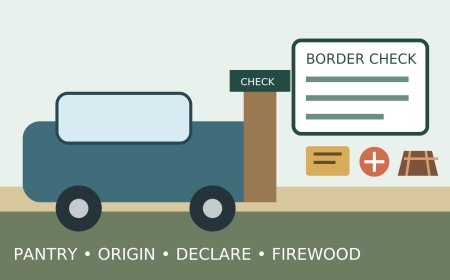
The useful rule is simple: inspect the RV cabinet by cabinet, keep packaging that proves origin, and declare agricultural items. Do not turn a general article about "allowed food" into a permanent shopping list.
Start with direction, origin and the exact item
The same food can receive a different answer depending on which way the RV is traveling, where the product was produced and whether a temporary animal- or plant-health restriction is active. Canada's food page says its requirements vary by item, country of origin and the province of entry.[3] U.S. border guidance likewise warns that many fruits, meats, dairy and poultry products may be restricted when arriving from Canada.[1]
Build two lists if the trip crosses twice:
| Crossing | Inventory to check | Official decision source |
|---|---|---|
| United States into Canada | Every food, plant, seed, animal product, pet item and firewood bundle | CFIA personal-use food guidance, AIRS when directed, and the border officer |
| Canada into the United States | Every agricultural or wildlife product, plant material, meat, produce and firewood | USDA APHIS/CBP traveler guidance and the inspecting officer |
Do not reuse the outbound answer for the return trip. Country of origin also is not necessarily the country where the item was purchased. A Canadian supermarket can sell produce grown elsewhere; a U.S. cooler can contain meat originally imported from another country.
Make a cabinet-by-cabinet border inventory
Open each food and storage space 24 to 48 hours before departure. Use a short inventory rather than trying to remember everything at the booth.
- Refrigerator and freezer: meat, eggs, dairy, produce, leftovers and homemade meals.
- Pantry: canned meat, dried food, rice, spices, honey, nuts and sealed snacks.
- Produce storage: fruit, vegetables, potatoes, herbs and any soil attached to them.
- Outdoor kitchen and coolers: bait, game meat, fish, ice chests and food forgotten after the last stop.
- Pet area: animal food, treats, chews and veterinary paperwork.
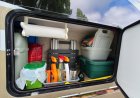
- Exterior bays: firewood, kindling, plants, seeds, soil and natural craft materials.
Canada requires travelers to declare food products, and its traveler guide tells people to check requirements before packing because the rules vary by product and origin.[2][3] Keep retail labels and receipts with questionable items. A sealed package is easier to identify than food transferred into an unlabeled container, though packaging alone does not guarantee admission.
For homemade meals, write the ingredients and the origin of the meat or produce on a note. The note does not make the meal admissible. It gives the officer a clearer description and helps you avoid an accidental vague answer.
Treat firewood as a separate decision
Firewood is not ordinary camping gear. It can move forest pests, and both countries regulate it. CBP's northern-border advisory says only qualifying heat-treated firewood from Canada may enter the United States and advises travelers to bring treatment documentation.[1]
Canada's CFIA directive says firewood imports are controlled and describes permit, certificate, treatment and inspection conditions. Its rules can also affect movement from a regulated pest area to another part of Canada.[4] That is far more complicated than checking whether a campground allows a campfire.
For an RV trip, the low-risk plan is to leave firewood behind and buy compliant wood near the destination. If you intend to cross with wood, check the current rules for the exact origin, species, treatment label and crossing. A campground receipt or a shrink-wrapped bundle should not be treated as automatic permission.
Use a three-bin packing decision
Sort questionable items before the RV reaches the queue:
- Keep and declare: the current official tool indicates the item may be admissible, and you have the label or paperwork needed to describe it.
- Use before crossing: a perishable item is uncertain and can be safely consumed before arrival.
- Leave behind: the item is prohibited, has unclear origin, lacks required documents, or is not worth delaying the trip over.
Do not discard food or firewood beside the inspection lane unless an officer directs you. Plan a legal disposal or donation stop before entering the port area.
A declaration is not a promise that an item will be admitted. It gives the officer the chance to inspect and decide. The CFIA warns that noncompliance can delay a traveler or keep an animal from entering, while its food guidance says products may be inspected at the point of entry.[2][3]
Add pet and farm-contact checks
This article focuses on pantry items and firewood, but a complete RV border plan also covers pets. Canada's traveler guide points owners to species-specific import requirements and warns that the right paperwork matters.[2] Check the pet's current documents, microchip or identification details, vaccination records and any food or treats traveling with it.
Record recent farm visits or animal contact too. Agricultural agencies may ask about those exposures because dirt on footwear or equipment can carry disease or pests. Clean boots, mats, tools and outdoor equipment before the crossing. Do not claim that cleaning replaces a declaration.
A 30-minute pre-border reset
Park somewhere safe before joining the line.
- Put passports and vehicle documents within reach.
- Place the written food, plant, pet and firewood inventory with the documents.
- Keep receipts, original labels and required certificates together.
- Make declared items accessible without unloading the road shoulder's worth of gear.
- Confirm the lane accepts your RV's height and width, and secure loose items before inspection.
- Answer the officer's questions directly. If you are unsure whether something counts, say what the item is and where it came from.
The goal is not to predict every booth decision. It is to remove forgotten items and weak descriptions before they become a problem. An honest, organized inventory is more useful than a screenshot of a broad travel blog.
What to recheck shortly before departure
Revisit the official pages within a day or two of travel, especially after an animal-disease or invasive-pest announcement. Search by the exact commodity and origin. Save the relevant page offline because cellular service near remote crossings can be poor.
Then repeat the inventory before the return crossing. Food bought during the trip creates a new set of origin and admissibility questions. So does leftover firewood.
Sources
- U.S. Customs and Border Protection: Be a Ready Traveler (accessed September 16, 2026).
- Canadian Food Inspection Agency: Travellers guide (accessed September 16, 2026).
- Canadian Food Inspection Agency: Bringing food into Canada for personal use (accessed September 16, 2026).
- Canadian Food Inspection Agency: Firewood import and movement requirements (accessed September 16, 2026).
What's Your Reaction?