








An overnight freeze is coming: use the tank, not the hose
A practical RV freeze-night plan: when to switch from the campground hose to the fresh tank, confirm winter water service, disconnect, and depart safely.

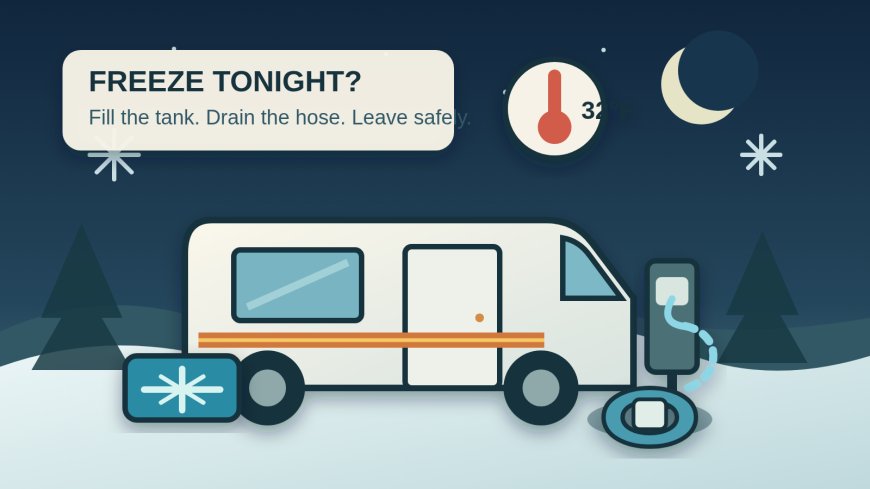
An overnight freeze is coming: use the tank, not the hose

A campsite can still be open after its water hookup has become a liability. When the forecast dips below freezing, the practical question is not whether your RV has a four-season sticker. It is which parts of the water system will sit outside, exposed and full, while you sleep.
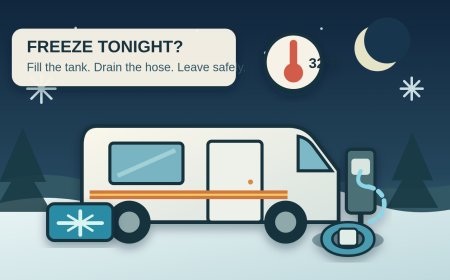
For a single cold night, the cleanest plan is usually to fill the fresh tank while the campground supply is working, disconnect and drain the hose before temperatures reach freezing, and use the onboard pump overnight. That removes the most exposed water line from the equation. It does not make every RV freeze-proof, so the rig's own manual still controls.
This is a short-event plan, not a substitute for full winterization. If sustained freezing is expected, the furnace cannot run reliably, or your manual says the plumbing must be winterized, follow the manual or move to a milder location.
Start with the low, not the alert name
The National Weather Service uses a Freeze Warning when the forecast calls for a prolonged drop below 32°F. A Freeze Watch can be posted 24 to 36 hours before a possible widespread freeze.[1] Those products are useful triggers, but they are written around freeze hazards to plants. They do not certify that an RV hose, hydrant or underbelly will be safe.
Read the hourly forecast for the campground itself. Note the forecast low, how many hours temperatures may remain at or below 32°F, wind, and when the temperature is expected to cross freezing. A brief 31°F forecast and a long night in the low 20s are different operating problems. Forecast error also matters, so do not plan to disconnect at the exact minute the chart touches 32.
Use the alert as a prompt to act before dinner, while there is daylight and the spigot still works.
Make the tank-versus-hose decision
An RV generally receives potable water in one of two ways: the fresh tank and 12-volt pump, or a pressurized city-water connection.[5] That creates a simple decision tree.
Choose the fresh tank for the night when:
- the campground allows tank filling and potable water is still available;
- you have enough fresh-tank capacity for drinking, cooking, toilet use and limited washing;
- the pump and 12-volt system work;
- the RV's manual permits cold-weather use under the expected conditions; and
- interior heat can run through the coldest hours, if the design depends on the furnace to protect plumbing.
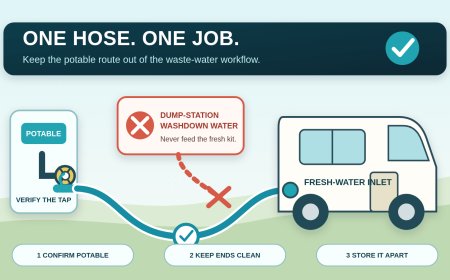
Fill only to the amount you need plus a reasonable reserve. Water is heavy, and you may be towing it out the next morning. Turn off the campground spigot, relieve hose pressure at a faucet, disconnect both ends, drain the hose fully, and store it where trapped water cannot freeze inside the fittings. Cap the RV inlet.
Keep a hose connected only when all of this is true:
- the campground explicitly permits it during the freeze;
- the pedestal and exposed fittings are protected by an approved arrangement;
- your hose and connection method are rated and installed for the conditions;
- the setup follows both campground rules and the RV/component manuals; and
- you can monitor the system rather than leaving a pressurized connection unattended.
Do not assume a heated hose protects the campground hydrant, filter, regulator, splitter or the short exposed fitting at the RV. One protected component does not protect the chain. The 2026 Keystone manual also warns owners not to leave an RV unattended on city water for extended periods and to use a pressure regulator.[5]
If any condition in that second list is uncertain, switch to the tank.
Confirm what the campground will actually provide
A reservation marked "water hookup" describes the site, not necessarily tonight's service. Official park pages show how sharply operations can change with season and weather. Utah's Dry Hollow Campground has water hookups in its normal season but turns off water at every campsite from October through April.[2] At Platter Flats on Lake Texoma, individual hookups are shut off after November while one frost-free hydrant remains available for filling tanks.[3]
The cutoff may also be weather-dependent rather than tied to a fixed date. Washington State Parks says water at Belfair can be shut off during an extended freeze, and Deception Pass turns campground water off in mid-November depending on weather.[4]
Ask the campground office or host four specific questions:
- Will water remain on at my site tonight, and may I stay connected?
- If site water is shut off, where is the nearest confirmed potable fill?
- Will the dump station and rinse water be operating at my departure time?
- Is an early shutdown possible before the published seasonal date?
Record the answer and the time you received it. If nobody answers, plan as if the site hookup may be unavailable. Fill before office closing, and keep enough water to leave without depending on a morning refill.
Disconnect before the cold arrives
Do not wait for a stiff hose or frozen coupling. Set your own disconnect time at least a few hours before the forecast crossing, then move it earlier if the campground announces a shutdown.
Use this sequence:
- Fill the fresh tank while the potable supply is confirmed.
- Check that the pump runs and water flows from every fixture you expect to use.
- Turn the campground spigot off.
- Open a cold faucet briefly to release pressure, then close it.
- Disconnect the hose at the RV and spigot. Drain it from end to end.
- Remove and drain exposed filters, regulators, splitters and quick-connect fittings.
- Cap the RV city-water inlet and store the drained equipment.
- Turn on the pump and check visible fittings for leaks.
This sequence is deliberately boring. It catches the two common planning failures: discovering the pump is not working after the office closes, and leaving a water-filled accessory outside after draining only the hose.
Protect the system you cannot see
Running from the tank protects the hose, not necessarily the RV. Plumbing layouts differ among brands and models, and Keystone's manual says winterization procedures can vary with the plumbing configuration.[5]
Before the trip, use the manual for the exact model and installed components to answer these questions:
- Are the fresh tank and supply lines inside a heated or enclosed space?
- Does freeze protection require the main furnace, rather than a portable heater?
- Are low-point drains, an exterior shower, a filter canister or a water heater exposed?
- Does the tankless water heater have its own freeze-protection requirements?
- What temperature limits or operating conditions does the manufacturer state?
Keep the furnace and its required power source available if the manual depends on it. Check propane and battery capacity before bedtime. A shore-power outage can become a plumbing problem if the furnace blower or control board loses power.
Do not improvise with open flames, unlisted heat sources or heat tape that the campground or equipment maker has not approved. If you cannot meet the manufacturer's cold-weather conditions, drain and winterize as directed or leave before the freeze.
Decide whether one cold night has become a winterization event
Switch from the overnight tank plan to full winterization when the cold is deeper or longer than the RV is designed to handle, the RV will be unheated, water service has failed, or you will leave the rig unattended.
Winterization is model-specific. Keystone's published procedure includes draining water lines and the fresh tank, shutting down and draining the water heater, and addressing low-point drains; it directs owners of tankless units to the appliance manual.[6] The manufacturer's full procedure may also cover filters, outside showers, refrigerator water lines, washers, toilets, traps and black-tank flush plumbing. Do not treat "I drained the hose" as winterization.
Use only the method and pressure limits in your manuals. If the procedure is unfamiliar, arrange dealer or mobile-tech help rather than learning under a falling thermometer.
Make the morning departure independent of campground water
The safest departure plan assumes the spigot and dump-station rinse water will still be off.
Before bed, stow the freshwater hose and accessories, secure loose exterior items, and set out gloves and a light. In the morning, inspect the campsite on foot. Look for ice around the pedestal, steps, hitch, leveling equipment and dump connection. Do not pull a hose or cable loose if it has frozen to the ground; thaw it by an approved method or wait.
If you need to dump, confirm that the station is open before breaking camp. Never count on a closed or winterized station for flushing. Carry enough fresh water to reach the next verified service point, and choose that point before leaving.
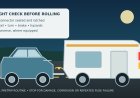
Then run a short departure check:
- Pump off; faucets closed.
- City-water inlet capped; hose, filter and regulator aboard.
- Water heater in the correct operating or drained state for your system.
- Tank levels compatible with the drive and the RV's cargo limits.
- Steps, jacks, stabilizers, slideouts and awnings fully stowed.
- Tires, hitch or towbar, lights and safety connections checked.
- Route reviewed for overnight ice, snow and wind.
If ice makes the campsite unsafe, delay departure. A checkout time is not a reason to work under an RV on slick ground or tow onto untreated roads. Tell the campground office what is happening and leave when the rig and route are safe.
The one-page freeze plan
For an ordinary overnight freeze, make the decision by late afternoon:
- Forecast: Read the hourly low and duration, not just the alert label.
- Service: Confirm site water, tank-fill and dump-station status with the campground.
- Supply: Fill the onboard tank while potable water is available.
- Exposure: Disconnect, drain and stow the hose and every inline accessory before freezing.
- Rig limits: Follow the exact RV and appliance manuals; keep required heat, propane and power available.
- Departure: Assume morning water is unavailable, inspect for ice and leave only when the rig and route are safe.
The useful distinction is not "hookups" versus "dry camping." It is exposed, pressurized water versus a smaller supply kept in the part of the RV designed to carry it. For one cold night, reducing exposure early is usually easier than trying to rescue a frozen connection at dawn.
Sources
What's Your Reaction?