











Read the fish pouch before you thaw it at camp
A label-first workflow for keeping frozen vacuum-packed fish safe, choosing the correct thawing lane and cooking it at an RV campsite.

Read the fish pouch before you thaw it at camp
By Romana
Category: Cooking
A vacuum-sealed fish fillet is easy RV food: flat in the freezer, tidy in the cooler and quick in a skillet. The packaging also changes the thawing decision. FDA treats vacuum and other reduced-oxygen packaging as a special control point because low-oxygen conditions can support Clostridium botulinum growth and toxin formation if the product is mishandled.[1]
The short answer: Keep the fish frozen until you have read the handling statement on its own pouch. Some frozen reduced-oxygen packages direct you to thaw under refrigeration immediately before use. Others direct you to remove the fish completely from the package before thawing. Follow the exact instruction on your product; do not turn a freezer pouch into an unplanned refrigerator-storage container.[1]

This is a label-reading problem first
“Vacuum packed” describes more than a neat shape. FDA’s import guidance groups vacuum packaging with other reduced-oxygen packaging. With little oxygen moving through the material, the package can create conditions relevant to botulism control.[1]
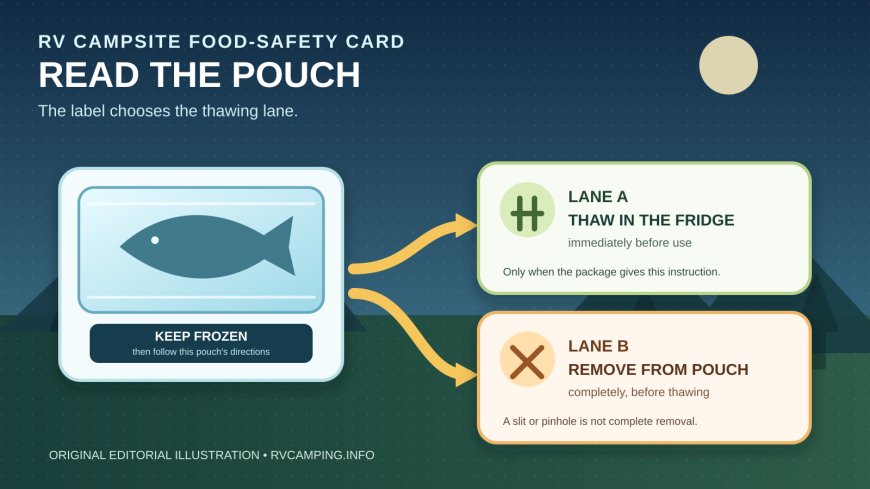
That does not mean every sealed fish pouch is unsafe. It means the freezing and thawing directions are part of the product’s safety system. FDA says frozen raw fish in reduced-oxygen packaging should carry a two-part direction: keep it frozen, then either thaw it under refrigeration immediately before use or remove it from the package before thawing.[1]
Read the individual pouch, not just the outer carton. Do this at the store or before the RV freezer gets packed. If the directions are hidden under frost, photograph them or write them on the meal plan while they are still legible.
A handwritten “fish” label on a repacked pouch is not enough. Keep the manufacturer’s instructions with the food. If you no longer know what the original package required, do not improvise a thawing method and assume that cooking will repair the uncertainty.
Pack it as frozen cargo
FDA tells shoppers to avoid frozen seafood in an open, torn or edge-crushed package. Heavy frost or ice crystals may indicate long storage or a thaw-and-refreeze history, while frozen flesh should be hard rather than bendable.[2]
For an RV trip, give the fillet a spot that protects both temperature and the printed directions:
- Leave it in its labeled retail pouch while it is frozen.
- Put that pouch in a rigid secondary container or leak-resistant bag so cooler water and other packages cannot abrade it.
- Keep it in the freezer, or in a cooler that is actually maintaining frozen food, until the planned thaw begins.
- Do not move it to the refrigerator days early simply to free freezer space.
FDA’s seafood guidance says to place seafood on ice or in a refrigerator or freezer within two hours of purchase, or within one hour when it is exposed to temperatures above 90°F.[2] A stop for fuel and groceries can quietly use most of that window. Buy the fish late in the shopping run and return it to controlled cold storage before sightseeing or setting up camp.
Choose the lane printed on the package
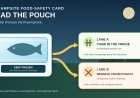
Set the pouch on a clean tray and find the handling statement before cutting anything. Then use the lane that matches the wording.
Lane A: thaw under refrigeration immediately before use
If the package specifically says to keep frozen and thaw under refrigeration immediately before use, plan backward from dinner. Put the still-frozen pouch on a tray in a refrigerator that is holding 40°F or below, away from ready-to-eat food. FDA’s general seafood advice is to thaw frozen seafood gradually in the refrigerator overnight.[2]
“Immediately before use” is not a permit to park the thawed pouch in the refrigerator for several days. Start the thaw when you can cook the fish as soon as the directed thaw is complete. If your small RV refrigerator swings above its safe setting during travel, use a measured cold source rather than the refrigerator door and verify the temperature with an appliance thermometer.
Lane B: remove completely from the package before thawing
If the pouch says to remove the product from the package before thawing, take the fish all the way out. Cutting one corner, poking a hole or peeling the seal halfway is not the same instruction. Transfer the fish to a clean, food-safe container, cover it, and thaw it in the refrigerator.
Keep the discarded pouch away from clean plates. Wash hands, the opening tool and any surface touched by raw fish or liquid before handling cooked food.
FDA also gives two quick-thaw methods for seafood in general: immerse seafood sealed in a plastic bag in cold water, or use a microwave’s defrost setting and stop while the fish remains icy but pliable; microwaved seafood should be cooked immediately afterward.[2] A vacuum-packed fish label may impose a more specific direction. The package wins. If it requires complete removal before thawing, move the fish to a suitable clean bag or container rather than submerging the unopened retail vacuum pouch.
Do not create a third lane on the counter
Counter thawing is a poor fit for an RV. Sun through a window, a warm dinette and a delayed hike can heat the outside while the center still feels frozen. FDA’s consumer seafood page gives refrigerator, cold-water and microwave methods, not a countertop method.[2]
The intact pouch can also hide your mistake. FDA notes that botulinum toxin production may occur before a vacuum-packed raw fish shows spoilage that a consumer would reject.[1] Smell, appearance and a still-tight seal cannot prove that a mishandled pouch is safe.
Treat these as stop signs:
- the fish arrived soft when it should have stayed frozen;
- the package is torn, open, badly crushed or leaking;
- the pouch spent an unknown period warm in a vehicle or on a picnic table;
- the original thawing direction is missing;
- the fish was thawed in the sealed pouch despite a direction to remove it first.
When the time and temperature history cannot be reconstructed, discard the fish. Do not taste it to investigate.
Stage the skillet before the thaw finishes
A cramped galley works better when the cook step is ready first. Set out a clean plate for cooked fish, a food thermometer, the pan and one raw-fish utensil. Keep salad, bread and garnishes outside the raw-fish area.
FDA says most seafood should reach an internal temperature of 145°F. Check the thickest part of the fillet rather than judging only by browning.[2] If the fillet is too thin for a reliable side entry, follow the thermometer maker’s method for thin foods and take more than one reading.
Move the cooked fish to the clean plate. The tray that held the pouch and the utensil that touched raw fish do not become serving equipment until washed. Return extra cooked seafood to refrigeration promptly; FDA’s seafood guidance uses the same two-hour limit, shortened to one hour above 90°F.[2]
The five-line note for the RV meal board
Write this beside the dinner plan:
- READ: Find the thawing statement on the individual pouch.
- FREEZE: Keep the product frozen until the planned thaw starts.
- CHOOSE: Refrigerated in-pouch immediately before use, or completely out of the pouch, exactly as directed.
- COOK: Prepare without delay and verify 145°F in the thickest part.
- RESET: Wash raw-contact hands, tools, tray and surfaces; chill cooked leftovers on time.
The useful habit is simple: decide the thawing method while the package is still frozen and the label is still in your hand. At camp, that decision is much easier to follow than one made over a half-thawed mystery pouch at dinnertime.
Evidence note: FDA provides the reduced-oxygen packaging hazard, labeling alternatives, package-condition checks, cold-storage limits, thawing methods and cooking temperature. The two-lane card, RV packing sequence and galley staging are original RVCamping.info workflow tools. The exact product label remains controlling.
Sources
What's Your Reaction?