




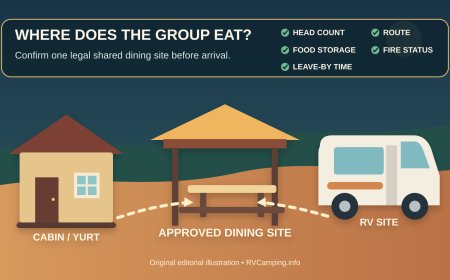

Where Does the Group Eat? A Shared-Dining Plan for RV-and-Cabin Stays
A rule-confirmation and shared-meal plan for choosing a legal gathering place when an RV group splits between campsites, cabins and yurts.

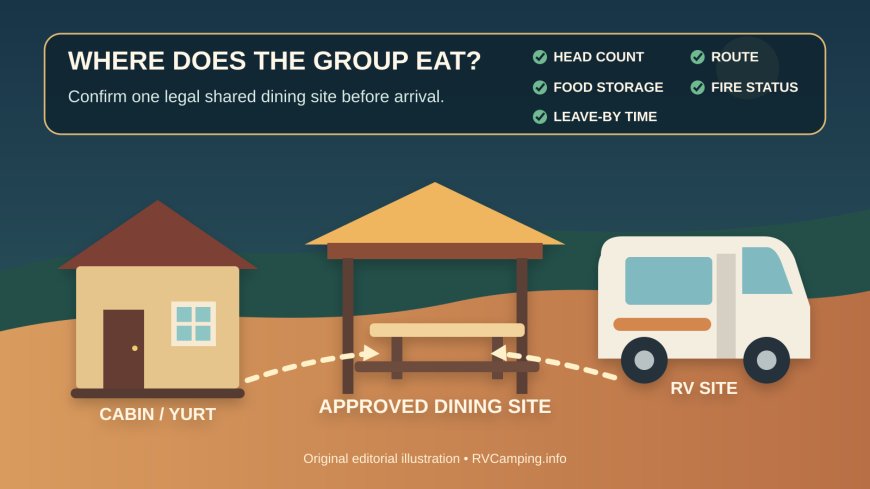
Where does the group eat? A shared-dining plan for RV-and-cabin stays
By Romana | October 7, 2026 | Glamping
A mixed group can hold two valid reservations and still have nowhere legal or comfortable to eat together. The RV site may cap the camping party below the group's head count. The yurt may sleep five but offer one outdoor table. A nearby shelter may be reservable, seasonal or closed at quiet hours. “We’ll meet at the RV” is not a plan until the property confirms that the whole group may gather there.
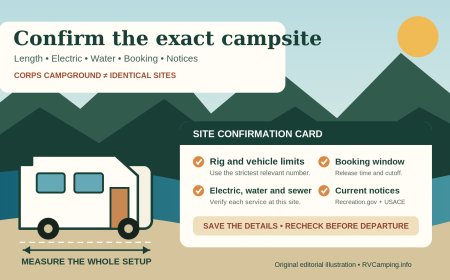
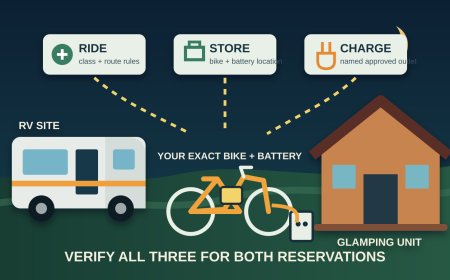
This guide solves a narrower problem than deciding which stove or grill is allowed: choosing the shared dining location, proving the group may use it and moving food to and from it without turning one campsite into an unapproved group facility. Rules below are examples from named public parks, not defaults for another campground. Confirm the exact sites, dates and current notices before paying.
First, count diners separately from sleepers
Make three counts: people sleeping at the RV site, people sleeping in each cabin or yurt, and the total who will attend a shared meal. A sleeping-capacity number does not automatically authorize that many visitors at dinner, and a campsite limit may apply even when some diners sleep elsewhere.
Washington State Parks, for example, says one camping party is allowed per campsite, with no more than eight people per site. The same statewide page sets quiet hours from 10 p.m. to 6:30 a.m. unless a park posts otherwise.[1] That does not answer whether nine registered guests split between an RV and a yurt may gather temporarily at one of those sites. It tells the organizer to ask rather than treating the two reservations as one large site.
Send the property this exact description:
We have [number] overnight guests in RV site [number/type] and [number] in cabin/yurt [number/type]. We want all [total] registered guests to share dinner from [time] to [time]. At which reserved site or day-use facility may the full group gather? Does the answer change the people, vehicle, visitor-fee or quiet-hour limits attached to either reservation?
Save the written reply with both confirmation numbers. If staff gives an answer by phone, record the employee, date, time, exact units discussed and the approved location. Reconfirm at check-in; do not ask the cabin guests to carry plates over until the answer is settled.
A picnic table is not a group dining room
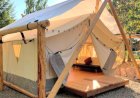
Paradise Point State Park in Washington shows why the visible amenities are only a starting point. Its yurt listing says each unit accommodates up to five guests, has a picnic table and a fire pit with grate outside, and prohibits cooking in the yurt. The park also lists a utility-equipped RV pad that carries a separate charge.[2]
Those facts do not say that the RV pad and yurt form one combined reservation, that two parties may crowd around the yurt table, or that a temporary fire restriction leaves the grate usable. They also do not describe table dimensions, fixed benches, wheelchair positions, shade, lighting or the route from the RV. A photo can help, but only the park can confirm the booking and gathering rules for the selected units.
For the proposed dining spot, verify:
- the maximum number of people who may gather there, including children;
- whether guests registered to the other lodging unit count as visitors;
- the number of tables, usable seats and wheelchair spaces;
- whether tables may be moved or an extra folding table may be used;
- the route, distance, surface, grade, road crossings and lighting between units;
- nearby parking and any visitor or extra-vehicle fee;
- the approved cooking, serving, dishwashing and trash locations; and
- the time the gathering must end.
Do not block the RV pad, cabin steps, road, utility pedestal, neighboring site or accessible route with a buffet table. “It fits” is not enough if it moves the gathering outside the assigned area.
Consider a third reservation for the meal
Sometimes neither sleeping site is the right social space. A reservable picnic shelter, meeting hall or group facility can separate dinner from private sleeping quarters and provide more seats, weather cover and a known capacity. It is a third reservation, not an amenity to assume comes with the RV or cabin.
Cottonwood Canyon State Park in Oregon offers a concrete example. The park says its picnic shelter seats 30 at wooden tables and can be reserved by groups of 50 or fewer. It lists electricity, a charcoal-grill area and a potable-water sink—but says the water is turned off from November through March. The nearest day-use restroom is also closed in that period; winter users are directed to restrooms near the cabins.[3] Elsewhere on the same page, the park says day-use facilities must be vacated at 10 p.m., when quiet hours begin.[3]
Its meeting hall is another distinct product: the listing describes a standard refrigerator, indoor potable-water sink and outdoor kitchen, while explicitly prohibiting indoor cooking. The facility is available April through October and has separate capacity and cleaning rules.[3] None of those details should be projected onto another Oregon park, or even from the meeting hall onto Cottonwood Canyon’s picnic shelter.
If a shelter is the answer, ask whether the reservation includes the entire facility or shared use, when setup may begin, what cleaning is required, whether refrigerator space is exclusive, and where RV and cabin guests park. Confirm seasonal water and restroom operation for the actual dates, not just the park’s opening status.
Build a weather decision before buying groceries
Choose a primary location and one legal fallback. “Inside the RV” is not a fallback for a large group unless the RV owner agrees, the manufacturer’s occupancy limits are respected and the campground approves the gathering. “Inside the yurt” fails where food service or cooking is prohibited, and it may make the space inaccessible to someone who needs clear floor area.
Use a simple decision time:
- 48 hours before dinner: review weather, smoke and fire information; ask the property about closures.
- At check-in: confirm the dining site, tables, water, restroom, fire status and end time.
- Two hours before service: choose the primary or fallback location and notify everyone once.
A good fallback reduces equipment. It might be a reserved shelter, a restaurant that can seat the group, or a cold meal served at an approved covered table. It is not a propane stove under an unapproved awning or a last-minute crowd inside someone’s RV.
Use a one-way shared-meal route
Once the location is approved, keep food movement simple. The RV should not become an open pantry that every cabin guest enters. Assign one food lead and one runner, and divide the route into four points:
- Cold storage: one named refrigerator, cooler or property refrigerator holds perishables.
- Preparation: raw-food work happens at the approved kitchen or cooking site, not at the dining table.
- Service: only the current serving batch goes to the table; backup portions stay hot or cold.
- Return: leftovers, dirty dishes and trash move promptly to their approved destinations.
For a mixed group, a workable dinner is usually modular: a cooked main dish, ready-to-eat sides and a no-heat backup. Give every dish an owner, ingredient/allergen label and destination after service. Pack serving utensils with the dish so no one walks into the RV hunting for a spoon.
USDA outdoor-food guidance says to plan food and equipment together, keep raw foods separate and use a cold source for perishables. It identifies 40°F to 140°F as the “Danger Zone” and says bacteria can reach dangerous levels after two hours, or one hour when the temperature is 90°F or higher.[4] Build the group’s service and cleanup times around those limits; do not let a long social meal erase the clock.
Confirm wildlife storage before choosing the buffet
The dining location also needs an after-meal storage path. National Park Service guidance says food-storage rules differ among parks and tells visitors to check the destination’s requirements. It treats trash, coolers, toiletries, fuel and meal-preparation items as scented items, tells campground users to secure food and garbage promptly, and warns against storing food in a tent or backpack.[5]
That makes “the yurt porch” or “beside the picnic table” a poor default for coolers after dinner. Ask the property where each of these goes when nobody is actively using it: food, beverages, pet food, coolers, grills, cookware, trash, recycling and toiletries. Do not assume the hard-sided RV is approved overflow storage; some parks require lockers, and an RV with soft-sided sections may be treated differently.
Assign a storage closer who checks the approved locker, vehicle or building before the group leaves the table. The same person confirms that no grease, scraps or dirty cookware remain outside. NPS guidance specifically says not to burn leftover food, tea bags or coffee grounds because partially burned material can still attract wildlife.[5]
Keep the fire check separate from the facility booking
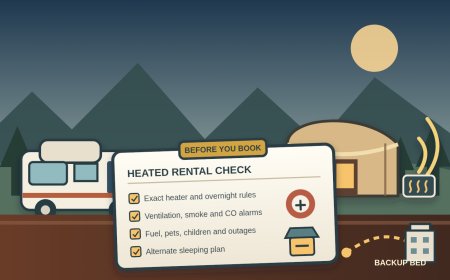
A fire pit or charcoal-grill area is equipment, not permission. Temporary restrictions may remove wood or charcoal, limit gas devices or close the facility altogether. Ask which official page or phone line controls fire status, whether the property imposes a stricter rule, and whether a permit is required. Recheck close to departure and again on arrival.
Write the meal so it survives a “no open flame” answer. If a provided electric appliance remains allowed, confirm its location and circuit. If no cooking appliance is allowed, switch to the ready-to-eat menu rather than improvising. Never move a grill to the RV awning, yurt deck or shelter because rain has started unless staff explicitly approves that exact placement.
The shared-dining card
Give both lodging groups one final card:
- RV site and cabin/yurt numbers;
- approved dining location and maximum gathering count;
- meal start, service cutoff, cleanup start and leave-by time;
- route and lighting plan between sleeping units and the dining site;
- cooking location and currently allowed appliance or fuel;
- cold-storage owner and location;
- wildlife-storage location for every scented item;
- dishwashing, gray-water, trash and recycling locations;
- weather fallback and decision time; and
- staff confirmation, date and fire-status source.
The best shared meal does not require the RV occupants to host by default or the cabin guests to guess what a picnic table permits. It gives the group an approved place, a head count, a food route and an end time. Once those four facts are confirmed, everyone can arrive as a guest instead of negotiating the campground rules over dinner.
Sources
- Camping — Washington State Parks; campsite party limits, quiet hours and general campground rules; accessed October 7, 2026.
- Paradise Point Yurts — Washington State Parks; yurt capacity, outdoor table and fire pit, RV-pad note and indoor-cooking restriction; accessed October 7, 2026.
- Cottonwood Canyon State Park — Oregon State Parks; picnic-shelter and meeting-hall capacity, seasonal water/restrooms, kitchen, cleaning and closing rules; accessed October 7, 2026.
- Food Safety While Hiking, Camping & Boating — USDA Food Safety and Inspection Service; outdoor meal planning, cold holding and time-temperature guidance; accessed October 7, 2026.
- Storing Food — National Park Service; park-specific storage rules and guidance for scented items, dirty dishes and food waste; accessed October 7, 2026.
What's Your Reaction?