


























Your RV water pump runs with every faucet closed. What now?
A model-aware troubleshooting sequence for an RV fresh-water pump that restarts with every fixture closed, including leak checks and clear electrical, plumbing and mold-remediation stop points.

By Romana | Tips and Trends | October 9, 2026
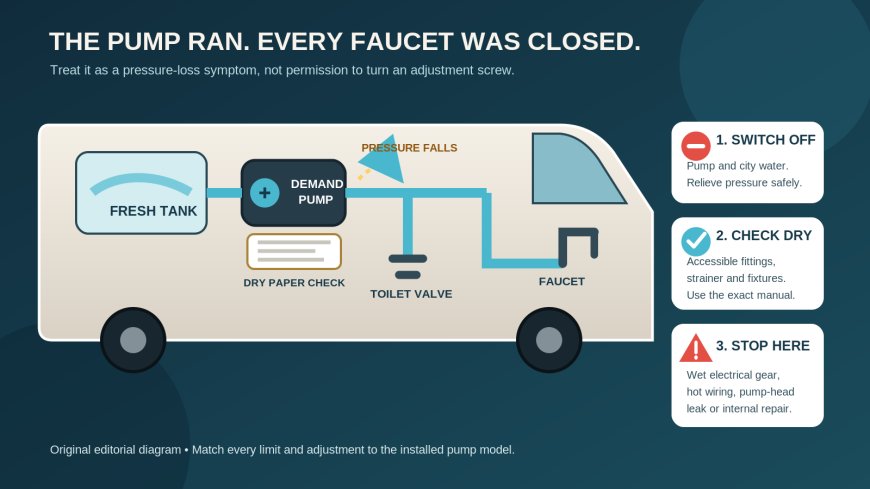
A water pump that wakes up for a second in the middle of the night is telling you something. The pressurized side of the fresh-water system has lost enough pressure to restart the pump. That may come from a dripping fixture, a loose fitting, a toilet valve that does not seal, air left in the lines, debris inside the pump, or an internal check-valve problem. It is a symptom, not a diagnosis.
There is one distinction to make before reaching for a screwdriver. A pump that starts when no water is being used calls for a leak and pressure-loss check. A pump that flips on and off while a faucet is deliberately running at a trickle is "rapid cycling," which can point to a restricted filter, low-flow fixture, restrictive plumbing or a model-specific pressure/bypass issue. Pentair lists those as separate troubleshooting conditions for its Shurflo 4008. [1]
Start by stopping the pump
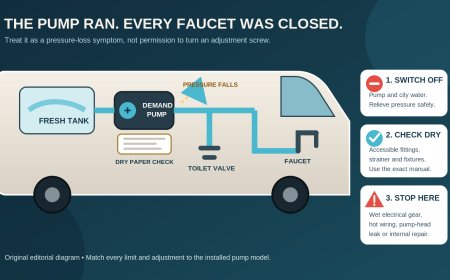
Turn the pump switch off. If the RV is connected to city water, shut off that supply too. Put a towel or shallow pan beneath the pump compartment before opening it. Do not leave the pump powered while you go to dinner, sleep, or leave the site. Pentair's manual says to shut off pump power whenever the RV is unattended. [1]
If water has reached a converter, inverter, breaker panel, receptacle, wiring splice or other energized equipment, stop there. Disconnect power only from a dry, safe location. Do not stand in water to operate a breaker or touch wet electrical equipment. CDC guidance says wet electrical equipment should stay off until it is dry and has been inspected by a qualified electrician when there is any doubt. [4]
A pump that will not stop, smells hot, blows its fuse again after one reset, has scorched wiring, or leaks from the motor/drive area should remain off. Use bottled water until the system is repaired.
Confirm that the sound is truly unexpected
Refill the fresh tank enough to keep its pickup covered. Make sure every indoor and outdoor faucet is fully closed, including both hot and cold valves behind a shower head with a pause button. Check the toilet bowl for a quiet trickle. Confirm the outside shower is shut at the valves rather than only at its handset. Return any fill, sanitize or winterize valves to the operating position shown in the RV's own manual.
Then purge air using the procedure for your RV. A practical check is to open each fixture in turn until the flow is steady, close it, and listen. The Artis pump manual notes that initial operation fills the water heater, toilet and shower lines at the same time, and says the pump should stop when all valves are closed. If it does not, the manual directs the owner to turn it off and use the troubleshooting guide. [2]
Do not infer too much from one sound after a refill or de-winterization. Trapped air can cause odd operation. Repeated restarts after the lines have been purged deserve inspection.
Use dry paper to find a small leak
With the system depressurized and pump power off, dry the compartment. Wrap or place dry paper towels at accessible connections without disturbing them. Include:
- the pump inlet, outlet and strainer bowl;
- the fresh-tank pickup and winterizing suction connection;
- visible fittings under sinks and behind removable access panels;
- toilet supply and valve area;
- water-heater connections and low-point drains;
- exterior shower valves and city-water/fill connections.
Restore pump power briefly and watch from a dry position. A darkened paper edge often reveals a seep before a drop reaches the floor. Turn the pump off again before tightening, opening a strainer, removing a panel near wiring, or touching a connector.
Do not keep tightening a plastic fitting because it looks damp. Pentair warns that sealers or thread tape can lubricate some threaded pump fittings and lead to cracks or stripped threads from over-tightening. Its manual also notes that travel-induced movement may work plumbing connections, the strainer and pump fasteners loose. [1] Use the fitting and torque method specified for the installed pump and connector. If the fitting type is unclear, let an RV technician identify it.
Read the symptom in the right column
Brief restarts with every fixture closed: look first for pressure-side leaks and valves that do not seal. Pentair includes leaky plumbing, fixture valves and toilets, trapped air, debris-held pump valves, voltage problems, loose pump hardware and pressure-switch operation in this condition. [1] Artis lists an empty tank, low battery voltage, leaking plumbing and a failed pressure switch when its pump runs with all faucets closed. [2]
Fast on/off cycling while water is flowing: check the exact pump manual before changing anything. A dirty filter, partially opened fixture or low-flow shower head can be the cause. The Artis manual supplies an adjustment procedure for its PDS1RV25. Pentair, however, reserves the Shurflo 4008 bypass adjustment for a technician equipped to measure the result correctly. [1][2] Those are different products with different boundaries.
Remco's 3200-series manual adds another model-specific warning: rapid cycling should be limited to no more than six times per minute because cycling can heat the motor and shorten the life of the motor and pressure switch. That number belongs to the identified Remco series; it is not a universal RV-pump limit. [3]
The pump runs continuously and never builds pressure: switch it off rather than letting it run while you search. Check tank level, fill/winterize valve position, a clogged strainer and visible inlet leaks. A split suction hose can draw air without leaving an obvious puddle. A pump that still will not prime after the manual's basic checks needs service.
Clean only what the manual makes owner-serviceable
Many owners can inspect an accessible strainer after turning off power, relieving pressure at a faucet and placing a pan underneath. But even that is model-dependent. Confirm the strainer location, seal and reassembly steps in the pump or RV manual. Replace a damaged bowl or O-ring with the correct part rather than forcing it to reseal.
Do not copy an adjustment count, fuse size, pressure setting, wire gauge or sanitizing recipe from a different pump. Read the data label and match the manufacturer, model and revision. If the label is hidden, photograph it before ordering parts.
Pressure-switch or bypass adjustment is not the first response to unexplained cycling. An adjustment can hide a leak, raise system pressure or prevent shutoff when done incorrectly. Call an RV service technician when the leak is concealed, the pump head leaks, the housing is cracked, wiring is hot or damaged, the same fuse opens again, the pump needs an internal repair, or the procedure requires gauges you do not have.
Treat the wet area as part of the repair
Finding the plumbing fault does not finish the job. Dry the floor, insulation and cabinet materials. EPA advises fixing plumbing leaks promptly and drying items completely. It recommends professional help after extensive water damage, when mold covers more than about 10 square feet, or when sewage or other contaminated water is involved. [5]
Before returning the system to normal use, run the pump with access panels open, close every fixture, and listen through several quiet minutes. Recheck the paper towels. Then test each fixture one at a time. The useful result is not merely a silent pump. It is a dry system that holds pressure without hiding an electrical or material-damage problem.
Sources
- Pentair, Shurflo 4008 RV Revolution By-Pass Pump Installation & Operation Manual (Rev. K; model-specific installation, troubleshooting and professional-adjustment boundary).
- Gulf Stream Coach / Artis, Power Drive Series One Automatic Water System Pump Manual (PDS1RV25 operation and troubleshooting).
- Remco Industries, 3200 RV Series Pumps: Operational and Installation Guidelines (2022; model-series cycling and service limits).
- Centers for Disease Control and Prevention, What to Do to Protect Yourself From Electrical Hazards (reviewed August 26, 2026; wet-equipment safety boundary).
- U.S. Environmental Protection Agency, Mold Cleanup in Your Home (updated June 4, 2026; drying and professional-remediation thresholds).
What's Your Reaction?