







Check an RV absorption refrigerator’s vents before lighting the burner
A manual-first pretrip check for vented RV absorption refrigerators: identify the appliance, clear the designed air path, recognize stop signs and defer gas work to qualified service.

Tips and Trends
Check an RV absorption refrigerator’s vents before lighting the burner
A manual-first pretrip check for vented RV absorption refrigerators: identify the appliance, clear the designed air path, recognize stop signs and defer gas work to qualified service.
By Romana 
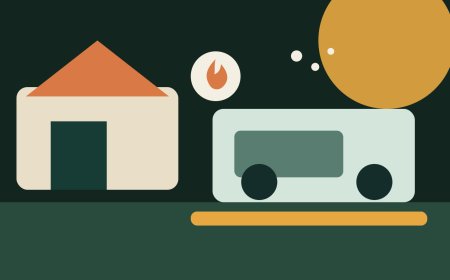
An exterior refrigerator grille can look like trim, but on a vented LP-gas absorption refrigerator it is part of a defined air path and often the access boundary for the service area.[1][2] A nest, stored rag, loose cover or suspicious residue deserves attention before the appliance is started—not after food has warmed up or an odor reaches the cabin.[1][3]
This check is only for RV refrigerators that the exact model documentation identifies as a vented absorption appliance. Other RV refrigerators can use compressor cooling and have different installations and service rules.[1] Read the data label, RV manual and refrigerator manual first. Those documents control shutdown steps, owner-accessible areas, vent design, cleaning methods and service intervals.
Make the appliance safe before opening anything
Perform the visual check while the refrigerator is off and cool. Keep flames, smoking materials, sparks, gasoline and oily rags away. Dometic’s DM/DMA manual says not to keep flammable vapors or liquids in the service area, warns that the cooling system is pressurized, and directs users to disconnect power before cleaning or maintenance.[1]
Use the shutdown sequence for the installed RV and refrigerator. That may include turning the appliance off, disconnecting shore power, isolating 12-volt power and closing an LP valve, but the correct order and permitted owner actions are model-specific. If the manual does not tell an owner to remove the exterior grille, leave it closed and arrange service. Never disconnect a gas fitting, probe a burner, puncture tubing or work around a hot flue.
1. Identify the refrigerator, not just the RV
Photograph the refrigerator data label and record:
- manufacturer, exact model and serial number;
- RV VIN, make, model and model year;
- the appliance manual revision;
- any recall-remedy label or service invoice already present.
The appliance may not be the one originally installed, and a model family can contain both two-way and three-way versions. Do not infer the refrigerator from an RV brochure.
This identification step is also the recall step. A 2008 NHTSA-hosted owner notice for specific Crossroads RVs and Dometic refrigerator model-and-serial ranges described a boiler-tube defect that could release pressurized coolant and, under particular conditions, contribute to a vehicle fire.[3] That notice is not evidence that every older Dometic unit is recalled. It is evidence that the exact appliance identity matters. Search the current RV and appliance recall channels; unresolved or uncertain recall status goes to the RV maker, appliance maker or an authorized service center before use. NHTSA’s current recalls page supports VIN and equipment searches.[4]
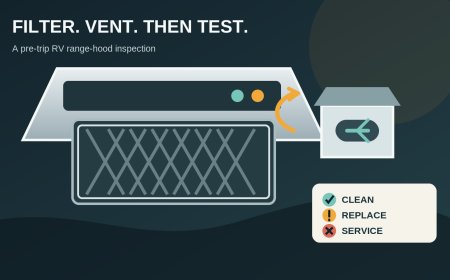
2. Inspect the outside air path
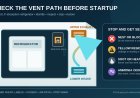
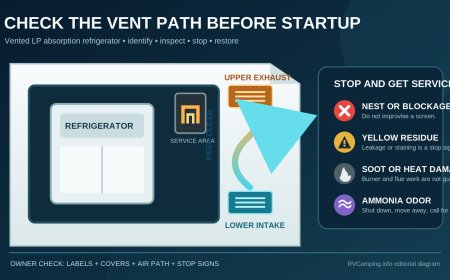
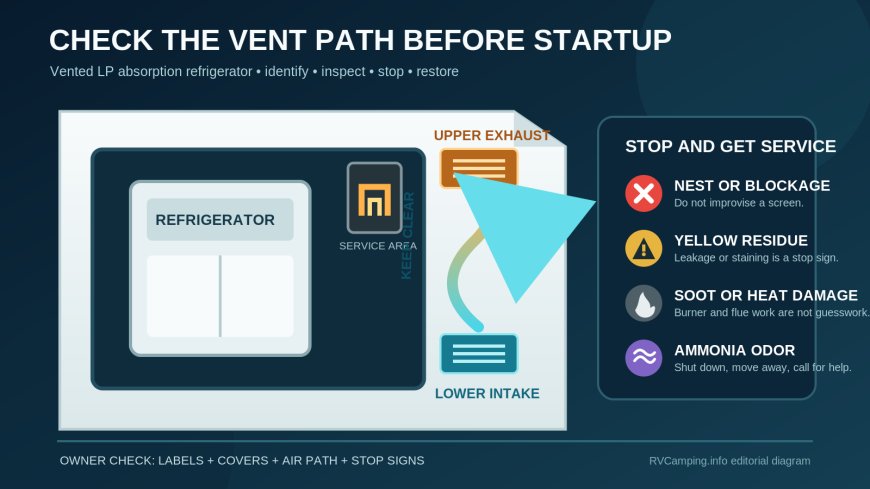
Locate the lower intake and the upper exhaust specified for the installation. The upper outlet may be a roof vent or a second sidewall grille.[2] Do not assume two nearby grilles serve the same appliance.
From the ground, inspect both covers for cracks, missing fasteners, distortion, impact damage and failed seals. Do not climb an RV roof for this check; use a qualified technician when the roof outlet cannot be safely viewed.
With the appliance safely shut down and only if the manual permits owner removal of the lower cover, look without reaching into the compartment. For the cited DM/DMA models, Dometic directs owners to inspect both vents and the space connecting them for bird nests, insect nests or other obstructions.[1] Its installation manual says the certified arrangement uses a lower fresh-air intake and upper exhaust, and that openings must remain clear.[2]
Look for:
- nests, leaves, seed pods, mud, webs or packed dust;
- camping gear, rags or insulation intruding into the compartment;
- a grille blocked by tape, a cover, sealant or an unapproved screen;
- a warped, loose or incorrectly seated access panel;
- water tracks, swollen wood or corrosion around the opening;
- wires or tubing that appear rubbed, unsupported or heat-damaged.
Do not add household mesh because insects are a concern. Vent area, screen opening and airflow are installation specifications.[2] Use only a screen or guard approved for the exact refrigerator and vent system, and have uncertain alterations evaluated professionally.
3. Read the compartment for stop signs
A pretrip visual check is not burner service. Stay outside the compartment and stop for any of these findings:
- ammonia odor;
- yellow powder or yellow residue;
- wetness, leakage or staining that has no harmless, identified source;
- soot, scorching, melted insulation or browned wiring;
- a displaced burner cover, flue component or heat shield;
- damaged cooling-unit tubing;
- repeated failure to cool or repeated fault indications.
The NHTSA-hosted recall notice directed owners in its affected population to shut down units showing leakage or staining, yellow residue, ammonia odor or failure to cool.[3] Dometic’s broader DM/DMA operating manual likewise says to turn the refrigerator off, leave the area and contact qualified service if it stops working or emits an ammonia smell.[1]
If ammonia is suspected, do not open the food doors to investigate, do not restart the appliance and do not lean into the exterior opening. Move people away, ventilate only as the exact manual directs when it is safe, and contact the appliance maker, RV maker, fire department or qualified service provider as conditions warrant. Call emergency services for fire, heavy smoke, an active gas leak, illness or immediate danger.
Soot is also a stop signal, not a cleaning assignment. It can point to a combustion or venting problem. Burner cleaning, gas-pressure checks, leak testing, electrode adjustment, control diagnosis and flue work belong to the person and procedure named in the manual. In the cited DM/DMA manual, burner cleaning, LP-gas connection checks and control-system checks are assigned to a qualified service technician.[1]
4. Restore the vent exactly
If the inspection finds only loose surface debris that the manual allows an owner to remove, use the stated method. The cited Dometic manual permits a soft-bristled brush on accessible rear coils; it does not turn every nearby component into an owner-cleaning item.[1]
Before restoring power or LP gas:
- Remove every tool and loose item from the area.
- Confirm no approved drain or weep path has been sealed over. Dometic’s installation instructions specifically warn against blocking molded weep tracks with sealant.[2]
- Reinstall the correct panel in the exact orientation, with every latch or fastener engaged.
- Verify the lower intake and upper exhaust remain open.
- Follow the model manual’s restart sequence from outside the service area.
Do not perform a generic flame test copied from another refrigerator. Some manuals reserve flame, burner and gas-safety checks for technicians. If operation is noisy, faulted, odorous or unable to cool, shut it down and request service rather than cycling it repeatedly. Dometic specifically warns owners of the cited models not to keep restarting a refrigerator that stops cooling.[1]
5. Confirm performance without turning the trip into an experiment
After a normal manual-approved restart, confirm that the control panel shows the intended energy source and no persistent fault. Keep the exterior cover installed. Use a refrigerator thermometer and allow the appliance the cool-down time stated in its manual; a few minutes of operation is not a cooling-performance test.
The RV must also meet the model’s parking-level requirements while the refrigerator operates.[1] Do not borrow an angle or time limit from a different model. If the appliance will run during travel, verify that practice against the RV maker, appliance maker, route rules, refueling instructions and ferry or tunnel restrictions. This article does not establish that LP operation in transit is permitted or appropriate.
A compact pretrip card
Identify: Photograph refrigerator model/serial and RV VIN; check recall status.
Shut down: Use the exact manual; cool the appliance; remove ignition sources; open only owner-authorized access.
Look: Lower intake, upper exhaust, between-vent air path, cover retention, nests, debris, staining, yellow residue, soot, heat damage and rubbed wiring.
Stop: Ammonia odor, leakage, yellow residue, soot, damaged tubing, heat damage, unresolved recall, repeated fault or poor cooling.
Restore: Clear only what the manual permits, keep weep paths open, refit the correct panel and restart by the exact procedure.
Escalate: Gas, burner, flue, wiring, cooling-unit, recall and uncertain findings go to the manufacturer, an authorized service center or another properly qualified RV appliance professional.
A clean-looking grille is not a certification that the burner, gas pressure or flue is safe. The useful owner check is narrower: identify the appliance, preserve its designed air path, recognize stop signs and hand the technical work to the person the manual specifies.
Sources
- Dometic: DM & DMA Refrigerators Operating Manual (manufacturer operating and maintenance instructions; archived in source corpus)
- Dometic: DM, RM & DMA Refrigerators Installation Manual (manufacturer venting and installation requirements; archived in source corpus)
- NHTSA-hosted Crossroads/Dometic Refrigerator Recall Owner Notice (government recall record for specified RV and refrigerator populations; archived in source corpus)
- NHTSA: Check for Recalls—Vehicle, Car Seat, Tire, Equipment (current federal recall-search entry point; access evidence preserved in source corpus)
What's Your Reaction?