




Grill-to-fridge meat safety at an RV campsite
A complete RV campsite meat-safety workflow for cold transport, refrigerated marinating, thermometer checks, clean serving, and rapid chilling.

Grill-to-fridge meat safety at an RV campsite
By Romana
Category: Cooking
A safe campground cookout starts before the RV leaves the driveway and ends only after the leftovers are cold. Give raw meat a leakproof place at the bottom of a food cooler, marinate it under refrigeration, use separate raw and cooked tools, judge doneness with a thermometer, and put leftovers into shallow containers before the serving clock runs out.
This guide uses current USDA and FoodSafety.gov guidance, archived September 4-5, 2026. It adds an RV-specific workflow for cramped refrigerators, shared picnic tables, and coolers that may be opened all afternoon. It does not claim hands-on testing.
Pack the cold chain, not just dinner
Chill or freeze the meat before departure. A cooler cannot quickly undo an hour on a warm counter. Pack enough ice or frozen packs to hold the food at 40°F or below, then verify that temperature with a cooler thermometer.[2][3]
A two-cooler setup earns its cargo space. Put drinks and snacks in the cooler people will open repeatedly. Reserve the other one for meat, dairy, and prepared sides. USDA specifically recommends separating beverages from perishables and keeping a food cooler shaded with its lid closed as much as possible.[1]
Raw packages need another barrier. Put each one in a sealed bag or watertight container, then place it beneath ready-to-eat food. A separate raw-meat cooler is better when space permits. USDA's camping guidance warns that drips from raw meat and poultry can spread bacteria to hands, utensils, and other foods.[2]
Use this loading order:
- Frozen packs or block ice on the bottom.
- Bagged raw meat in a rigid, lidded bin.
- Another cold layer around and above that bin.
- Sealed sides and produce above the raw zone.
- A thermometer where it can be read without unpacking everything.
The RV refrigerator is useful only when it is already cold and operating within its instructions. Do not treat a just-started refrigerator as an instant chiller. If the food cooler warms above 40°F, time matters; a cold-looking package and melted ice are not temperature records.
Marinate without turning the bag into a hazard
Marinate meat in a refrigerator or in the food cooler while it stays at 40°F or colder, never on the counter or picnic table.[3] Set the bag inside a bowl or rigid container so a bad zipper does not season the refrigerator shelf with raw juices.
Make the serving sauce before raw meat enters the picture. Pour a clean portion into a labeled container, close it, and return it to refrigeration. Do not dip a brush into marinade that held raw meat and then paint cooked food with it. USDA says raw-contact marinade must be boiled before reuse, but at camp the cleaner, easier choice is to reserve a separate portion at the start.[1]
If someone else packs the cooler, label three things in plain language: RAW, COOKED, and SAUCE - NEVER TOUCHED RAW MEAT. This is less elegant than matching containers and much harder to misunderstand in fading light.
Build a raw side and a cooked side
A picnic table has no built-in sanitation boundary. Create one. Keep the raw-meat bin, marinade bag, raw platter, and raw tongs on the grill side. Put buns, garnishes, clean plates, clean tongs, and the thermometer case on the serving side.
Bring water that is safe for food preparation and washing. USDA tells campers to find out whether clean water is available and to bring it when it is not.[1][2] If the campground is under a water advisory, follow the issuing authority; do not assume the sink at the site is suitable for handwashing or food work.
Wash hands before food preparation and again after touching raw meat. Soap and running water are the first choice. Keep disposable towels close enough that nobody has to cross the clean side with wet, raw-meat hands.
Use one platter to carry raw food out and a different platter to bring cooked food back. The same goes for cutting boards and tongs. USDA warns that a raw platter or utensil can contaminate food that has already reached a safe cooking temperature.[1]
Thermometer targets for the grill
Color is unreliable because the outside of grilled meat can brown before the center is safe. Insert a food thermometer into the thickest part, away from bone when possible, and check more than one spot on irregular pieces.
USDA's safe minimums for the meats most often grilled at camp are:[1][2]
- Whole cuts of beef, pork, lamb, and veal: 145°F, followed by at least a three-minute rest.
- Ground beef, pork, lamb, and veal: 160°F.
- All poultry, including ground poultry: 165°F.
- Reheated leftovers: 165°F.
Do not partly grill meat at home or at camp and plan to finish it later. USDA advises against partial grilling followed by delayed cooking.[1] If a batch is too large, leave the second batch cold until the first is nearly ready.
Clean the thermometer probe between readings according to its instructions. A cooked burger should not be jabbed with a probe still carrying raw chicken juice.
Serve in batches so the clock stays visible
Cooked meat that will not be eaten right away must stay at 140°F or hotter; cold foods need to remain at 40°F or colder.[1][3] A warm picnic table is not a holding appliance.
Put out a small tray and replenish it rather than serving the whole batch at once. Keep the reserve hot on equipment intended for holding food, or keep a cold cooked portion refrigerated for later reheating. Write the set-out time on painter's tape attached to the serving tray.
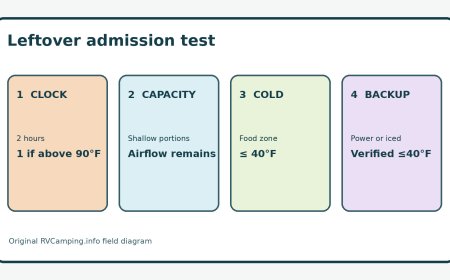
Discard perishable food after two hours without temperature control. Cut that limit to one hour when the outdoor temperature is above 90°F.[1][3] The countdown is cumulative: time during prep, serving, and casual grazing all belongs to the same exposure window. Putting an overdue tray back into the refrigerator does not reset it.
Keep the clean serving tongs with the cooked tray. If they fall on the ground or touch the raw station, replace them. Do not wipe them on an apron and put them back.
Chill leftovers before the RV refrigerator is overwhelmed
Decide before lighting the grill how much refrigerator or cooler space is available. A small RV refrigerator packed tight with warm food cools poorly, so avoid cooking surplus that has nowhere to go.
Move wanted leftovers into several shallow, covered containers and refrigerate promptly. FoodSafety.gov recommends shallow containers because they let leftovers cool faster.[3] Mark the container with the meal and date. Keep it separate from any remaining raw meat.
If the refrigerator cannot hold the containers at 40°F or below, use a properly iced cooler with a thermometer. USDA's camping page gives a practical discard signal: if the cooler no longer has ice, do not keep perishable leftovers on faith.[2]
Never taste food to decide whether a broken cold chain was harmless. When the temperature history or serving time is unknown, discard it.
The 60-second handoff before anyone eats
One person should be able to answer five questions:
- Is the food cooler still at or below 40°F?
- Which platter and tongs touched raw meat?
- What temperature did each meat reach?
- When did the serving tray leave heat or refrigeration?
- Where are the shallow leftover containers going?
That short handoff matters when the cook changes, children start serving themselves, or the person watching the grill walks away. Campground food safety works best when the system is visible, labeled, and boring enough to repeat.
Sources
- Grilling Food Safely | USDA Food Safety and Inspection Service — live page content archived September 4, 2026.
- Food Safety While Hiking, Camping & Boating | USDA Food Safety and Inspection Service — live page content archived September 4, 2026.
- 4 Steps to Food Safety | FoodSafety.gov — live page content archived September 5, 2026.
What's Your Reaction?