
















Great Basin National Park RV campgrounds: where your rig actually fits
Compare Great Basin National Park campgrounds by RV length, access road, loop restrictions, reservation window, water and dump logistics, and fall closure risk.

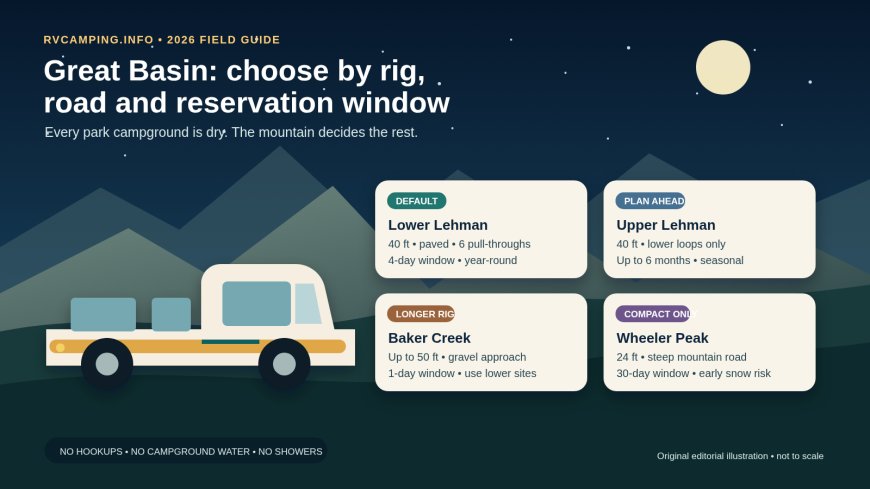

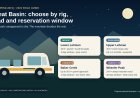
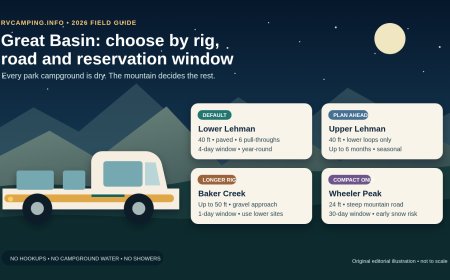
Quick answer: Lower Lehman Creek is the safest default for most RV trips because it accepts rigs up to 40 feet, has six pull-through sites, and is the park's only year-round campground.[1][3] Upper Lehman Creek works well for rigs up to 40 feet if you book a lower-loop site. Baker Creek can take rigs up to 50 feet in some sites, but the approach is gravel and its upper section has a stricter combined-length limit.[1][5] Wheeler Peak is for compact rigs only, with a 24-foot ceiling and a steep mountain approach. Grey Cliffs does not accept RVs or trailers. All park campgrounds are dry, and none currently has potable water at the campsite.[1][2][3]
Great Basin is not a place to choose a campground from the scenery photo alone. The five developed campgrounds split across two very different access roads, and the posted RV limits change by campground, loop, and sometimes by the combination of motor vehicle and trailer. The park also lists Snake Creek primitive sites, but that dirt-road option belongs in a separate category from a developed RV campground.
Great Basin RV campground comparison
| Campground | Best for | Posted RV/trailer fit | Road and season | Reservation pattern for 2026 | Utilities |
|---|---|---|---|---|---|
| Lower Lehman Creek | Most RV travelers; shoulder-season trips; easier cave access | RVs and trailers to 40 feet; six pull-through sites | Paved access; only year-round campground | Reservable up to 4 days ahead, including same day | No hookups or campground water; vault toilets |
| Upper Lehman Creek | Rigs to 40 feet that want a forested base partway up the scenic drive | RVs/trailers allowed in lower loops; none in sites 20-24 | Paved mountain road; winter closure possible | Sites 1-17 up to 6 months; sites 18-24 up to 14 days for listed 2026 stays | No hookups or campground water; vault toilets |
| Baker Creek | Longer rigs that fit a specific lower site; short-notice planners | Some sites list up to 50 feet; no RVs/trailers in sites 9-14; upper road section bars combinations over 32 feet | Three-mile gravel approach; weather closure possible | Reservable up to 1 day ahead | No hookups or campground water; vault toilets |
| Wheeler Peak | Camper vans, truck campers, short motorhomes, and very short tow combinations | Vehicle and towed unit each posted at 24 feet maximum, subject to a road-rule conflict explained below | Paved but narrow, steep, winding road to 9,886 feet; can close as early as September | Up to 30 days ahead during its short season | No hookups or campground water; vault toilets |
| Grey Cliffs | Tent campers and groups, not RV travelers | Current campground page says no RVs or trailers | Gravel Baker Creek Road; winter closure possible | Loops A and C up to 6 months for listed 2026 dates | No hookups or water; vault toilets |
| Snake Creek primitive sites | Self-contained compact rigs only, if road conditions suit | 30-foot maximum for RVs, trailers, and other large vehicles | Dirt road; first-come, first-served; closes in winter | No reservation | No services or potable water |
The park's main campground page supplies the broad rig limits: 40 feet at Lower and Upper Lehman, 24 feet at Wheeler Peak, 50 feet at Baker Creek, and no RV or trailer access at Grey Cliffs. It also bars RVs and trailers from Upper Lehman's sites 20-24 and Baker Creek's sites 9-14.[1] Those are screening numbers, not a promise that every otherwise eligible campsite will fit your whole setup.
Lower Lehman Creek: the practical default
Lower Lehman is 2.5 miles up Wheeler Peak Scenic Drive and remains below the road's 24-foot restriction point. The park lists six pull-through sites and a 40-foot maximum for both RVs and trailers.[1] Recreation.gov describes large paved pull-through parking at those six sites, although its overview still refers to an older nine-site configuration while the current NPS page lists 20 sites. Use the live campsite record and campground map rather than the stale count in that description.[6]
This is the best first look for a Class A or longer Class C, a travel trailer that needs an uncomplicated arrival, or anyone visiting outside the high summer window. The park calls Lower Lehman its only year-round campground. The live conditions table says reservations open no more than four days ahead and can be made the same day.[1][3]
Year-round does not mean full service. Lower Lehman has no hookups and no potable water at the campground. Its campsites include gravel and dirt surfaces, and NPS warns that some are steep.[1][6] A 40-foot published maximum also does not settle where a tow vehicle or toad will go. Check the individual site's driveway type and listed equipment before booking.
Upper Lehman Creek: good access, but stay in the right loop
Upper Lehman sits about three miles up the scenic drive at roughly 7,500 feet. It puts campers closer to the high-country road without committing the RV to the sharpest upper nine miles. The campground accepts RVs and trailers up to 40 feet in some lower-loop sites, but sites 20 through 24 are closed to both.[1]
For 2026, the current conditions table splits the booking window. Sites 1-17 can be reserved up to six months ahead for stays through September 30, while sites 18-24 use a 14-day window for the listed season.[3] An RV traveler should not mistake the short booking window for broader equipment eligibility. Sites 20-24 remain off limits to RVs and trailers, regardless of whether they appear available online.[1]
Upper Lehman is still dry camping. There is no potable water at the campground, and Recreation.gov limits generator operation to 8 a.m. through 8 p.m., with quiet hours from 8 p.m. through 8 a.m.[7] The campground road has paved parking areas, but the individual campsites can be gravel, dirt, and steep.[1]
Choose Upper Lehman over Lower Lehman when a suitable lower-loop site appears and you value being a little farther up the scenic drive. Choose Lower instead if your setup is close to a limit, you want one of the documented pull-throughs, or the weather is becoming uncertain.
Baker Creek: best chance for a longer rig, with caveats
Baker Creek carries the largest headline number in the park: the NPS campground page lists a 50-foot maximum for RVs and trailers. It also says RVs and trailers are allowed in many sites, but not in the upper loop, sites 9-14.[1] That sounds like the obvious big-rig winner until the access details enter the picture.
The campground is three miles along Baker Creek Road, a gravel road that closes in winter.[3][9] The superintendent's compendium encourages large vehicles and RVs to turn left into the lower campground. It prohibits a vehicle combination longer than 32 feet in the upper portion beyond the posted closure sign.[5] In practice, a long rig should be matched to a lower campground site and kept away from that upper section.
Baker Creek has a short reservation window. The live 2026 conditions table says it can be reserved up to one day ahead until weather closes the campground.[3] That makes it useful when the longer-window inventory at Upper Lehman is gone, but it also reduces certainty for travelers building a fixed itinerary months in advance.
There are no hookups and no potable water at Baker Creek. The road and campsites include dirt, gravel, uneven surfaces, and some steep ground.[1][9] A 50-foot equipment field cannot tell you whether your wheelbase will clear a turn, whether the pad is level enough, or where a second vehicle will sit. Read the exact site listing and use the campground map before committing.
Wheeler Peak: a compact-rig mountain campground
Wheeler Peak Campground is at 9,886 feet at the end of Wheeler Peak Scenic Drive. NPS lists a 24-foot maximum for both RVs and trailers.[1] The road climbs more than 4,000 feet in 12 miles, is narrow and winding, and requires lower gears on the descent to control speed and brake heat.[4]
This campground makes sense for a camper van, truck camper, short Class B or C, or a genuinely compact combination whose exact campsite can contain every unit. It is not a place to stretch a measurement or count on overflow parking. Recreation.gov says both the towing and towed units must fit the site's stated driveway length.[8]
There is also an official wording conflict that towable owners should not ignore. The current conditions page and Recreation.gov say a vehicle under 24 feet may tow a trailer that is also under 24 feet beyond Upper Lehman.[3][8] The superintendent's compendium says the scenic drive above Upper Lehman is closed to all trailers and to vehicles over 24 feet.[5] The conservative plan is to leave the trailer below Upper Lehman unless a ranger confirms which rule controls for your travel date.
Wheeler Peak can close on short notice when snow arrives, potentially as early as September. The current conditions page says affected reservations will be canceled and refunded, but travelers should carry an alternate overnight plan.[3][8]
Reservations open up to 30 days ahead during the campground's operating season.[3] There is no potable water or hookup service at the campground.[2][8]
Why Grey Cliffs is not an RV fallback
Grey Cliffs appears beside the RV-capable campgrounds on Recreation.gov, but its current listing says it cannot accommodate RVs or trailers because of space constraints.[10] The NPS campground page agrees: RV allowed, no; trailer allowed, no.[1]
The superintendent's compendium contains older or less restrictive wording that limits vehicles to 24 feet and prohibits trailers.[5] For an RV trip, follow the current campground-specific prohibition. A short motorhome should not treat the 24-foot compendium line as permission to book a tent site.
Snake Creek is a primitive small-rig option
Snake Creek has 12 primitive sites listed on the main campground page, reached by a dirt road. NPS sets a 30-foot ceiling for any RV, trailer, or other large vehicle. The sites are first-come, first-served, close in winter, and have no services or potable water.[1][2][3]
This can work for a self-contained van or compact truck camper when the road is dry and open. It is a poor backup for a large motorhome, a low-clearance trailer, or anyone who needs a dump station, assured space, or a campground water source.
Water, dump, showers, and power
Every Great Basin campground is dry. NPS says none has hookups, all developed campgrounds use vault toilets, and water is not currently available in any campground.[2][3] Carry drinking and cooking water before climbing to camp rather than planning to fill from a spigot at the site.
The park's sanitary station is one-half mile inside the park on Nevada Highway 488. It has a dump point, potable fill, and trash receptacles. NPS says it is usually open from late May through October, weather permitting, and lists a $10 dump fee. Water itself is available there at no charge according to the current conditions page.[2][3]
There are no showers in the park. NPS directs visitors to paid showers at businesses outside the park.[2] If you need regular showers, electric service, or a guaranteed water connection, an RV park near Baker is a better base than any campground inside Great Basin.
Generators are not a substitute for choosing the correct site. Recreation.gov currently lists generator hours of 8 a.m. to 8 p.m. and quiet hours of 8 p.m. to 8 a.m. at Lower Lehman, Upper Lehman, and Wheeler Peak.[6][7][8]
Baker Creek uses the same schedule.[9] Check the confirmation and posted board in case restrictions change.
September and shoulder-season planning
On September 13, 2026, the park's live conditions page showed the main roads and campgrounds open, but it also warned that Wheeler Peak, Baker Creek, Upper Lehman, and Grey Cliffs may close for winter weather as early as September.[3] Snow is not the only changing condition. The same page reported no campground water and active Stage II fire restrictions, so a reservation alone did not settle the day's operating rules.[3]
Lower Lehman is the least seasonally fragile choice, but even there a road gate, maintenance issue, fire restriction, or severe weather can alter the trip. Recreation.gov tells campers at Lower Lehman, Upper Lehman, and Wheeler Peak to save reservation confirmation offline because the campgrounds are unstaffed and some cellular providers do not work there.[6][7][8]
Baker Creek carries the same warning.[9]
A rig-first way to choose
- Measure the whole travel setup. Record motorhome length, trailer length, and combined length. Include the tow vehicle or toad when checking the campsite parking area.
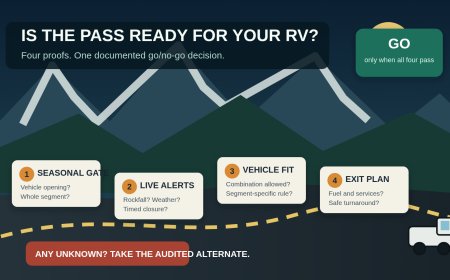
- Reject the wrong roads and loops. Stay out of Upper Lehman sites 20-24 and Baker Creek sites 9-14 with an RV or trailer. Do not take a rig over 24 feet beyond Upper Lehman. Towable owners should resolve the official trailer-rule conflict before using the upper scenic drive.[1][3][5]
- Pick a reservation horizon. Upper Lehman gives qualifying sites the longest lead time. Wheeler Peak uses 30 days, Lower Lehman four days, and Baker Creek one day in the current 2026 table.[3]
- Build the water plan. Fill before camp and verify the sanitary station is open. Do not count on campground water.[2][3]
- Keep a weather backup. A fall booking at the high campgrounds can disappear with a snow closure. Lower Lehman or an outside-park RV park is the sensible fallback.[3]
Bottom line
Lower Lehman is the broadest recommendation: paved access, documented pull-throughs, a 40-foot ceiling, and year-round status. Upper Lehman is a good second choice for rigs that fit the lower loops and travelers who can reserve earlier. Baker Creek deserves a close look from owners of longer rigs, but only after they accept the gravel approach and match a lower site to the complete setup. Wheeler Peak trades easy access for high-country proximity and should be reserved for compact rigs after the trailer-rule conflict is resolved.
Grey Cliffs is not an RV campground under the current listing. Snake Creek is a primitive dirt-road alternative for smaller, self-contained rigs, not a like-for-like substitute. Wherever you stay, arrive with water, expect no hookups or showers, and verify the live NPS conditions page before leaving pavement.
Sources
- Campgrounds - Great Basin National Park
- Camping Information - Great Basin National Park
- Alerts & Conditions - Great Basin National Park
- Wheeler Peak Scenic Drive - Great Basin National Park
- Superintendent's Compendium - Great Basin National Park
- Lower Lehman Creek Campground - Recreation.gov
- Upper Lehman Creek Campground - Recreation.gov
- Wheeler Peak Campground - Recreation.gov
- Baker Creek Campground - Recreation.gov
- Grey Cliffs Campground - Recreation.gov
What's Your Reaction?