























Garlic in oil at camp: make four days the outside limit
A refrigerator-first campsite workflow for homemade garlic-in-oil: make a small batch, label four days, freeze extras, and discard uncertain jars without tasting.

Garlic in oil at camp: make four days the outside limit
By Romana | October 14, 2026 | Cooking
Garlic and oil look like ideal RV pantry ingredients. Neither seems fussy on its own, and a jar can turn bread, pasta or grilled vegetables into dinner. Mixed together at home, though, they stop being a casual counter condiment. The safe plan needs refrigeration, a date and a firm discard time.
Quick answer: Make homemade garlic-in-oil fresh, refrigerate it at 40°F or below, and keep it no longer than four days.[1][2] Freeze portions you will not use within that window.[1] Do not use smell, taste or appearance as a safety test because botulinum toxin cannot be seen, smelled or tasted.[2] Anyone who may have botulism needs emergency medical evaluation without delay.[3]

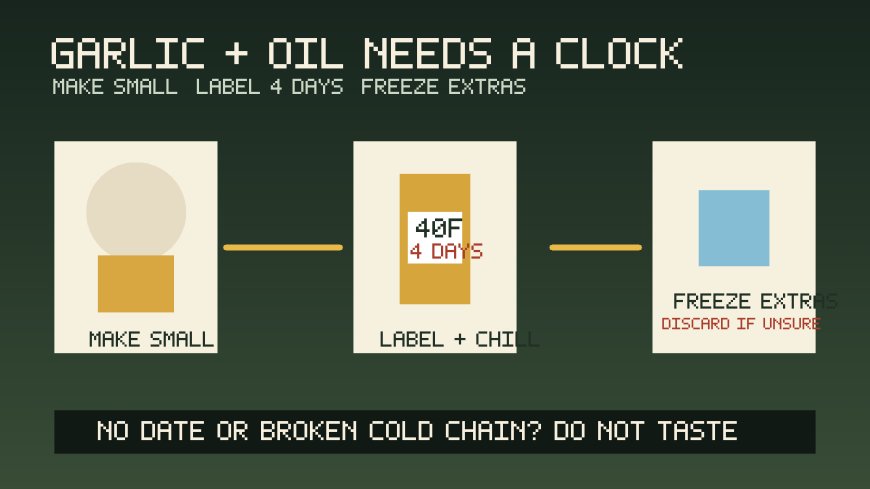
The jar needs a clock as much as it needs a lid. Original RVCamping.info diagram.
The problem is the mixture, not the ingredient list
A bulb of garlic may travel in a dry food bin. An unopened bottle of oil may sit in a cabinet. Chopping the garlic and submerging it in oil creates a different storage problem. The National Center for Home Food Preservation says research confirmed a botulism risk when garlic-in-oil mixtures are stored at room temperature.[1] CDC also names chopped garlic in oil among foods linked to botulism. Its consumer guidance puts homemade garlic- or herb-infused oils in refrigeration and sets disposal after four days.[2]
That four-day limit is the useful planning number for a camper. It is not a suggestion to leave the jar out for part of the trip and chill it later. The clock and cold chain begin when the mixture is made.
Commercial products are a separate case. Read the exact package. A commercially formulated, unopened product may have storage instructions that differ from a homemade mixture, and its after-opening directions still control. Do not pour a commercial product into an unmarked camp jar and assume the original shelf-stable status follows it.
Choose the trip strategy before chopping garlic
There are three workable plans.
- Make a small refrigerated batch. Prepare only what the group can use within four days, label it immediately and keep it at 40°F or below.[1]
- Freeze meal-sized portions. NCHFP says garlic-in-oil may be frozen for longer storage and recommends freezer containers with headspace, a label and a date.[1] Freeze at home rather than asking a small RV freezer to pull down a warm jar.
- Keep the ingredients separate. Carry whole garlic and oil, then combine only the amount needed for one meal. This is often the simplest answer when refrigerator temperature or space is uncertain.
The least useful plan is a large jar with no date. A generous batch creates pressure to keep it past the limit, and a shared campsite makes it easy for one cook to assume another person refrigerated it.
Build a label that answers the next cook's questions
Write the label before the mixture goes into the refrigerator:
- MADE: date and time;
- DISCARD AFTER: four days from preparation, using a specific date and time;
- KEEP AT: 40°F or below; and
- OWNER: the person responsible for storage and discard.
Use a clean, food-grade container with a sound lid. Make a shallow or modest portion that fits the refrigerator without crowding the cold-air path. The label belongs on the container, not only in a phone note. A dead phone or absent cook should not turn the jar into a mystery.
If you freeze portions, label each one. "Garlic oil" is not enough. Include the freeze date and intended meal so the group does not thaw all of it at once.
Give it a verified cold-space assignment
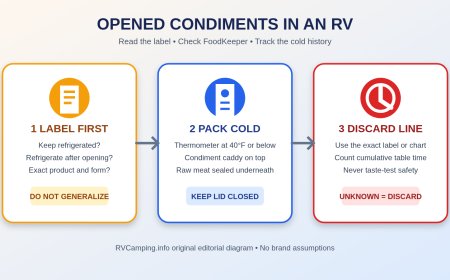
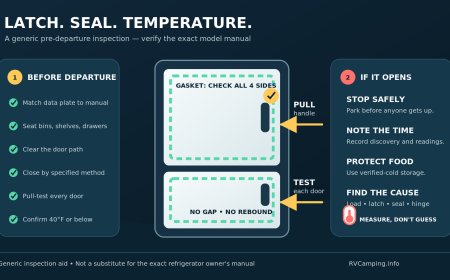
An RV refrigerator deserves proof, not optimism. Put an appliance thermometer where food is stored and verify 40°F or below before loading the garlic mixture. Reserve a stable shelf location away from raw-meat leaks and where the lid will not tip during travel.
Do not store the jar in a warm door pocket just because it is convenient. Follow the refrigerator manufacturer's instructions for loading, travel and ventilation. If the appliance warms during a power interruption or travel mode change, the calendar label no longer tells the whole story. Time at unsafe temperature matters too.
A cooler can serve only when it is managed as measured cold storage. Keep the food zone at 40°F or below, protect the container from meltwater and raw-food leakage, and check the temperature rather than judging the remaining ice by sight. If nobody can establish the time and temperature history, discard the mixture.
The four-day clock does not pause at dinner
Spoon out one meal's amount with a clean utensil and return the container to cold storage promptly. Do not park the whole jar beside the grill for a two-hour dinner, then act as though the refrigerator date is the only control.
A squeeze bottle does not fix unsafe storage. Neither does a narrow-neck jar, extra salt guessed by eye, or a layer of oil over the top. This article does not provide an acidification recipe. Home preservation processes must come from a tested source and be followed exactly; an improvised splash of lemon juice or vinegar is not a substitute for the refrigerated four-day plan.
Avoid "topping off" an old batch with fresh garlic and oil. The new ingredients do not reset the age of the old mixture. Wash the container before making a new batch and give the new batch its own label.
Use a one-meal service cup
At a group campsite, the refrigerator jar should stay under one person's control. Put a small amount into a clean service cup for the table. Add more only with a clean utensil. At the end of the meal, discard what remained in the service cup rather than pouring it back into the master container.
This setup solves several ordinary camp problems. Bread crumbs do not enter the storage jar. A utensil that touched raw food cannot wander back unnoticed. The cold container spends less time outside. Most important, the dated batch does not become communal property with no clear keeper.
If the meal includes guests with food allergies, identify every ingredient and prevent utensil sharing. Garlic-in-oil safety and allergen control are different jobs; doing one does not complete the other.
When freezing is the better trip plan
Freeze when the trip is longer than four days, refrigerator capacity is tight, or the mixture will be used late in the itinerary. NCHFP recommends glass freezer jars or plastic freezer boxes with one-half inch of headspace, plus labeling and dating.[1]
Portion by recipe: one pasta pan, one bread service, one vegetable packet. Thaw only the portion needed and keep it cold. Do not repeatedly thaw and refreeze the master supply during travel. A series of small frozen portions gives the cook a visible inventory and keeps the remainder out of the handling cycle.
An RV freezer is not automatically a home freezer equivalent. Verify that it holds the food frozen and follow the appliance manual. If a portion thaws and its temperature history is uncertain, discard it. The cost of a few tablespoons of oil and garlic is not worth negotiating with an unknown cold chain.
Do not taste an uncertain jar
CDC warns that botulinum toxin cannot be seen, smelled or tasted, and even a small taste can be deadly.[2] That removes the familiar campsite tests. No sniffing. No "tiny taste." No decision based on a normal-looking lid.
Discard the mixture when:
- it spent time at room temperature and the history is uncertain;
- the refrigerator or cooler was not verified at 40°F or below;
- the made date or discard time is missing;
- the four-day limit has passed;
- raw-food liquid, meltwater or dirty utensils may have contaminated it; or
- someone topped up an older batch and its age can no longer be separated.
Dispose of suspect food so people and animals will not eat it. Do not offer it to another campsite, and do not leave it in an open trash bag where wildlife can reach it.
Know the emergency signs without trying to diagnose
Botulism is uncommon, but CDC treats it as a medical emergency. Possible signs include eyelids that droop, speech that becomes slurred, trouble swallowing or breathing, weak muscles, altered vision, or difficulty moving the eyes. Nausea, vomiting, abdominal pain or diarrhea can also occur in foodborne cases.[3]
If symptoms suggest botulism, go to an emergency room or call emergency services immediately. Do not wait for another person to become ill, do not drive while vision or muscle control is affected, and do not use an article to diagnose the cause. Tell clinicians what was eaten and when. Keep other people from eating the suspected food, but do not handle or transport it casually.
A two-minute departure card
Copy this before the trip:
| Decision | Trip answer |
|---|---|
| Batch will be made | home / campsite / not making |
| Made date and time | __________ |
| Discard date and time | __________ |
| Verified cold location | RV refrigerator / measured cooler |
| Appliance reading | _____°F at _____ |
| Frozen portions | _____ containers for _____ meals |
| Service utensil and cup packed | yes / no |
| Person responsible for discard | __________ |
| Backup if cold storage fails | keep ingredients separate / discard |
The cleanest camp habit is simple: if the refrigerator cannot prove its temperature, do not make the mixture. Whole garlic and a bottle of oil can wait until the kitchen is ready.
Sources
What's Your Reaction?