



















Where can everyone meet? A mixed RV-and-glamping gathering worksheet
A five-gate worksheet for mixed RV-and-glamping groups to verify guests, visitors, vehicle access, fires, music, site boundaries, and an authorized gathering location.

Where can everyone meet? A mixed RV-and-glamping gathering worksheet
By Romana | October 13, 2026 | Glamping
A mixed group can book enough beds and still have nowhere lawful to sit together. The RV site may have the biggest table, the glamping deck may look inviting, and a picnic shelter may be ten minutes away. None of those facts establishes that twenty people, six cars, music and a fire are allowed there.
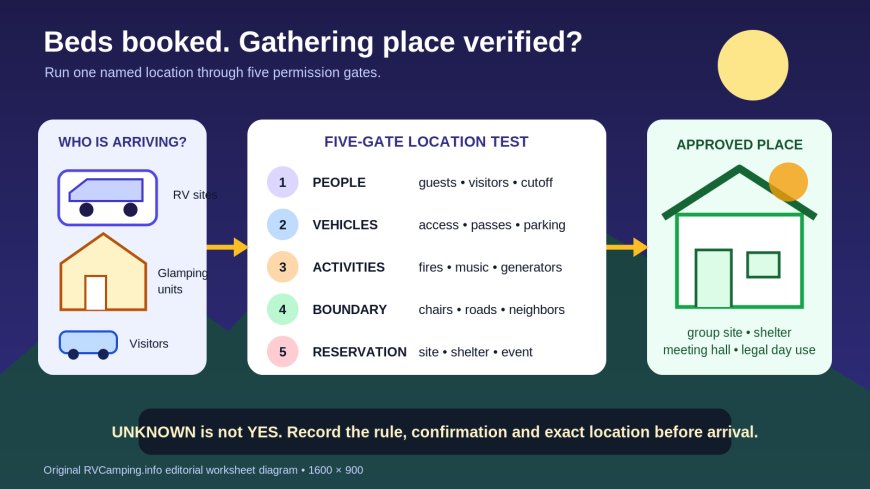
Quick answer: Treat the gathering location as a separate reservation. For each candidate place, verify who may enter, how many people and vehicles may occupy it, when visitors must leave, whether music and fires are allowed, where the boundary lies, and whether the exact use requires a group-site, shelter or event reservation.[1][2][3][4] Write the approving rule or staff answer beside every yes. If any line is blank, the group does not yet have a gathering place.

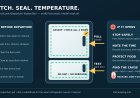
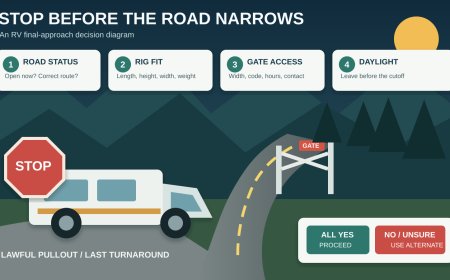
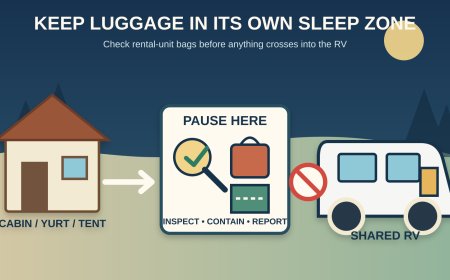
Beds are not meeting permits. Verify the place where the whole group will actually spend time. Original RVCamping.info diagram.
The thesis: quiet hours answer only one of five questions
Quiet hours matter, but they answer when noise must be reduced. They do not decide whether cabin guests count against an RV site's occupancy, whether visitor cars can enter after a gate closes, whether a portable fire pit is permitted, or whether chairs can spill beyond a rented boundary.
NPS's general etiquette page notes that campground quiet hours are commonly posted and that courtesy continues outside those hours. It also tells campers not to enter or encroach on another occupied campsite without permission.[1] Those are useful principles, not a universal property contract. The exact park, campground and lodging operator supplies the enforceable details.
Build one worksheet around a named location, not around the group chat's assumption. “At camp” is not a location. “RV site B14, from 5 to 8 p.m., with twelve registered guests and two visitor cars” can be checked.
Step 1: list every rule owner
Mixed stays often involve more than one set of terms:
- the campground-wide rules;
- the reservation terms for each RV site;
- the glamping operator's lodging and deck rules;
- park or concession rules for roads, parking and day-use areas;
- current fire restrictions; and
- the confirmation for a group site, shelter, meeting hall or event.
One employee may not control all six. Ask the reservation office which document governs each candidate space and who can approve an exception. Save the dated page, email or reservation note. A friendly verbal “probably” should be treated as unresolved when the gathering depends on it.
Official examples show why copying a rule from one campground is unsafe. Natchez Trace Parkway limits a site to eight people and two vehicles, requires tires to remain on pavement, sets quiet hours, and confines fires to specified grills or fire rings.[2] Great Smoky Mountains allows up to six people per campsite, restricts parking, limits campground entry during quiet hours to registered campers and requires group-site reservations.[3] These are examples of rule categories to verify, not defaults for another property.
Step 2: define guests and visitors before counting
Write every person under one of three labels:
- registered overnight guest at a specific RV site or glamping unit;
- day visitor who will leave before the property's cutoff; or
- outside attendee coming only for the gathering.
Then ask the property, in writing if possible:
- Do glamping guests count as visitors when they enter an RV loop or site?
- Does the site's people limit include children and daytime visitors?
- Must visitors register, pay a fee, display a pass or leave identification?
- Is campground entry limited to registered campers after a certain hour?
- Can a lodging guest host people on a porch, deck or outdoor area?
- Does the total trigger a group, event or commercial-use rule?
Do not solve an occupancy limit by moving chairs a few feet into the road, neighboring site or vegetation. That can create a boundary or access violation while leaving the original gathering unauthorized.
Step 3: make a vehicle-access plan that survives arrival
A reservation for sleeping space is not automatically a parking allocation for dinner guests. Count every motorhome, trailer, tow vehicle, car, van and rideshare drop-off that will enter. Ask which combinations count as one or two vehicles, where extra vehicles may park, whether a fee applies, and when a gate, kiosk or access code stops working.
The Natchez Trace rules provide a clear illustration: two vehicles per site, tires on pavement, and camping only in designated sites.[2] Great Smoky Mountains permits no more than two motor vehicles or one vehicle with a trailer at a campsite, requires wheels to stay on pavement and limits entry during quiet hours to registered campers.[3] Your property may calculate differently.
Add an arrival column to the worksheet:
| Vehicle | Occupants | Access credential | Legal parking location | Must leave by |
|---|---|---|---|---|
| RV / trailer combination | ____ | ____ | ____ | ____ |
| Tow or towed vehicle | ____ | ____ | ____ | ____ |
| Glamping guest car | ____ | ____ | ____ | ____ |
| Day visitor car | ____ | ____ | ____ | ____ |
| Accessible drop-off need | ____ | ____ | ____ | ____ |
If legal parking is remote, verify the route back after dark and whether the group can walk it. Do not direct overflow cars onto shoulders, empty pads, grass or another guest's space without explicit authorization.
Step 4: separate fire permission from music permission
Ask about each activity independently. A site with a fire ring does not promise that a fire is currently allowed. A property that permits acoustic conversation may prohibit amplified sound. A lodging deck that allows chairs may ban cooking or open flame.
Record:
- wood fire, charcoal, propane appliance and portable fire-pit rules;
- current restriction source and the time it will be rechecked;
- approved device and exact placement;
- fuel, firewood and extinguishing requirements;
- speaker, instrument and amplified-sound rules;
- quiet hours and any earlier “no amplified music” cutoff; and
- generator and vehicle-idling hours.
At Natchez Trace Parkway, fires are permitted only in specified grills or fire rings, must use appropriate fuel and must be extinguished when unattended; generators are prohibited during quiet hours.[2] Great Smoky Mountains likewise confines campfires to fire rings and has generator limits that differ from its quiet hours.[3] Those differences are the reason the worksheet gives fire, music and generator activity separate rows.
A group's own rule should be stricter than the maximum permission: one sound lead, one fire lead and a fixed shutdown time that leaves room for cleanup before the official cutoff.
Step 5: draw the site boundary
Ask for a map or walk the space with staff. Mark:
- parking pad and vehicle edge;
- RV awning, slide and utility side;
- glamping deck or porch;
- fire ring and required clear area;
- road, path and accessible route;
- neighboring sites and unoccupied sites;
- vegetation, water edge and protected area; and
- the exact line beyond which tables, chairs, games and pets cannot go.
NPS etiquette advises campers not to enter or pass through occupied sites without permission and not to encroach with their own setup.[1] The operational version is simple: keep every chair leg, cooler, cord and game inside the approved footprint, and keep the travel path open.
A vacant neighboring site is not common space. Neither is the road behind the RV. If the approved footprint cannot hold the group without blocking a route or spilling outward, reject that location.
Step 6: choose the gathering location with a five-gate test
Score each candidate: RV site, glamping outdoor area, group campsite, reservable picnic shelter, meeting hall or public day-use area.
| Gate | Question | Proof to record |
|---|---|---|
| People | Are all registered guests and visitors allowed at that time? | occupancy and visitor rule |
| Vehicles | Can every vehicle enter, park and leave legally? | passes, fees, lot and cutoff |
| Activities | Are the planned fire, cooking and music allowed? | exact rules and current restrictions |
| Boundary | Can the setup fit without blocking or encroaching? | map, dimensions or staff confirmation |
| Reservation | Does this use require a group, shelter or event booking? | confirmation number or written answer |
A location passes only when all five gates pass. “No” means choose another place or remove the activity. “Unknown” also means not approved yet.
Oregon State Parks illustrates the alternative to squeezing a reunion into ordinary campsites: it offers reservable group camping areas, picnic shelters and meeting halls, and also describes a process for groups reserving blocks of campsites.[4] The correct option depends on the park and group; the useful lesson is to reserve the gathering function deliberately.
The one-page call worksheet
Copy this into the trip file:
Property and dates: ____________________ Rule page checked on: ____________________ Staff contact / confirmation: ____________________
Sleeping locations
- RV site numbers and registered occupants: ____________________
- Glamping unit numbers and registered occupants: ____________________
- Total overnight guests: ______
- Day or outside visitors: ______
Candidate gathering location: ____________________
- Maximum people, including visitors: ______
- Visitor registration, fee and departure time: ____________________
- Maximum vehicles and legal overflow lot: ____________________
- Gate or vehicle-access cutoff: ____________________
- Fire device allowed today: ____________________
- Music/amplification rule and cutoff: ____________________
- Quiet hours: ____________________
- Site boundary source or attached map: ____________________
- Group/event/shelter reservation required? yes / no
- Confirmation number: ____________________
- Rain or closure backup: ____________________
Final decision: approved / unresolved / choose another location
The worksheet should travel with the person coordinating arrivals. Share a short version with every driver: destination, parking, visitor cutoff, gathering hours and the one activity rule most likely to cause trouble.
When the ordinary RV site is the wrong answer
Move the gathering to a reservable group space when the regular site cannot pass all five gates, even if the picnic table looks large enough. That is especially likely when:
- attendees exceed ordinary-site occupancy;
- several visitor vehicles need parking;
- the group expects music, speeches, games or catered food;
- chairs would extend beyond the assigned footprint;
- a fire or cooking setup needs more room;
- the group needs a roof, accessible route or reliable restroom access; or
- neighbors would receive the event's noise and foot traffic.
If no authorized common space is available, split the visit into smaller hosted blocks or meet at a lawful off-property venue. Do not make the campground enforce a location decision the group could have made before arrival.
A final five-minute briefing
Before anyone drives over, say the answers aloud:
- Who is allowed to attend?
- Where does every vehicle park?
- Which path may people use between lodging types?
- What is allowed for fires, cooking and music today?
- Where is the gathering boundary?
- When do visitors leave and quiet operations begin?
- Who has the confirmation and who will end the gathering?
That briefing is the difference between “we booked nearby” and “we verified a place to be together.”
Sources
What's Your Reaction?