























The campsite rate is not the trip total: build an all-in RV reservation budget
A line-by-line method for comparing RV campsite costs after reservation charges, entrance fees, extra vehicles, residency rules, hookups, and change risk.

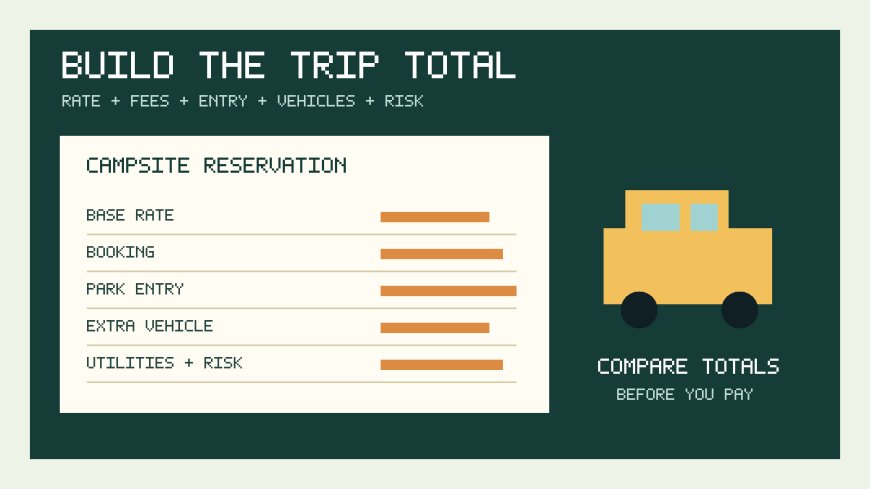
The campsite rate is not the trip total: build an all-in RV reservation budget
By Romana | October 14, 2026 | RV Camping
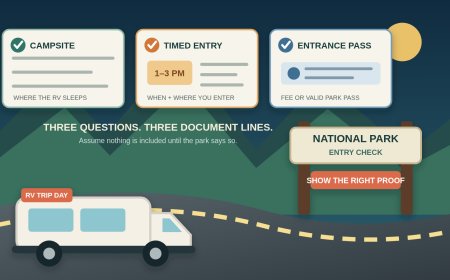
Quick answer: Compare campsites with a trip-total worksheet, not the advertised nightly price. Put the site charge, booking transaction, park admission, extra vehicles, hookups, residency adjustments, taxes, and likely on-site services on separate rows. Then add a second number for the cost of changing or canceling the stay. A cheap-looking pad can lose the comparison once the rest of the reservation is priced.

A $30 campsite and a $38 campsite are not necessarily eight dollars apart. One system may add a reservation charge once per booking. Another may charge for a second vehicle every night. A national park campground may sit behind a separate entrance fee. A full-hookup rate may already include the services that would cost money elsewhere.
The checkout screen gives you a payable total for that transaction. It does not always show every dollar the camping party will spend after reaching the gate. The fix is a small worksheet that treats each charge according to what triggers it.
Start with the unit that creates the charge
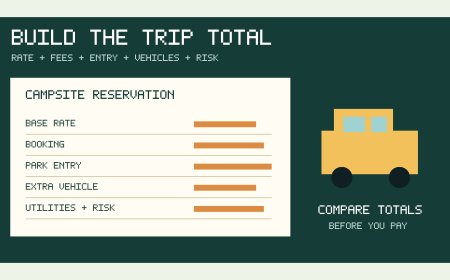
Every budget row needs a unit. "Fee" is too vague. Write whether it applies per night, per reservation, per vehicle, per person, per use, or per change.
Use these rows:
- Site use: nightly rate multiplied by the number of nights.
- Reservation transaction: a charge added once to the booking, if applicable.
- Admission or entrance: a separate park-access cost unless the official page says camping includes it.
- Vehicle parking: any amount for a car beyond the vehicle allowance attached to the reservation.
- Utility tier: the difference between primitive, electric, partial-hookup, and full-hookup inventory.
- Residency or season adjustment: an increase or reduction tied to home address, dates, or weekdays.
- On-site services: showers, dump service, firewood, laundry, or other optional purchases you realistically expect.
- Change exposure: charges or lost use fees if the dates, site, or plan change.
That structure prevents a common mistake: multiplying a one-time reservation charge by the number of nights, or counting a nightly vehicle charge only once. It also makes two parks comparable even when their checkout labels differ.
Read the nightly rate as a starting point
The first number to record is the rate for the exact site and exact dates. Do not copy a range from a general fee page and treat the lowest number as your quote.
Oregon State Parks says its published overnight figures are ranges and directs customers to search available inventory for an exact rate. Its page also says lodging tax is included, rates can change, nonresidents pay more, and seasonal pricing may differ between weekdays and weekends.[3] That is four pricing variables before an extra vehicle is considered.
The practical move is to capture the selected site's checkout details with the date and time. Record:
- campground, loop, and site number or site type;
- arrival and departure dates;
- number of nights;
- base rate for each night if rates vary;
- electric, water, and sewer description;
- taxes shown;
- discount applied and its eligibility requirement;
- total due now versus any amount collected at arrival.
A screenshot is useful, but a written row is better for comparison. Checkout pages change, and a picture of a total does not explain which assumptions produced it.
Keep the booking charge out of the nightly-rate row
Reservation systems may add charges that do not buy another night. California State Parks lists separate nonrefundable charges for a new booking, a modification, and a cancellation.[2] Washington State Parks distinguishes online and phone reservation charges and adds a separate reservation amount for nonresidents.[4]
Put each of those in its own row. Then divide the trip total by the number of nights only after every fixed charge has been included. This shows why a one-night stop can have a much higher effective nightly cost than a seven-night stay at the same published site rate.
For example, do not write "site: $40" when the actual structure is:
- site use: $40 × number of nights;
- reservation transaction: once;
- nonresident reservation adjustment: once, if applicable;
- extra car: per night, if approved;
- entrance: separate, if required.
The amounts must come from the live checkout and current official fee page. The list above is a calculation pattern, not a quote.
Separate a campsite from admission to the park
A camping reservation and permission to enter a park are different products unless the destination explicitly connects them. Sleeping Bear Dunes states that campground charges are additional to the standard park entrance charge.[5] That single sentence changes the trip budget for a traveler who does not already have an accepted pass.
Build an admission row with three fields: required, amount, and coverage. Coverage matters. A pass might cover the passholder and occupants of one vehicle, while a second arriving vehicle may need separate treatment. Do not infer that a campsite confirmation covers every car in the group.
If you already own a pass, record its name, expiration date, and whether the destination accepts it for this fee. A pass can reduce admission without reducing camping. Sleeping Bear Dunes also describes a camping discount for certain passholders while excluding some categories such as electrical hookup and group-site charges.[5] "We have a pass" is not enough detail for a budget.
Price every vehicle by what the policy calls it
RV groups use imprecise words: tow car, dinghy, truck, guest car, second car. The fee page may use different definitions.
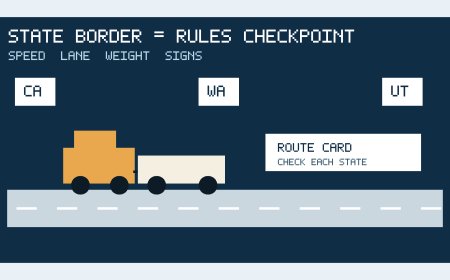
California treats the paid campsite as covering a primary vehicle together with its legally towed trailer or automobile; another vehicle is charged at the park.[2] Washington says its campsites include one vehicle, but it describes a specific no-charge treatment for a vehicle towed into the park by an RV, subject to conditions, and warns that not every site can hold an extra vehicle.[4]
Those examples should stop you from applying one state's rule to another. For each vehicle, record:
- how it reaches the park: driven, towing, or towed;
- whether it remains with the RV;
- whether it fits on the assigned pad;
- whether overflow parking is permitted;
- nightly fee and where it is paid;
- whether after-hours arrival changes registration;
- whether the second vehicle needs separate entrance coverage.
Price and permission are separate. A listed extra-vehicle amount does not guarantee that the site or overflow lot has space. Confirm both before relying on it.
Do not treat hookup labels as equal
"Electric," "partial hookup," and "full hookup" can hide different service sets. Before comparing rates, write the actual amperage, water availability for the travel dates, sewer connection, and dump-station access.
A higher site rate may replace a paid dump stop or reduce generator fuel, but only if the services match the rig. A 20-amp outlet is not a substitute for a needed 30-amp or 50-amp connection. Seasonal water shutdown can turn a full-service expectation into a tank-management problem even when the site remains open.
Use the site's official amenity record, not a filter label alone. If a service is uncertain, cost the conservative case: include the backup dump or water stop and remove it only after confirmation.
Add a change-risk number beside the booked total
Travel plans move. Weather, a repair, illness, or a route closure can make the original dates unusable. A reservation that is cheap only when nothing changes deserves a visible risk number.
Recreation.gov says a modification may carry a service charge depending on the change. Its policy also says a campsite cancellation made the day before or on arrival can involve both a service charge and loss of the first night's use charge; a no-show has its own consequences.[1] California publishes separate charges for booking, modification, and cancellation.[2]
Do not collapse those policies into one universal penalty. Instead, write three scenarios using the current policy for the selected reservation:
- change dates while outside the cut-off period;
- cancel near arrival;
- arrive late enough to risk no-show treatment.
The point is not to predict trouble. It is to choose between two otherwise similar bookings with open eyes. A flexible reservation can be worth more than a small base-rate savings when the trip depends on mountain weather or a long repair-prone route.
Build two totals, not one
The worksheet should end with two numbers.
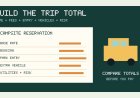
Committed total is what you expect to pay if the trip happens as booked. It includes the exact site quote, reservation charge, admission, vehicles, expected services, and any known taxes or residency adjustments.
Disruption total is the plausible cost if the plan changes. It includes the nonrefundable portion of the booking, expected modification or cancellation consequences, and the price gap for a backup stop if you have one.
Keep optional spending such as souvenirs and meals out of the reservation comparison. Include services that are part of making the RV stay work, such as a dump stop required because the site has no sewer and the next leg exceeds tank capacity.
A five-minute comparison before payment
Run this check for each finalist:
- Did I quote the exact site and dates rather than a rate range?
- Is every charge labeled by its unit: night, booking, vehicle, person, use, or change?
- Is park admission separate, included, or covered by a verified pass?
- Have I priced every driven, towing, and towed vehicle under this park's definitions?
- Do the hookup details match the RV and season?
- Did residency, weekday, or seasonal pricing alter the quote?
- Which costs are due online, and which are collected at arrival?
- What becomes nonrefundable if I modify, cancel, or miss check-in?
Save the confirmation, fee page, cancellation terms, and worksheet together. If the policy changes later, you will still know what information shaped the booking.
The lowest nightly number can still win. It just has to win after the rest of the stay is counted.
Sources
- Rules and Reservation Policies — Recreation.gov (accessed October 14, 2026)
- Booking and Fees — California State Parks (accessed October 14, 2026)
- Reservation Rates — Oregon State Parks (accessed October 14, 2026)
- Fees — Washington State Parks (accessed October 14, 2026)
- Camping Fees & Reservations — Sleeping Bear Dunes National Lakeshore (accessed October 14, 2026)
What's Your Reaction?