























No cell signal between the RV loop and glamping units? Test the group plan before booking
A booking and arrival test for mixed RV-and-glamping groups that combines exact-unit maps, short texts, lawful FRS use, paper cards, scheduled check-ins, and an accessible physical fallback.

No cell signal between the RV loop and glamping units? Test the group plan before booking
By Romana | October 14, 2026 | Glamping
A campground can put an RV site and a furnished tent on the same property while placing them beyond a ridge, across a river road or in different loops. The booking page may call both areas "on site." That says nothing about whether a text will arrive, a handheld radio will reach, or a child walking between them will know where to go when plans change.
Quick answer: Before paying, mark the exact RV sites, glamping units, office, safe meeting point and permitted walking route on one map. Ask about cellular service by carrier and exact area, not just at the office. Download property information for offline use, give everyone a paper contact card and agree on check-in times and meeting points.[2][3] If the group wants handheld radios, use compliant equipment, understand that FRS channels are shared and test the actual route after arrival; advertised range is not proof of coverage.[1]

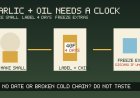
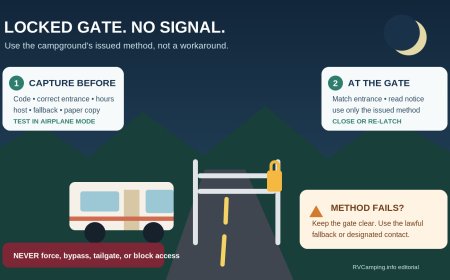
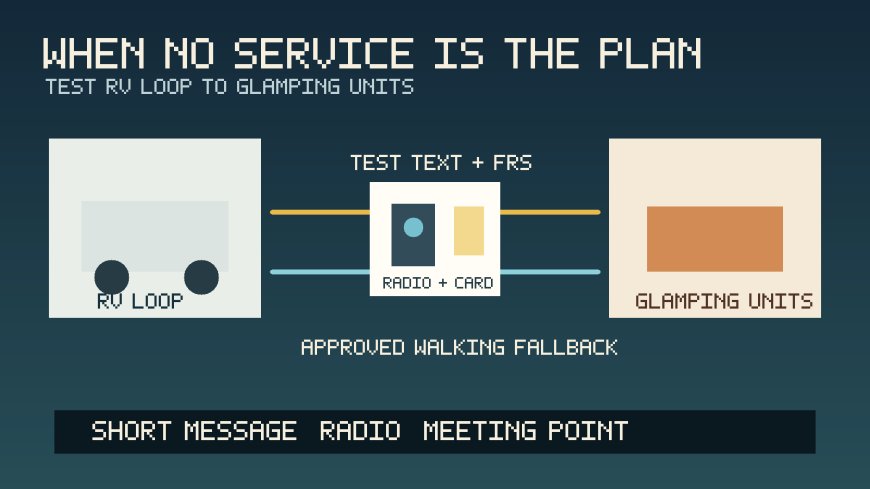
"Same campground" is not a communications test. Original RVCamping.info diagram.
Book a communication route, not a carrier logo
A single bar icon on a campground listing is too crude for a split lodging group. Reception can differ between the entrance, RV loop, cabin row and the inside of a metal-sided or screened structure. The question is not whether somebody once found service on the property. It is whether the people in your exact sleeping areas can exchange a short message when the group needs it.
The National Park Service tells visitors to use park-specific information and notes that people visiting parks with limited cell service can download NPS app information for offline use.[3] Yellowstone's campground page shows why exact-area checks matter: the official amenity listings mark some campgrounds as having cell reception and others as having none.[4] A property-wide "service available" label can hide that difference.
For mixed RV and glamping bookings, communication belongs in the selection criteria beside bed count and rig fit. If the group includes children, older adults, people who use mobility devices or anyone who may need assistance, a vague promise of "usually a signal" is not enough.
Ask five questions before the deposit
Send the property a short, exact request:
- Which numbered RV sites and glamping units are available for our dates?
- What is the permitted walking route between those exact locations, and is it open after dark?
- Where do staff currently see usable cellular service, and for which carriers?
- Is there a staffed office, host site, call box, landline, Wi-Fi calling area or other contact point after hours?
- Are personal handheld radios allowed, and are there quiet-hour or device-use rules that affect them?
Ask for a current map. A marketing map may omit grades, locked gates, seasonal paths and road crossings, so confirm the route with staff. Save the reply offline. If the property cannot identify the exact unit before arrival, make the communication test an arrival task and choose a cancellation or reassignment option that leaves room to act on a failed test.
Do not ask the office to guarantee a carrier network it does not operate. Ask for observed conditions and current infrastructure, then keep the uncertainty in the plan.
Give every person a paper card
Ready.gov advises making a paper copy of contact information, giving everyone a copy and practicing the plan. It also warns that phones and computers may be unreliable during disasters and that electricity may be disrupted.[2] A campground version can be much smaller than a household disaster file.
Put these items on each card:
- property name and street address;
- reservation holder and booking number;
- RV site and glamping unit numbers;
- office and after-hours contact method;
- one out-of-area contact;
- ordinary group meeting point;
- emergency meeting point selected with property guidance;
- planned check-in times; and
- instruction to call 911 only for a life-threatening emergency.
Use only the medical and personal information the traveler needs. Do not print full payment-card numbers, account passwords or unnecessary identity details. Children can carry a simpler card with their lodging number, responsible adults and meeting instructions.
The RV is a useful place for a duplicate, but it cannot be the only copy if half the group sleeps elsewhere.
Use scheduled check-ins when messages may fail
A no-signal plan works by reducing the number of messages the group must send. Set ordinary check-ins around natural trip moments: breakfast, departure for an activity, return before dinner and quiet-hours setup. Name the place and a time window.
A useful check-in rule sounds like this: "If no message arrives, meet at the office notice board between 6:00 and 6:15 p.m. If the office is closed, use the approved shelter sign by 6:30." It does not sound like "We'll find each other later."
Ready.gov recommends meeting places, an out-of-town contact and short status messages. It notes that a text may get through when a call does not because it uses less bandwidth and may wait to send when capacity returns.[2] Keep messages compact: name, status, location and next action. Check that a queued message actually sent before assuming the other lodging area received it.
Never use a missed social check-in as a reason to enter a closed trail, staff-only road or another guest's site. The fallback route must stay within campground rules.
Handheld radios can be a layer, not a promise
Family Radio Service radios are designed for short-distance group communication. FCC materials describe FRS as licensed by rule, so an individual license is not required when compliant equipment is operated within the rules. FRS has 22 channels, and those channels are shared with GMRS users.[1]
Shared means private channel names and "privacy codes" do not create a confidential line. Other users may be present, and the group must avoid unnecessary interference. Do not transmit reservation numbers, gate codes, medical details or other sensitive information.
The FCC notes that FRS range depends on channel power and conditions.[1] Trees, terrain, buildings and the distance between lodging areas matter. A mileage claim on a package is not a property test. The group should use FCC-certified equipment, read the manual, confirm whether an older dual-service radio is being used legally, and avoid modifications.
Keep transmissions brief. Use names or simple call signs, identify the location and repeat critical details. Headphones can prevent late-night speaker noise, but they may also reduce awareness of approaching vehicles or alarms. Follow property rules and use equipment in a way that does not disturb nearby campsites.
Run the route test after arrival
Before the group scatters, two adults should test the planned chain:
- Stand at the RV site and glamping doorway.
- Send one text and record whether it sends and arrives.
- Place a brief call only if the property permits and coverage supports it.
- Test handheld radios on the selected shared channel, if radios are part of the plan.
- Walk the permitted route together in daylight.
- Locate the office, host, call box or other approved fallback.
- Repeat the check at the meeting point and any route decision point.
Record pass, intermittent or fail for each method. Intermittent is not a pass for a task that depends on immediate contact. Move the check-in location, shorten the distance, assign a buddy or ask for a lawful site reassignment.
Do not test by tying up an emergency number. Do not invent a radio distress drill that could alarm other guests. A normal status message and brief radio check are enough.
Plan for people who cannot use the default method
A radio-only plan can exclude a person who is Deaf or hard of hearing. A text-only plan can exclude someone without a phone or with limited dexterity or vision. A walking fallback can fail for a person who cannot use the route.
Ready.gov specifically includes people with disabilities and access or functional needs in communication planning and says meeting locations should be accessible.[2] Ask each traveler what method works, then verify that the fallback is usable. Options may include vibration or visual alerts, a printed large-type card, a buddy, a scheduled in-person check or an accessible staff contact point.
Do not assign one traveler permanent monitoring duty without agreement. Rotate ordinary check-ins and distinguish a convenience request from an emergency.
Use a simple three-layer plan
Give each lodging cluster the same order:
| Layer | Use | Failure rule |
|---|---|---|
| 1. Phone | short text, then brief call if needed | if not confirmed, do not assume receipt |
| 2. Radio | brief status on agreed FRS channel | if no reply after agreed attempts, stop transmitting |
| 3. Physical fallback | scheduled accessible meeting point or staffed contact | use only the approved route and time |
Write the attempt rule in advance. Repeated calling and radio chatter drain batteries and create confusion. A reasonable social plan might allow two radio calls separated by a short wait, followed by the next scheduled meeting. An emergency uses the property's emergency procedure and 911 when appropriate, not the social check-in sequence.
Battery planning matters. Charge devices before arrival, carry the right spare batteries and keep a light with the person walking to a fallback point. Do not idle an engine or run a generator outside permitted hours merely to support casual communications.
Reject the property when the fallback is not workable
Choose another campground or different unit combination when:
- the property cannot identify a lawful route between lodging areas;
- the route closes before the group needs it;
- no accessible fallback exists for a traveler who needs one;
- young or vulnerable guests would have to travel alone after dark;
- all communication depends on unverified cellular service;
- staff contact and emergency instructions are unclear; or
- exact units are assigned too late for the group to manage the risk.
This is not a demand for perfect reception. A property with no cell service can work well when the units are sensibly placed, the map is clear, staff procedures are known and the group has practiced meeting points. A property with good reception can still fail if the only walking route is closed or unsafe after dark.
The booking worksheet
Property and dates: ____________________ RV site or loop: ____________________ Glamping unit or area: ____________________
| Check | Evidence |
|---|---|
| Exact locations marked on one map | __________ |
| Permitted day and night route | __________ |
| Carrier observations by exact area | __________ |
| Offline map downloaded | yes / no |
| Office or after-hours fallback | __________ |
| Accessible meeting point | __________ |
| FRS permitted and equipment compliant | yes / no / not using |
| Arrival route test owner | __________ |
| Reassignment or cancellation option | __________ |
The decision is ready only when the group can answer a plain question: if every phone shows "No Service," where will each person go, when will they go there and how will they get there without breaking a campground rule?
Sources
What's Your Reaction?