























Stabilizer jacks are not automatically tire-change jacks: identify the system before any lift
Learn why RV stabilizers are not automatically lifting jacks, how to identify the exact installed system, and when manuals or professional service must control a tire change.

Stabilizer jacks are not automatically tire-change jacks: identify the system before any lift
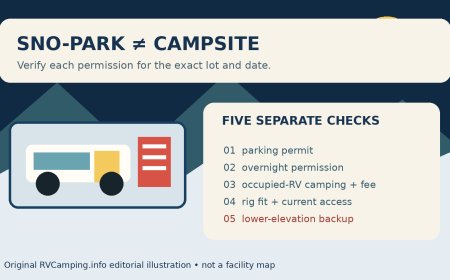
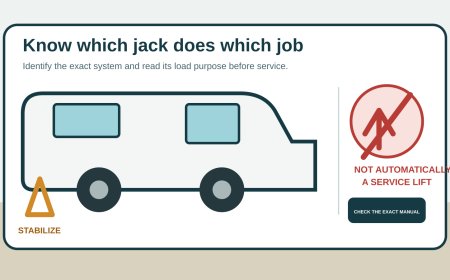
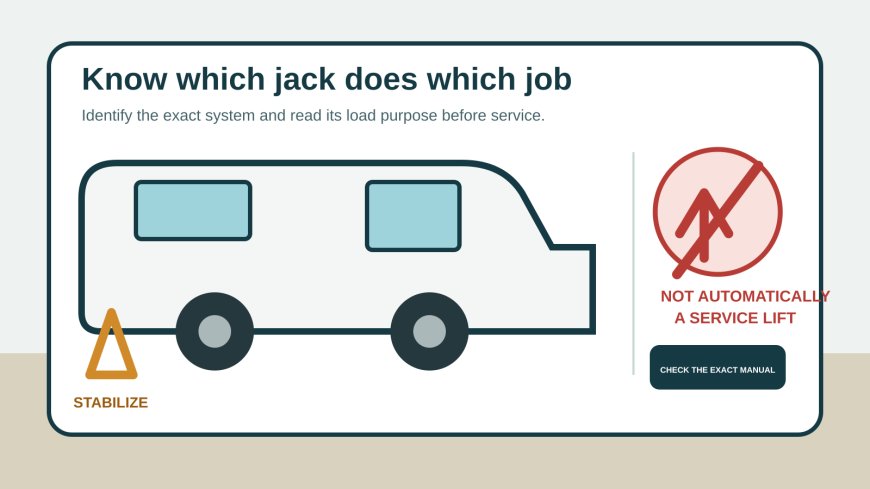
The metal legs under an RV can look interchangeable. They are not. A travel trailer may have a tongue jack, landing gear, corner stabilizers, a leveling system, or some combination of those parts. Similar controls and sturdy-looking steel do not give every device the same job.
That distinction matters most when a tire is flat or someone needs access beneath the trailer. A jack that keeps the floor from bouncing at camp may not be designed to carry the trailer, raise a wheel, or protect anyone working nearby. The safe starting point is therefore identification, not improvisation: determine the exact RV, exact installed system, and exact manual before deciding what equipment or service is appropriate.
The name on the switch is not enough
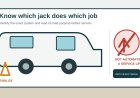
“Jack” describes a broad family of mechanisms, not a universal load rating or approved use. These common RV systems have different assignments:
- A stabilizer reduces movement after the trailer has already been leveled.
- A tongue jack raises or lowers the front of a travel trailer for coupling and front-to-back positioning.
- Fifth-wheel landing gear supports the front during hitching and unhitching and may handle front-to-back leveling.
- A leveling system changes the coach or trailer attitude within the limits set by its manufacturer.
- Tire-service lifting equipment raises the vehicle at approved structural locations for the specific service task.
Those categories can overlap on some products, but overlap must be stated in the documentation. It cannot be inferred from the shape of the leg, the presence of a motor, a printed capacity seen on a replacement-parts page, or the fact that a system can move the RV.
Lippert's PSX1 manual is unambiguous about its own boundary. It describes the product as a stabilizing system used after the trailer has been leveled and says it is not for tire changes or other work beneath the trailer. The manual also says Lippert recommends a trained professional for trailer tire changes.[1] That is a product-specific instruction, not a rule that every Lippert-branded leg has the same purpose.
BAL's Powered “C” Type document uses the phrase “fine leveling and stabilizing,” yet it separately warns against lifting tires off the ground and says not to use that product as a tire-changing jack.[2] This is a useful reminder that a manual's exact restrictions control. A marketing label, product family, or casual use of the word “leveling” does not erase a stated tire-service prohibition.
Find the exact installed system
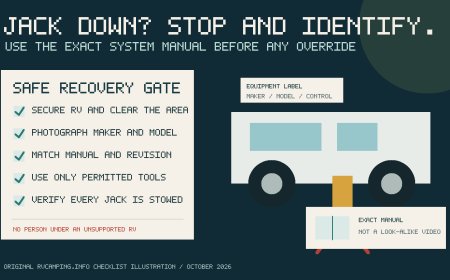
Begin with the RV identity. Record the manufacturer, model, model year, floorplan, and VIN from the certification information. Then inventory the hardware without crawling under an unsupported unit. Photograph accessible labels, control panels, remote screens, warning decals, and the outside profile of each jack assembly. Capture every model, part, and serial number that is readable from a safe position.
Forest River's general towable manual explains why both levels of documentation matter. Its manual is a quick reference that may not apply to every model, while the component-manufacturer booklets in the owner's packet provide instructions for the equipment actually installed. It also notes that a vehicle data card may list the manufacturer, model, and serial number for major factory-installed equipment.[3]
Use this identification chain:
- Match the RV's VIN and model-year documentation to the unit in front of you.
- Check the original owner's packet, vehicle data card, build sheet, window sticker, and dealer delivery records.
- Match the physical label and control interface to an official component manual.
- Confirm the manual revision and model coverage. A manual for a similar product is not proof.
- If a label is missing or the equipment may have been replaced, give the RV manufacturer or component maker the VIN, photographs, label fragments, and control-panel details.
Do not identify a system by appearance alone. The PSX1 manual itself says that actual parts and assemblies may differ from its reference images.[1] Replacement motors, switches, wireless controls, painted covers, and aftermarket installations can make two systems look alike or one product look unfamiliar.
A useful record is a one-page “support map” kept with the RV documents. For each device, list its location, maker, exact model, serial number, controller name, manual URL or filename, intended purpose, prohibited uses, and support contact. Add a note if the identification is still uncertain. “Unknown rear electric legs” is safer than a confident but incorrect model name.
Read manuals for purpose, not just capacity
Owners often search first for a pound rating. That number is not enough to authorize a lift. A capacity may describe static load, distributed load, a pair of jacks, one leg, a tested component, or a narrow operating condition. It does not automatically address frame attachment, side loading, ground conditions, stability, approved lifting points, or work beneath the unit.
Read the system manual in this order:
- Intended use: Does it say stabilize, level, hitch, lift, service, or change tires?
- Explicit prohibitions: Look for “not for,” “never,” “do not,” “service,” “tire,” “wheel off the ground,” and “under the trailer.”
- System scope: Confirm whether the instructions cover the exact model and whether they assume factory installation.
- Load language: Note whether a rating applies per leg, per pair, or to the complete system, and under what conditions.
- RV-level instructions: Check whether the RV maker imposes tighter restrictions or names specific chassis locations.
- Service boundary: Look for requirements for trained technicians, separate supports, approved equipment, or dealer contact.
The operating behavior may reveal misuse, but it should never be treated as a load test. On the PSX1, for example, a protective shutdown can indicate that the system is trying to lift too much weight.[1] That shutdown is a warning to stop and recheck the intended use, not evidence that the system is almost strong enough.
The frame is part of the decision. BAL warns that some RV subframes may not tolerate forces beyond those intended to support the cabin and directs owners to the RV manufacturer for subframe information.[2] A leg's mechanical ability to extend says nothing by itself about whether the attachment point or trailer structure can accept a service lift.
Stabilizing, leveling, and lifting are separate decisions
The Forest River towable manual says its stabilizers must neither change trailer height nor carry the unit's full load. It describes them as equipment for reducing rocking after leveling.[3] Lippert gives the PSX1 the same basic role and limits extension after ground contact.[1]
A true leveling system can carry more of the vehicle during its normal leveling cycle, but that still does not automatically make it a service lift. The relevant manual must expressly address tire changes or under-vehicle work. If it prohibits those uses, the label “leveling system” does not create an exception.
Likewise, tongue jacks and landing gear have defined coupling and positioning jobs. Their ability to raise one end of a trailer does not establish that they can safely create tire-service clearance or support repair work. Read the exact manuals for both the RV and the component.
This keeps three questions separate:
- Can this device perform its normal campsite function?
- Can the complete installed system raise the RV in the requested way?
- Is the raised RV safely supported for the planned service?
A “yes” to the first question does not answer the other two.
When a tire or service task appears
Do not turn a roadside problem into an experiment. Move away from traffic only when that can be done safely, protect the people first, and use roadside assistance or professional service when location, surface, traffic, weather, equipment, documentation, or physical ability makes the situation uncertain.
Before any owner-performed tire service, the controlling documents should identify the approved lifting location and required equipment for the exact RV, chassis, axle, or suspension. Forest River's general towable manual, for example, warns against placing a jack against the trailer underbelly and directs the jack to the chassis frame.[3] That broad statement still is not a substitute for a model-specific lifting-point diagram, axle instructions, equipment ratings, or professional judgment.
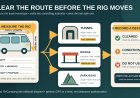
Stop and call the RV manufacturer, chassis or axle maker, dealer, roadside provider, or qualified RV technician when:
- the installed system cannot be positively identified;
- the relevant manuals are missing, conflict, or do not name an approved lifting point;
- the only available device is a stabilizer or another component whose manual excludes tire service;
- the ground is sloped, soft, uneven, or exposed to moving traffic;
- the RV has visible frame, suspension, wheel, axle, or jack damage;
- the required rated lifting and support equipment is not available;
- anyone would need to enter beneath a unit without the manufacturer-specified support arrangement;
- the task exceeds the owner's training, mobility, or comfort level.
Professional service is not an admission that the RV owner “should have known how.” Lippert expressly recommends a trained professional for a PSX1-equipped trailer's tire change.[1] The sensible choice is the one that follows the equipment documentation and keeps people out of an unsupported load path.
Build the answer before the breakdown
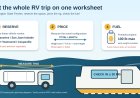
The best time to settle this question is at home, with the RV parked and no deadline. Download the manuals for the exact RV and installed components. Ask the manufacturer or dealer to identify approved lifting points and tire-service equipment in writing if the owner documentation is vague. Store those records offline, because a roadside location may have no signal.
Add the roadside-assistance number, VIN, tire size, wheel information, and service contacts to the same packet. If the RV has been modified, document who changed the jacks, frame, axles, suspension, wheels, or tires and retain the updated instructions.
The practical rule is simple: a stabilizer is a stabilizer until the exact manufacturer documentation says otherwise. Even a leveling system is not automatically permission to change a tire or work underneath. Identify the installed hardware, follow its stated load purpose, use only manufacturer-specified lifting points and equipment, and hand the job to a professional whenever that chain is incomplete.
Sources
What's Your Reaction?