









Campground dairy dip and cheese-board safety: keep it cold, track the clock
Keep dairy dips and cheese boards at 40°F or below, serve small portions over ice, use clean utensils, track cumulative time and make clear discard calls.

Campground dairy dip and cheese-board safety: keep it cold, track the clock
By Romana
Category: Cooking
A tub of ranch dip and a cheese board can spend longer warming up than anyone realizes. The cooler rides in a hot tow vehicle, the board waits while chairs are unfolded, and someone slides the leftovers back onto ice without knowing how long they were warm.
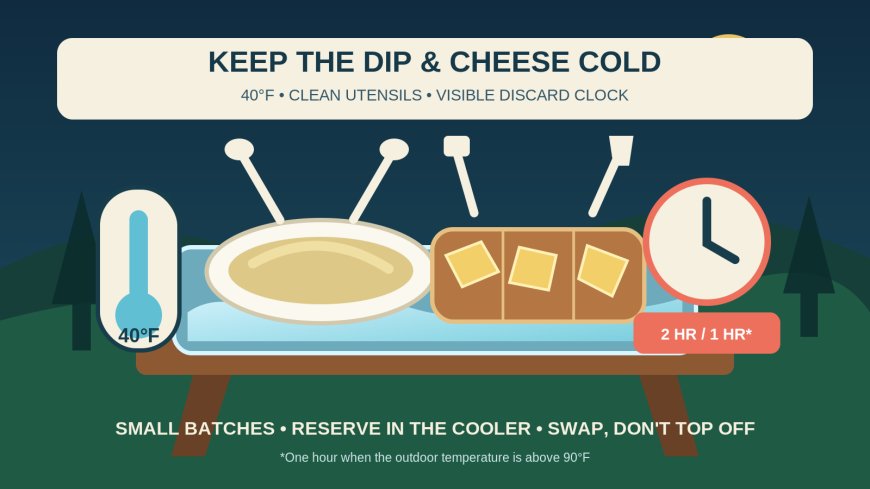
The short answer: Keep dairy-based dips and perishable cheese-board foods at 40°F or colder until service. Put out small portions over ice, keep the reserve in a closed cooler, and write down the time each portion leaves verified cold holding. If the food is not kept at 40°F or below, the consumer limit is two hours. Once the outdoor air exceeds 90°F, use a one-hour limit.[1][2][4]
Use a separate clean utensil for each dip and board item. Replace the whole serving dish instead of topping off an old one. Discard perishable food when its clock has expired or its time and temperature history cannot be established.

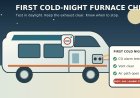
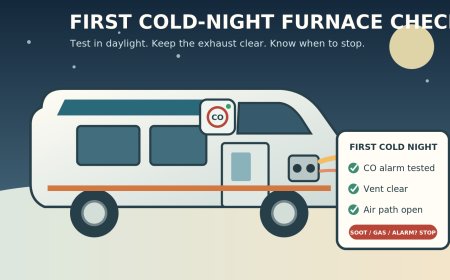
Cold holding is a setup you can verify, not a platter that merely started cold. Original illustration by RVCamping.info.
Decide what needs the cold plan
Treat yogurt, sour-cream, cream-cheese and mayonnaise-based dips as perishable. The same plan should cover fresh and soft cheeses, shredded cheese, cheese spreads, and any board that also carries deli meat, cut fruit, cut vegetables, cooked eggs or another food that normally needs refrigeration.
Some firm, aged cheeses may tolerate room temperature differently, but a campground buffet is a poor place to sort exceptions from memory. Product formulas, moisture and label directions differ. Read the package before the trip. If the label says to refrigerate, or if you cannot confirm an exception from the maker, put that item on the cold-holding plan. Keeping the entire board cold is the simple host rule and protects the more perishable garnishes sharing the tray.
This article uses federal U.S. consumer guidance. A permitted public event, commercial vendor or fundraiser may have to follow a state or local food code with different operating requirements.
Start at 40°F, not with a bag of melting ice
Chill the dip, cheese, board inserts and backup portions in the refrigerator before packing. FDA advises keeping cold picnic food at 40°F or below, using ice or frozen packs inside the cooler.[2] USDA gives the same 40°F cold-holding target for group meals and recommends an appliance thermometer in the cooler.[1]
Pack the food cooler directly from the refrigerator. Use enough frozen packs or ice to surround the food, fill empty space, and keep the lid shut. Put drinks in another cooler if possible; FDA notes that a frequently opened beverage cooler exposes perishables to warm air.[2] Store the food cooler in shade rather than in the sun or a closed hot vehicle.
Keep the dip sealed against meltwater. Wrap or box the cheese-board components so they do not sit in cooler water. Raw meat, poultry and seafood belong in securely wrapped packages in another compartment or cooler, where leaking juices cannot reach ready-to-eat food.[2][4]
The thermometer belongs inside the cooler where you can read it. Check at packing, arrival and before service. A cold can of soda or a few surviving ice cubes do not establish the temperature of the dip.
Build a serving station that stays cold
A practical campground station has a deep pan, ice, a shallow food container and shade. Set the dip bowl or board insert into the ice so the cold source reaches around the food rather than touching only the bottom edge. FDA recommends individual cold dishes on ice or a shallow container inside a deeper ice-filled pan; it also says to drain meltwater and replenish the ice.[2]
Use a clean food thermometer to check the dip itself. Stir a thick dip with its dedicated clean utensil, then measure near the center without touching the bowl. For a divided cheese board, monitor the cooler and the setup closely, bring out only a small quantity, and rely on the written service clock whenever you cannot verify that the food stayed at 40°F or colder.
Do not set a cold tray over ice once and walk away. Sun shifts, wind moves the shade, and a thin bed of cubes disappears quickly. Assign one host to check the pan and clock. A 30-minute look is a useful house routine, not a federal inspection interval.
Keep food covered until guests arrive. A mesh food tent may deter insects, but it does not refrigerate the platter. Likewise, a decorative board sitting on top of a few ice packs is not verified cold holding unless the food actually remains within the target.
Serve a small portion and keep the reserve closed
FDA recommends small buffet portions, with fresh serving dishes replacing the ones already in use.[3] That approach fits an RV cooler: put out one small bowl of dip and part of the cheese, then leave the refill containers cold and covered.
Do not pour fresh dip into the bowl that has been on the table. Do not scatter new cheese over the old pieces. FDA specifically advises replacing nearly empty dishes rather than adding new food to them.[3] Swapping the container keeps the new batch from inheriting crumbs, handling and elapsed time from the first one.
Write a piece of tape for each service batch:
- DIP 1: left cooler _ / discard by _
- CHEESE 1: left cooler _ / discard by _
- BACKUP: cooler temperature _°F at _
If the dish remains at 40°F or below, note the temperature checks. If it warms above that target or comes off the ice, use the time limit. The tape is an original planning tool, not an agency form.
One clean utensil per food
Wash hands before arranging the board and after handling trash, raw food or pets. FDA's outdoor guidance calls for clean hands and surfaces; where running water is absent, it suggests bringing a water jug, soap and paper towels, or using moist disposable towelettes for hand cleaning.[2] If the campsite has a handwashing station, use it rather than the dishwashing basin.
Give every dip its own spoon and every board section its own tongs, fork or spreader. Rest handles where guests can grasp them without touching the food. Bring covered spares. Replace a utensil when it falls on the ground, a guest grips the food-contact end, or it travels to another dish. Do not wipe it on a towel and return it.
CDC recommends washing utensils, cutting boards and counters with hot, soapy water after each food item is prepared, and keeping raw animal foods apart from ready-to-eat foods.[4] FDA also warns against moving a platter or utensil from raw meat to cooked or ready-to-eat food unless it has first been washed with hot, soapy water.[2]
The food thermometer needs the same discipline. Clean the probe according to its instructions before and after it enters a dip. A probe that just checked a raw burger does not go into onion dip.
The clock follows the food
Federal consumer guidance gives perishable food two hours without hot or cold control. When the outdoor air is above 90°F, that window drops to one hour.[1][2][4] Start the service clock when a batch leaves verified refrigeration or a cooler at 40°F or below, unless the serving setup continues to hold the food at that temperature.
Elapsed time is cumulative. If a cheese tray spent 35 minutes on the picnic table, returned to an unverified cooler, and came back out for another 40 minutes, the known total is at least 75 minutes. Cooling it again does not erase the earlier exposure.
Do not use the two-hour rule as a promise that food will always be safe until the final second. Keep the food cold whenever possible, use the shorter hot-weather limit when it applies, and make the discard time visible before conversation gets busy.
A reading above 40°F does not tell you how long the food has been warm. Pair measurements with a clock. If you discover a dip at 48°F but nobody knows when the ice melted, there is no reliable basis for calculating the remaining time.
Make the discard decision without a taste test
Discard the dip or affected board food when:
- it has spent more than two hours outside verified cold holding, or has reached one hour after the outdoor air rose above 90°F;[1][2][4]
- the start time is missing and you cannot establish how long it was warm;
- the cooler or serving pan failed and the last confirmed safe temperature is too old to reconstruct the exposure;
- a fresh batch was mixed into an older serving dish with an unknown history;
- raw meat, poultry, seafood or their juices contacted the ready-to-eat food;
- a dirty utensil, contaminated meltwater, chemicals, insects or campground debris got into food in a way that cannot be corrected; or
- the package requires refrigeration and its storage directions were not followed.
Do not smell or taste food to overrule the clock. FDA's buffet guidance tells consumers to discard perishables that exceed the applicable room-temperature limit unless they have been kept hot or cold.[3]
Keep leftovers only when their history is known and they stayed cold or remained within the applicable time window. Transfer them promptly to clean, covered containers in a refrigerator or cooler holding 40°F or below. A half-full dip bowl that has circulated through the crowd should not be scraped back into the untouched container.
The two-minute host check
Before opening the potluck table:
- The food cooler reads 40°F or below, and backup portions remain closed inside it.
- The dip and perishable board foods are nested over enough ice in the shade.
- Every serving batch has a start time, a discard time and its own clean utensil.
- Spare utensils are covered and the handwashing setup is ready.
- Raw grill supplies are separated from the ready-to-eat table.
- The host knows who will replace ice, swap small portions and remove food at the deadline.
The useful question is not whether the cheese still feels cool. It is whether the batch stayed at 40°F or below, or how much of its time-controlled window remains. A thermometer, small portions and one visible clock make that answer possible.
Evidence note: The 40°F cold target, two-hour limit, one-hour limit above 90°F, small-portion service, ice-pan method, utensil cleaning and separation guidance come from the cited federal sources. The tape labels, 30-minute host look and two-minute checklist are RVCamping.info planning tools, not agency requirements. This is consumer food-safety guidance, not medical advice or a substitute for rules governing a permitted event.
Sources
What's Your Reaction?