







Pack the RV, Keep a Plan B: A Safer Evacuation Setup
Turn your RV into a secondary evacuation kit with portable go-bags, departure cutoffs, route backups, and propane and fire checks.

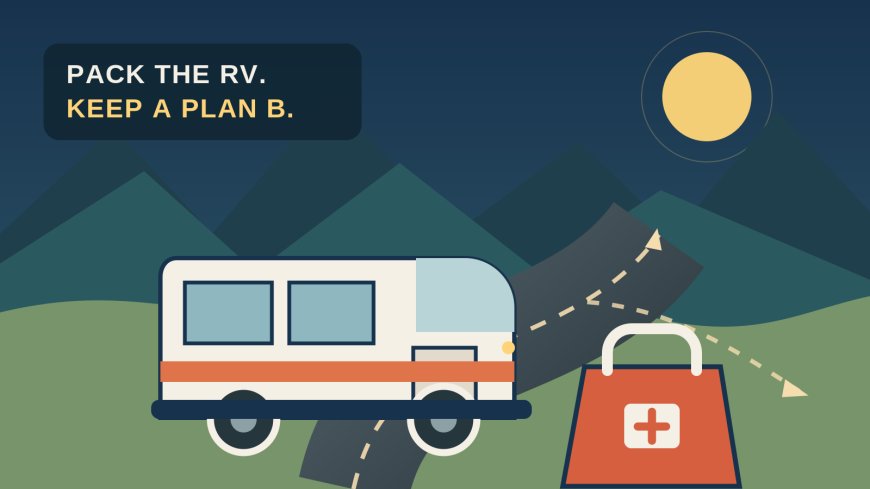
An RV can give an evacuation a head start: beds, basic cooking gear, storage, charging and a familiar place to settle after a rough day. It can also be in the shop, blocked behind another vehicle, too slow for the available route or unsafe to occupy. Build around both truths.
The idea for this guide came from Camping & RVing BC's article, "Turn Your RV Into An emergency kit," in which RVer Marjorie Moulton describes keeping an RV ready as a household "bug-out bag."[1] That is a useful prompt, but the safest version is more modest. Treat the RV as a secondary evacuation kit. Your primary plan must still work if you have to leave in the family car, accept a ride or walk to a pickup point.
Ready.gov makes the same point from the other direction: evacuation plans may involve travel on foot, and residents should follow local officials rather than cling to one route or vehicle.[2] The RV is an option. An evacuation order, road closure or responder's direction gets the final word.
Use a two-kit system
Keep one small, portable go-bag per person, then add an RV layer. The go-bag leaves with you regardless of transportation. The RV layer makes a usable vehicle more comfortable and self-contained.
Ready.gov recommends preparing supplies for home, work and vehicles because an emergency may not happen while everyone is at home.[3] This distributed approach fixes a weak spot in RV-only planning: the rig may be somewhere else when the alert arrives.
The bag that always goes
Use a backpack or other container each person can carry. Pack it for the person, not the RV:
- current medications and copies of prescriptions;
- identification, insurance information and emergency contacts in a waterproof pouch;
- phone charging cable and a compact power bank;
- water, food that needs no cooking and a manual can opener if needed;
- flashlight, simple first-aid supplies, hygiene items and a face covering;
- weather-appropriate layer, sturdy shoes and a change of socks;
- pet leads, carriers, medication, food and waste supplies;
- a paper map and a little cash.
Ready.gov's baseline calls for several days of supplies, including one gallon of water per person per day for drinking and sanitation. It also says to adapt the kit for prescriptions, older adults, infants and pets.[3] Carrying that full water quantity may be unrealistic for some people, which is exactly why the portable bag and the RV stock should be separate. Put what you can carry in the bag and record where the rest is stored.
The RV layer
Stock items that are useful only if the RV can leave safely:
- additional sealed water and shelf-stable meals;
- bedding, towels and clothes for the season;
- cookware that matches the appliances you can safely use;
- sanitation supplies and heavy garbage bags;
- spare charging cables, an inverter or approved power station, and task lighting;
- leveling gear, wheel chocks, basic tools and work gloves;
- copies of the RV registration, insurance, roadside-assistance details and manuals;
- pet bedding or a folding pen if your evacuation destinations permit it.
Date food, water and batteries with painter's tape. Avoid turning cabinets into a forgotten pantry. Heat, freezing weather, pests and time are hard on supplies, so inspect rather than assume.
Make the rig movable, not merely stocked
A packed trailer without a tow vehicle, accessible hitch or practiced driver is storage. A motorhome with a flat battery is a small room in the driveway. Readiness starts with departure.
Ready.gov advises keeping a vehicle at least half full of fuel at all times and filling it if evacuation becomes likely, since stations may close or lose power.[2] Apply that habit to the tow vehicle or motorhome. For diesel exhaust fluid, engine fluids and battery care, follow the vehicle maker's instructions instead of inventing a universal schedule.
Run a calm driveway drill twice a year:
- Move anything that blocks the RV.
- Hitch and connect the trailer, or prepare the motorhome for travel.
- Secure loose items, retract slides and awnings, and complete the maker's departure checklist.
- Load the portable bags, medication and pets.
- Pull forward far enough to prove the rig is travel-ready, then reset it.
Time the drill. The number is useful, but it is not a promise. Darkness, smoke, stress or a missing family member can stretch it. Decide in advance on a cutoff: if the RV cannot be rolling promptly, leave it and take the faster safe option.
Keep at least two destinations in different directions, plus one meeting point close to home. Ready.gov recommends identifying several destinations and alternate routes, while warning that official routes should take priority and shortcuts may be blocked.[2] Call campgrounds before depending on them. A reservation system, seasonal closure, power outage or local evacuation can make an otherwise suitable park unavailable.
Give propane and fire safety their own checklist
Extra supplies do not cancel the RV's ordinary hazards. The U.S. Fire Administration says RV owners should keep doors and windows clear for escape, practice an escape plan, keep a reachable extinguisher aboard and have a trained technician inspect the RV at least annually.[4] It also advises checking propane supply lines for damage and directing generator exhaust away and downwind from the RV.[4]
Add these checks to the departure drill:
- Test smoke, carbon-monoxide and propane alarms according to their manufacturers' instructions.
- Confirm that both planned exits open without moving cargo.
- Check the extinguisher as its label and manufacturer direct; do not bury it behind stored gear.
- Look for visible damage, loose cargo near appliances and blocked exterior vents.
- Arrange professional service when an appliance, detector, connector or propane system needs it.
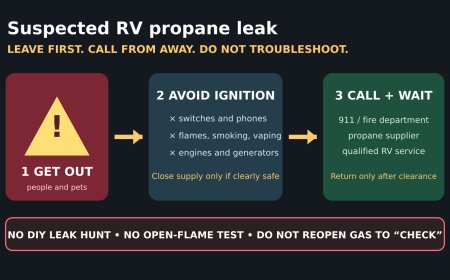
Do not improvise propane repairs during an evacuation. The Propane Education & Research Council says that if you suspect a leak, get everyone away, avoid switches, appliances, flames and other possible ignition sources, then call the propane retailer, 911 or the fire department from a safe location.[5] The council also says the full system should be checked by the propane retailer or a qualified professional before propane appliances are used again.[5]
Whether cylinders or valves should be open, closed, full or removed for travel depends on the RV, appliance, route, carrier rules and local law. Follow the manuals and the directions of qualified service professionals and authorities. A generic packing list cannot settle that safely.
Set conditions that rule the RV out
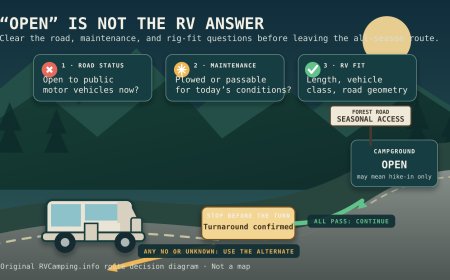
Write a short "leave it" list and keep it with the keys. The RV is not your evacuation vehicle when:
- officials prohibit oversized vehicles, trailers or travel on the planned road;
- the rig cannot be made roadworthy within your departure cutoff;
- the available driver is not comfortable operating it under current conditions;
- floodwater, debris, poor visibility or another hazard makes the route unsafe;
- the destination cannot accept the RV;
- you detect fuel, propane, electrical or mechanical trouble;
- taking the RV would delay compliance with an evacuation order.
This is the part most gear lists miss. A written cutoff protects against the very human urge to save an expensive vehicle or preserve the comfort it promises. People leave first.
Keep a one-page departure card
Tape a card inside a cabinet near the exit. Use short verbs and put tasks in actual order:
- Read the official alert and note the destination or route.
- Account for people and pets.
- Take medication, phones, keys and portable go-bags.
- Choose the RV only if it passes the "leave it" rules.
- Shut down and secure systems according to the RV maker's checklist.
- Tell your out-of-area contact where you are going.
- Leave by the official route.
Assign names to tasks, with backups. "Jordan loads the cat" works better than "load pets." Keep the card readable without power or cell service. Do not hide it in an app.
Review it when the clocks change
Twice a year, check expiration dates, seasonal clothing, medication plans, batteries, documents and pet supplies. Start the motorhome or tow vehicle and deal with warning lights now. Confirm that every intended driver can find the keys, portable bags, departure card and manual shutoffs. Book qualified RV and propane service rather than adding repairs to an emergency-day list.
After each trip, restore the evacuation stock before putting the RV away. During winterization or long-term storage, mark unavailable water, plumbing, batteries or appliances on the departure card. A winterized rig may still carry people and gear, but it should not quietly pose as a fully functioning shelter.
The payoff is not a miniature bunker. It is a household that can leave with less scrambling and still change plans. If the RV is safe, reachable and welcome at the destination, use it. If any of those conditions fail, grab the portable bags and go.
Sources
What's Your Reaction?