



After Yosemite's seasonal campgrounds close: which RV base still works?
A post-season Yosemite RV decision guide for choosing Upper Pines, Wawona, or Hodgdon Meadow by winter approach, exact rig fit, reservation status, and service expectations.

After Yosemite's seasonal campgrounds close: which RV base still works?
Once Yosemite's seasonal campgrounds shut down, three familiar names remain on the RV map: Upper Pines, Wawona, and Hodgdon Meadow. "Open all year" makes them sound interchangeable. They are not.
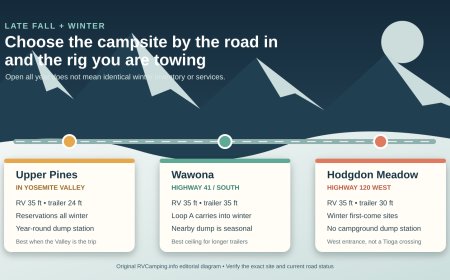
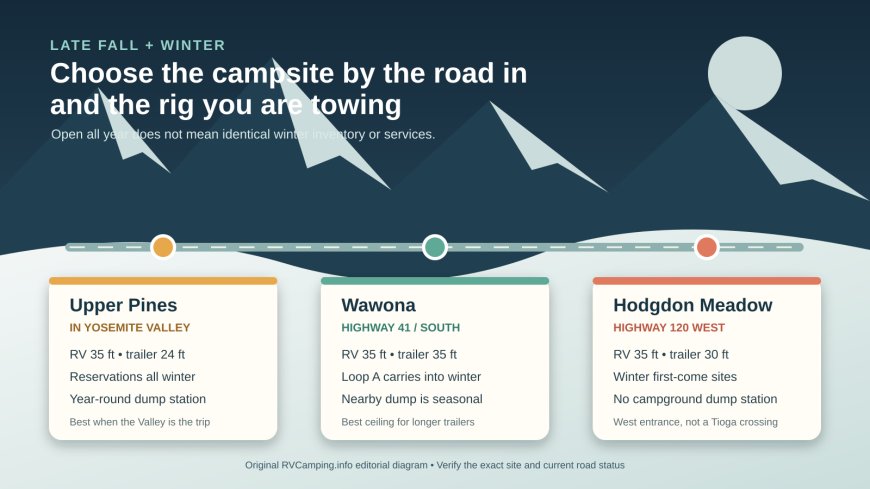
Upper Pines keeps reservations all winter and has the park's only year-round dump station. Wawona contracts to Loop A after Loops B and C close on October 26, then changes from reservations to first-come, first-served after its extended reservation period ends. Hodgdon Meadow also changes to first-come, first-served after October 26. All three are dry-camping choices, and each puts an arriving rig on a different approach road.[1][2]
This is a late-fall and winter decision guide. For a broader warm-season comparison, see our full Upper Pines, Wawona, and Hodgdon Meadow guide.
The winter shortlist is smaller than the map suggests
The seasonal closures remove Lower Pines, North Pines, Crane Flat, and the high-country campgrounds from the practical overnight list. The three remaining RV options differ in one way that matters before scenery enters the discussion: only Upper Pines stays reservable all year. Yosemite says Wawona and Hodgdon Meadow operate first-come, first-served in winter and warns that they can fill on weekends and holidays.[2]
For the 2026 transition, the dates are not identical:
| Campground | Late-fall reservation change | Published RV / trailer ceiling | Winter utility picture |
|---|---|---|---|
| Upper Pines | Reservations all year | 35 ft / 24 ft | Tap water; no hookups; year-round dump station |
| Wawona | Loops B and C close October 26; Loop A reservations continue through November 29 | 35 ft / 35 ft | Tap water listed; no hookups; nearby dump station is summer-only |
| Hodgdon Meadow | Reservations through October 26, then winter first-come, first-served | 35 ft / 30 ft | Tap water listed; no hookups; no dump station at the campground |
Those length figures are campground-level ceilings, not a promise that any open site will fit the rig. Yosemite explains that trailer and motorhome limits can differ because backing room and turning radius differ. If the equipment does not fit the reserved site, staff may not have another campsite to offer.[1]
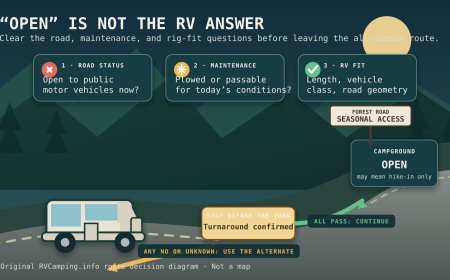
Start with the arrival road, especially after Tioga closes
A winter Yosemite booking begins outside the campground.
Hodgdon Meadow is half a mile inside the Big Oak Flat Entrance on Highway 120 from the west. That makes it the shortest tow after entering from Manteca. It does not create a winter crossing from the eastern Sierra. The park's cross-Sierra segment of Highway 120, Tioga Road, generally shuts in November and stays closed until late May or early June; during that closure, there is no park entry from the east. Highway 120 from the west remains open year-round, subject to weather and temporary controls.[3][7]
Wawona sits eight miles north of the South Entrance on Highway 41. It is the route-led choice for an arrival from Fresno and the only one of the three with a published 35-foot trailer ceiling. The tradeoff is distance from Yosemite Valley: Recreation.gov places it 27 miles and about 45 minutes away.[6]
Upper Pines requires towing into Yosemite Valley. Its listing directs arrivals from Highway 41, Highway 140, or Highway 120 west to follow signs into the Valley.[5] Highway 140 is worth checking when snow is in the forecast because the park says chain controls occur less often there than on Highway 41 and Highway 120 west. That is a relative tendency, not a clear-road guarantee.[4]
Any of the three approaches can come under chain control. Yosemite tells November-through-March visitors to expect possible chain requirements and to carry an approved device even in a four-wheel-drive vehicle whenever controls are in effect. Check that the device is allowed by the chassis, tire, and RV manufacturers; a campsite is useless if the legal winter approach is incompatible with the rig.[4]
Let the rig eliminate sites before the reservation system does
Upper Pines drops out first for many towable owners. Its published trailer maximum is 24 feet, even though its motorhome maximum is 35 feet. Wawona publishes 35 feet for both motorhomes and trailers. Hodgdon Meadow sits between them at 35 feet for an RV and 30 feet for a trailer.[1]
Use the full travel configuration when comparing that number with a site listing. A model name is not a measurement, and the campground ceiling does not describe every parking pad. Open the exact site record and account for the tow vehicle, any instruction about combined length, fixed accessories, and the room needed to back through the site's turn.
This produces a useful order of operations:
- Remove every campground whose published equipment ceiling is shorter than the rig.
- Remove every individual site that cannot accept the actual equipment type and length.
- Check the winter approach against the tow vehicle's chain-clearance and traction-device instructions.
- Only then compare Valley access, reservation certainty, and tank capacity.
A 28-foot travel trailer, for example, is already outside Upper Pines' campground-level trailer limit. Wawona remains in play at 35 feet, while Hodgdon Meadow remains possible at 30 feet, provided the exact open site fits.[1]
"Tap water" does not mean a full summer service package
The NPS comparison table lists tap water at all three campgrounds. It also says Yosemite has no electric, water, or sewer hookups at any campsite.[1] In other words, a working campground water system does not become a city-water connection for the RV.
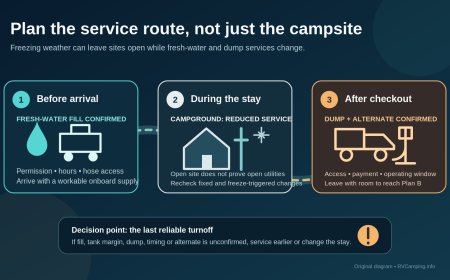
Dump access is the sharper winter difference. Upper Pines has an on-site dump station and potable water year-round.[1][5] The dump station near Wawona is summer-only, even though Wawona Campground itself stays open. Hodgdon Meadow has no dump station; its Recreation.gov page points campers to Yosemite Valley.[1][6][7]
That changes the choice for a long stay. A rig that can comfortably dry camp for one night may not have the tank capacity for four. Arrive with the freshwater and waste plan settled, but do not assume every warm-season convenience, restroom loop, store hour, shower option, or dump facility follows the campground's year-round calendar. Save the current alerts and the exact listing shortly before departure.
The reservation label changes the arrival plan
Upper Pines is the predictable option because the site is reserved. It is also the least forgiving option for a trailer longer than 24 feet. Recreation.gov lists flush toilets, drinking water, the Valley shuttle stop at the campground entrance, and the year-round dump station, but no campsite hookups.[5]
Wawona and Hodgdon Meadow trade reservation certainty for winter flexibility after their reservation seasons. First-come, first-served does not mean space will be waiting. Yosemite specifically notes that winter sites can fill on holidays and weekends.[2] Before towing into either campground, check current status and have a legal fallback outside the park. Sleeping in a vehicle is allowed only in a campsite registered to the camper; a full campground does not turn a parking lot or roadside pullout into overflow camping.[1][2]
Wawona also needs a loop-level reading. "Wawona is open" remains true after October 26, but Loops B and C are scheduled to close while Loop A continues. That is the clearest example of why a year-round label cannot be read as "the same inventory and services all winter."[1]
A practical choice for three common trips
Choose Upper Pines for a Valley-centered visit when the exact site fits, especially if reservation certainty, the shuttle, or a dependable dump stop matters more than a short tow from the entrance.
Choose Wawona for a longer trailer, a Highway 41 arrival, or a south-side itinerary. After October 26, plan around the smaller Loop A footprint, and after November 29, plan around first-come, first-served occupancy rather than a booked site.[1][2][6]
Choose Hodgdon Meadow for a Highway 120 west arrival and a rig within its 35-foot motorhome or 30-foot trailer ceiling. Do not use it as evidence that Highway 120 crosses the Sierra in winter; the west entrance can remain open while Tioga Road east of Crane Flat is closed.[1][3][7]
The safest booking sequence is route, rig, status, then services. Recheck all four before departure. Yosemite's open-all-year campgrounds keep winter camping possible, but they do not preserve a summer campground under a different date on the calendar.
Editorial note: This research-based guide uses official NPS and Recreation.gov pages archived October 22, 2026. It does not claim a firsthand drive, campsite inspection, or current vacancy check.
Sources
What's Your Reaction?