





RVParkShop.com: what buyers and sellers can use today
We checked RVParkShop's live listings, calculator, pricing, and public claims. See what campground buyers and sellers can use—and what to verify.

I went through RVParkShop’s public pages as a logged-out visitor on October 21, 2026. Two things were obvious. The site already has a useful campground deal calculator and a workable search page [2][5]. It also has public numbers, labels, and directory profiles that need cleanup before I would treat them as proof of a mature marketplace [1][10][11].
That does not make the site useless. It changes how I would use it: as a place to find leads, run an initial deal model, and organize questions—not as a substitute for the original listing, a property inspection, or professional advice [2][5][7].
Start with the live listing page, not the headline counters
The public listing index showed 14 properties when I checked. All 14 cards were marked “External,” which means the useful next click is the one that takes you back to the original source. Confirm that the property is still for sale, who is authorized to market it, and whether the price and basic facts are current before you spend time underwriting it [2].
One listing shows why that extra click matters. “Unlimited Potential for RV Park or Glamping Destination” displayed a $2.75 million asking price, but its acreage, site count, cap rate, and price-per-site fields were blank. The page named campground_connection as the original source and disabled RVParkShop’s own messaging and inquiry tools [13]. That is enough for a lead. It is nowhere near enough for a purchase decision.
The rest of the public site tells a less tidy story. The homepage and About page promoted 133 active campgrounds, while the listing index showed 14. The homepage also said the marketplace covered 14 states and offered access across 48-plus states. Those figures may refer to different pools of records or platform activity, but the public pages did not explain the difference [1][2][12].
I would not try to reconcile those counters myself. I would date the search, save the live listing, and work from the property records I can trace.
The calculator is the strongest public tool
RVParkShop’s RV Park Deal Calculator is available without a paid account. It works through the numbers a campground buyer actually needs to pressure-test: purchase price, down payment, loan terms, revenue, operating expenses, site count, occupancy, closing costs, immediate capital work, and opening reserves. It then shows estimated NOI, cap rate, cash-on-cash return, debt service, DSCR, price per site, and breakeven occupancy [5].
The useful part is not the answer on the screen. It is seeing which assumptions make the answer move.
I would run the same property at least three ways: the seller’s case, a more conservative revenue-and-expense case, and a repair case that includes the first round of electrical, septic, road, drainage, building, or pool work. If the deal only survives the seller’s assumptions, the calculator has done its job.
The page is clear about its limit. This is preliminary math based on what the user enters, not an appraisal, a lender commitment, or personalized investment advice [5].
Pricing is clearer on the dedicated pages
The homepage and pricing pages did not describe every promotion the same way. For example, the homepage referred to a $49 one-time package and a $99 package. The current seller-pricing page instead listed a $99 one-time Launch Boost, then monthly plans at $49, $97, and $197 [1][3].
I would use the dedicated seller and broker pricing page as the checkout reference and save a copy of the plan terms before paying. RVParkShop says a basic seller can create or claim one listing without a platform commission. Paid plans add placement, promotion, reporting, and buyer-matching features. The Terms say subscriptions renew unless canceled and that fees are generally nonrefundable after digital access or advertising begins [3][7].
Buyers can browse public listings without paying. Investor Pro was listed at $29 per month and advertised restricted listings, additional buy-box profiles, NDA requests, detailed metrics, community sessions, and up to three preliminary deal screens a month [4]. I did not test those account features, so I would judge the upgrade by the deals it unlocks—not by the length of the feature list.
Be cautious with “verified” labels
The public provider directory was the clearest reason not to let a badge do the diligence. One featured profile contained pseudo-Latin placeholder text and claimed “2011 yrs experience.” Other visible profiles used generic account-style names [10].
The success-story page made another unproven claim easy to spot. It displayed “Thousands Of Active Buyers” while also saying that no success stories had been published yet [11]. That is marketing copy, not transaction evidence.
Neither issue proves that a particular broker, lender, seller, or listing is illegitimate. It does mean you should verify the person and the property somewhere else. Check the broker or professional against the relevant state license database. Confirm the business address and phone independently. Ask for the original listing agreement or proof that the person is authorized to market the property. Do not send tax returns, bank statements, identification, or a deposit simply because a profile carries a “Verified” label.
How I would use RVParkShop as a buyer
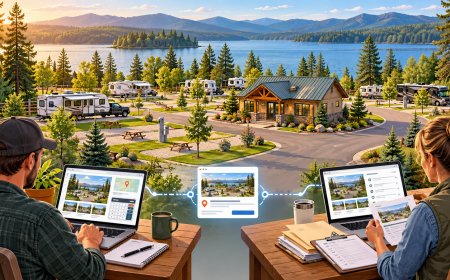
I would start with a written buy box: geography, total budget, available cash, minimum site count, acceptable seasonality, utility requirements, on-site housing needs, and the amount of repair risk I can carry. Then I would use the listing filters to make a short list [2].
For each candidate, I would keep the RVParkShop page beside the original source and build one evidence folder. That folder should eventually contain the offering memorandum, filed tax returns, bank support, trailing profit-and-loss statements, occupancy records, utility bills, permits, survey, title materials, vendor contracts, and capital-work history. The site’s own Terms put responsibility for financial, title, zoning, environmental, and physical diligence on the buyer [7].
The Education Hub can help generate questions about financing, valuation, utilities, and seller readiness [6]. It cannot answer whether one park’s septic system is undersized, whether its expansion rights survive a sale, or whether the revenue shown in a brochure reached the bank.
How I would use it as a seller
The free listing is a reasonable way to test whether the marketplace produces relevant inquiries before paying for more exposure [3]. I would prepare the listing in two layers: a public page with enough information to qualify interest, and a controlled file room for records that belong behind an NDA [3][7].
Before uploading anything, remove guest payment data, employee records, passwords, access codes, and unrelated account information. Be precise about who owns the listing, who may speak for the property, and which figures come from tax returns rather than projections. A buyer should not have to guess whether the asking price, site count, acreage, or operating numbers came from the owner, a broker, or an automated feed.
My read
RVParkShop is most useful today as a specialized lead-and-analysis tool. The calculator is worth using. The public listing filters save time. The free seller option lowers the cost of testing the marketplace.
I would not yet rely on the site’s headline inventory counts, audience-size claims, “verified” labels, or success language without independent evidence [1][2][10]. The honest description is simpler: RVParkShop can help start the work. It does not finish the work for you.
Sources
- RVParkShop homepage — accessed October 21, 2026.
- RVParkShop public listing index — accessed October 21, 2026.
- RVParkShop seller and broker pricing — accessed October 21, 2026.
- RVParkShop buyer and investor memberships — accessed October 21, 2026.
- RVParkShop RV Park Deal Calculator — accessed October 21, 2026.
- RVParkShop Education Hub — accessed October 21, 2026.
- RVParkShop Terms of Use — accessed October 21, 2026.
- RVParkShop Industry Contacts Directory — accessed October 21, 2026.
- RVParkShop Success Stories page — accessed October 21, 2026.
- About RVParkShop — accessed October 21, 2026.
- “Unlimited Potential for RV Park or Glamping Destination” listing detail — accessed October 21, 2026.
What's Your Reaction?