






Pasta salad at camp: a two-bowl cooler plan that keeps the clock honest
Cool pasta salad promptly, hold it at 40°F or below, serve small rounds over ice, run a visible two-hour clock and save only protected cold leftovers.

Pasta salad at camp: a two-bowl cooler plan that keeps the clock honest
By Romana
Category: Cooking
Pasta salad is easy to make ahead and awkward to manage at a campsite. The bowl is dense, the serving spoon travels from plate to table, and the cooler may be opened twenty times before dinner. A slick of dressing and a few ice cubes underneath do not tell you whether the food stayed cold.
The short answer: Cool the cooked pasta promptly, mix with cold ingredients, and chill the finished salad before it enters the RV cooler. Hold it at 40°F or below. At the picnic table, place only a small serving bowl in a deeper bowl of ice while the reserve stays sealed in the cooler. Write the service-bowl start time. Discard perishable salad after two hours without effective cold holding, or after one hour when the air is above 90°F.[1][2][4]
Do not pour a fresh cold batch on top of an older warm batch. Replace the service bowl with a clean bowl, a clean spoon and a new time label.

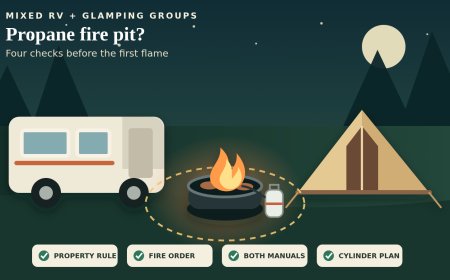
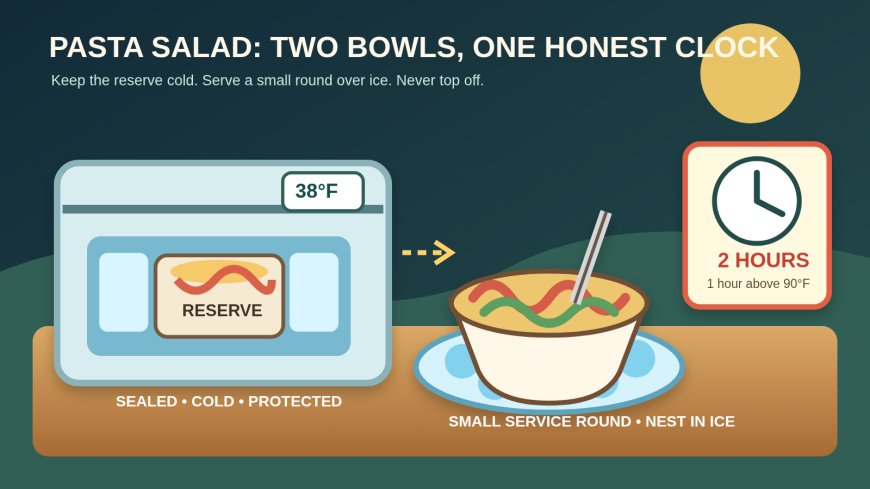
The two-bowl setup separates protected reserve from the bowl people are serving. Original illustration by RVCamping.info.
The salad is one cold-holding unit
It is tempting to rank pasta salads by dressing: mayonnaise equals risky, vinaigrette equals safe. That shortcut is unreliable. A mixed salad can contain cooked pasta, chopped vegetables, cheese, eggs, chicken or tuna. Its safety plan has to fit the most perishable ingredient and the handling history of the whole bowl.
Cooked pasta deserves attention even in a meatless salad. FDA's laboratory guidance says Bacillus cereus bacteria and spores are often detected in pasta and other foods. It also explains that toxin can form after spores germinate in food that was not stored properly.[3] That does not mean every batch contains a dangerous amount. It means cooking the noodles is not permission to leave a deep, warm pot on the counter for the afternoon.
The dressing does not erase the cold-chain requirement. A commercial mayonnaise may be acidic, while a homemade egg dressing, pesto, dairy dressing or vinaigrette has a different recipe. Once dressing is mixed through cooked pasta and other perishable additions, treat the finished dish as cold food unless a qualified process authority has established otherwise. At camp, there is no useful reason to gamble on the pH of a recipe.
Ingredient by ingredient, the practical risks look like this:
- Cooked pasta: cool it promptly and keep the mixed salad cold. Do not use smell or firmness as a temperature record.
- Egg, chicken, tuna, cheese or dairy dressing: these make the cold-holding need obvious. Cook egg or animal ingredients safely, then cool before mixing.
- Chopped tomatoes, peppers, herbs and greens: wash produce before cutting, then protect it from raw-meat juices and dirty utensils. FDA tells outdoor cooks to rinse produce under running water before packing and keep raw animal foods securely wrapped away from prepared food.[2]
- The cook and serving spoon: pasta salad is ready to eat after assembly. CDC warns that Staph risk rises when food contaminated during handling is held at unsafe temperatures; handwashing before preparation and service matters.[5]
Cool the batch before loading the RV
Start the clock at the stove, not when the cooler lid closes. A gallon-size container of hot pasta cools slowly in the center. USDA recommends shallow containers for faster cooling, and CDC likewise advises dividing warm or hot food among several clean, shallow containers before refrigeration.[1][4]
Drain the pasta into a clean setup. Follow the recipe for rinsing or not rinsing, but do not count a quick splash of cool water as proof that the center of a deep batch is refrigerated. Divide the pasta into shallow containers. Chill it promptly, and mix only with ingredients that are already cold. If you add freshly cooked chicken or eggs, cool those safely too.
Prepare the salad at home or in the RV only where you have potable water, clean hands, a clean counter and clean utensils. Keep raw grill meat on another board and in another cooler zone. CDC advises separating uncooked animal foods and eggs from items that will get no further cooking because contact and leaking juices can carry germs.[4]
Pack the finished salad in two containers:
- Reserve tub: most of the salad, sealed and labeled, for cold storage.
- First service tub: one round of portions, also sealed and cold.
Mark each with the preparation date and time. If the salad contains a commercially prepared ingredient with a more restrictive package direction, follow that direction. Do not mix yesterday's remainder into today's fresh tub; the older batch keeps its own age and temperature history.
Give the cooler a measurable job
Chill the salad and cooler before departure. Surround the containers with ice or frozen gel packs and place an appliance thermometer where it represents the food zone, not directly against a frozen brick. FDA's outdoor guidance sets 40°F or below for cold food and recommends a separate beverage cooler when possible so drink runs do not keep warming the perishable-food cooler.[2]
Use a simple card on the lid:
- PACKED: salad _°F at _
- ARRIVED: cooler _°F at _
- SERVE 1: small bowl out at _ / discard by _
- SERVE 2: clean bowl out at _ / discard by _
- RESERVE: stayed at or below 40°F? yes / no / unknown
These checkpoints are an RVCamping.info workflow, not a federal form. They solve an RV problem: the driver cannot watch a cooler thermometer continuously, but can make the important moments visible.
Secure the cooler away from a sunny windshield, heater outlet and warm engine doghouse. Keep the lid closed. Meltwater can soak labels and contaminate an unsealed container, so use watertight tubs. A thermometer reading above 40°F calls for a time decision, not a taste test. If the last safe reading was too long ago to reconstruct the exposure, the honest entry is "unknown."
Use two bowls, not one endless buffet
At service, leave the reserve tub in the cooler. Put a small amount into a clean serving bowl, then nest that bowl in a deeper pan of ice. FDA specifically recommends placing foods such as chicken salad directly on ice or setting a shallow container in a deeper pan of ice, with melted water drained and ice replaced.[2] USDA also recommends bowls of ice or small serving trays that are replaced often.[1]
Ice must contact the outside of the food bowl high enough to cool the salad, not sit as three cubes under its base. Keep meltwater out of the food. Shade the station and close the cooler before anyone starts serving.
Use one clean spoon for the service bowl. Do not let the spoon migrate to raw hamburgers, pet bowls or unwashed plates. If it falls on the ground, replace it. Hands should be washed before setting up and after handling raw foods. CDC identifies handwashing as a primary defense against Staph contamination.[5]
When the service bowl gets low, do not top it up. Remove it. If its safe time has expired or cannot be established, discard the contents. Bring out a clean, cold bowl with a fresh portion from the reserve and write a new start time. This is the point of two-bowl service: the protected batch does not inherit the exposure and handling history of the picnic table.
For a large group, several small rounds beat one heroic bowl. A four-person portion that disappears in 20 minutes is easier to manage than dinner for twelve sitting through campsite setup, conversation and second helpings.
The clock follows the food
Cold holding stops when the salad is no longer maintained at 40°F or below. Federal consumer guidance gives perishable food two hours at ordinary outdoor temperatures and one hour when the temperature is above 90°F.[1][2][4] A hot RV interior can trigger the shorter limit even if the shaded campground reading is lower.
Count time cumulatively. If a service bowl spent 35 minutes on the table, returned to a weak cooler for 25 minutes above 40°F, then came out for another 30 minutes, its known time without effective cold holding is 90 minutes. A return trip beside melting ice does not reset the clock.
A bowl nested properly in replenished ice may remain cold, but verify the food or its immediate holding environment rather than assuming. If you cannot verify 40°F or below, keep the time clock running. The clock is a conservative field tool for uncertainty; it is not a license to hold food warm until the final minute.
Write the discard time when each round starts. Do not rely on "we just put it out." At a shared campsite, nobody has the same memory of when the lid came off.
Decide what becomes a leftover
The clean reserve tub has the best chance of becoming tomorrow's lunch. Keep it sealed at 40°F or below, use a clean utensil when portioning, and return it to reliable refrigeration promptly. USDA advises wrapping or sealing leftovers and refrigerating them quickly; CDC recommends shallow containers for rapid chilling.[1][4]
The service bowl faces a stricter decision. Discard it if:
- it passed the two-hour limit, or the one-hour limit above 90°F;
- its start time is missing;
- the ice bath failed and its warm-time history is uncertain;
- diners ate directly from it or returned food from plates;
- the serving utensil contacted raw food, the ground or another contamination source.
Do not blend table leftovers into the cold reserve. Do not save an expired bowl by adding ice, freezing it or reheating it. CDC notes that Staph can make a toxin in food and that cooking does not destroy that toxin.[5]
For salad that stayed protected and cold, follow the shortest applicable storage limit among the ingredients and package labels. USDA's consumer chart lists homemade or store-prepared macaroni, egg, chicken, ham and tuna salads at three to five refrigerated days, but the trip does not pause that count.[1] Day one at home is still day one after the RV reaches camp.
Before saving any portion, ask three questions: Was it continuously cold? Was it protected from diners and dirty tools? Is its preparation date known? Three clear yes answers support refrigeration. A no or an unknown means discard.
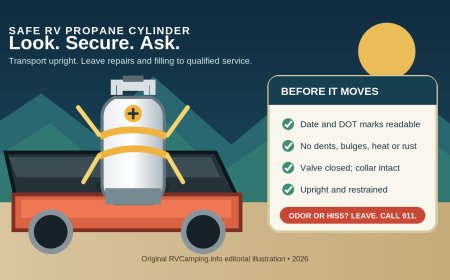
A five-minute setup card
Before people line up, make this check:
- Cooler thermometer reads 40°F or below.
- Reserve tub is sealed and buried in the cold zone.
- Small service bowl is nested in a deeper pan of fresh ice.
- Clean spoon, spare bowl and replacement ice are ready.
- Start and discard times are written where everyone can see them.
The useful distinction is not creamy versus vinegar dressed. It is protected versus exposed, cold versus unverified, and timed versus guessed. Two bowls make those differences visible without turning campsite dinner into a food-safety lecture.
Evidence note: Federal sources support the 40°F target, two-hour and one-hour limits, shallow-container cooling, ice-bath service, separation and handwashing guidance, and the pasta-associated organism discussion. The two-bowl reserve, lid card and round-by-round clock are original RVCamping.info planning tools, not agency requirements. This is U.S. household food-handling guidance; commercial food operations follow their own health codes.
Sources
- Leftovers and Food Safety | USDA FSIS (official source; evidence saved locally)
- Handling Food Safely While Eating Outdoors | FDA (official source; evidence saved locally)
- BAM: Quantitative Analysis for Cereulide in Food Products | FDA (official source; evidence saved locally)
- Preventing Food Poisoning | CDC (official source; evidence saved locally)
- About Staph Food Poisoning | CDC (official source; evidence saved locally)
What's Your Reaction?