








Cooked pasta at camp: cool the noodles, manage the sauce, and reheat safely
An RV-specific workflow for moving cooked pasta from the pot into shallow containers, keeping sauce and travel portions cold, and reheating safely.


Cooked pasta at camp: cool the noodles, manage the sauce, and reheat safely
By Romana Category: Cooking
A stockpot is a poor storage container in an RV. It holds a tight mass of hot noodles, takes up most of a small refrigerator shelf, and invites everyone to leave dinner on the stove while the galley gets cleaned. The safer move starts before serving: reserve space for several low, shallow containers and decide which portions will be eaten on which day.
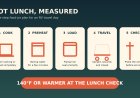
The short answer: Verify hot holding at no less than 140°F, or start the cooling handoff. Within two hours of cooking, divide the noodles and sauce into shallow meal-size containers and refrigerate them; use one hour rather than two when the food is exposed to outdoor temperatures above 90°F. Keep the refrigerator or travel cooler at 40°F or below. Plan to finish cold leftovers by day three or four. Warm only the portion needed to 165°F.[1][2][3]

Give every extra serving a container, a cold destination and a planned meal. Original RVCamping.info illustration.
The pot-to-fridge handoff
Do not use the cooking pot as a waiting room. Once the meal leaves verified hot holding, its time outside refrigeration is running. USDA says leftovers must enter refrigeration within two hours after cooking or removal from a warming appliance. Perishable food exposed to temperatures above 90°F gets a one-hour limit instead.[1] That shorter clock matters beside a sunny picnic table, inside a hot tow vehicle, or in an RV galley with the air conditioner off.
Set out clean containers before the pasta is drained. Low, broad containers are more useful than one deep tub because heat has less distance to travel. USDA and FDA both direct consumers to divide large quantities of leftovers among shallow containers for quicker cooling.[1][2]
Use this campsite sequence:
- Write the time when active hot holding ends.
- Serve dinner with a clean utensil.
- Transfer the amount worth saving promptly into clean, low-profile containers.
- Spread the noodles in a loose layer rather than pressing them into a hot brick.
- Put the small containers into a refrigerator that is already holding 40°F or below.
Hot food may go directly into the refrigerator. USDA also permits a quick chill with cold water or ice surrounding the food container before it goes into refrigeration.[1] If an RV refrigerator is already packed or struggling in the heat, use the bath around a closed container, keep water out of the food, and still finish the whole handoff within the applicable time limit. A long countertop cool-down is not part of this workflow.
Leave enough air space for the refrigerator to work. Do not stack several hot containers tightly or block the cold-air outlet. The practical test is the appliance thermometer, not the control dial or the feel of the door. FDA calls for a refrigerator temperature of 40°F or below.[2]
Decide whether the noodles and sauce travel together
Plain noodles and sauce can share a container, but that choice affects cooling and reheating. A thick meat sauce, cheese sauce or cream sauce can turn a loose serving into a dense mass. Smaller portions matter more when the mixture is heavy.
Separate storage is often easier in a compact galley. Put noodles in one shallow container and sauce in another, then pair them on the label. This makes it possible to heat the sauce thoroughly without scorching the pasta and to add only the amount needed. It also avoids flooding every noodle portion if plans change.
Do not treat tomato sauce as shelf-stable after dinner simply because unopened jars once lived in the pantry. After sauce has been opened, heated, served or mixed with other ingredients, follow its label and handle the saved portion as a leftover. Meat, seafood, dairy, eggs or cooked vegetables in the sauce may impose the more restrictive handling rule. If two components share one container, use the shorter safe storage period of the pair.
Keep the serving path clean. A spoon that touched diners' plates should not go back into the reserve sauce. A utensil used on raw sausage or chicken cannot be reused for cooked sauce until it has been washed in hot, soapy water. The goal is to close the saved containers before they collect extra handling, dust or raw-food drips.
Label portions for the actual trip
A lid without a date leaves the next cook guessing. Mark each container with:
- the food name;
- the original cook date and time;
- whether sauce is mixed in or stored separately;
- the intended meal; and
- a discard date based on the original cook.
USDA sets a three-to-four-day refrigerator window for leftovers and notes a three-to-four-month quality window in the freezer.[1] For an RV trip, assign every refrigerated pasta portion to a meal inside that refrigerator window. Freeze earlier if the schedule no longer fits. Moving Wednesday's pasta into a cooler on Friday does not make it Friday food.
This is also where portion size pays off. One container can become tomorrow's lunch while another stays closed for the following night. Opening, warming and returning a family-size tub creates a muddled history. Meal-size containers keep the untouched portions on a clean, cold track.
Move cold pasta in a travel cooler
A travel cooler should preserve a cold portion, not cool a container that is still warm from the stove. Chill the pasta in the refrigerator first. Just before departure, place the closed container among ice or frozen gel packs. FDA's outdoor guidance sets the same cold target for a cooler: 40°F or below.[3]
Put a thermometer where it reflects the food compartment rather than touching a frozen pack. Record a reading at loading, after arrival, and before the meal. Secure the cooler against sliding or direct sun in the windshield.
If possible, put drinks in a different cooler. FDA recommends separating beverages from perishables because frequent drink stops repeatedly admit warm air.[3] Keep pasta above meltwater in a sealed container. Raw meat intended for a later grill meal belongs in a separate leakproof zone where its juices cannot reach the cooked noodles or sauce.
A simple travel card works:
- LOADED: ____°F at ____
- ARRIVED: ____°F at ____
- OPENED FOR MEAL: ____°F at ____
- OUT OF COLD HOLDING: ____
- DISCARD DEADLINE: ____
The card is an RVCamping.info planning tool, not a federal form. Its job is to preserve a usable history when the day includes fuel stops, trail time and campsite setup.
Reheat one meal, all the way through
Take out the amount that will be eaten. Reheat leftovers to 165°F and verify the center with a clean food thermometer.[1][2] Pasta heats unevenly, especially when noodles have clumped or a microwave creates hot edges and a cold middle.
On a stovetop, add the stored sauce and enough liquid to prevent scorching, stir through the densest clumps, and check more than one place. FDA directs consumers to reheat sauces through a boil.[2] For a pasta-and-sauce meal, bring the sauce through that visible boil and still confirm that the noodles and any meat at the coolest point reach 165°F.
In a microwave, use a vented cover, stir and rotate the food, allow the standing time specified for the appliance or meal, then check several spots. Steam on the lid is not a temperature reading. If one area is below 165°F, continue heating, stir again and retest with a clean probe.
Eat the reheated portion now. This package uses a one-portion, one-reheat routine as an RV planning rule. It is not presented as a federal ban on every second reheating. The routine simply avoids repeated warm-ups, shared utensils and another cooling cycle in a refrigerator with limited capacity.
Keep it or discard it?
Use the record, not a sniff test.
Keep it cold when the container entered refrigeration within the correct two-hour or hot-weather one-hour window, has remained at 40°F or below, and is still within three to four days of the original cook.[1][2][3]
Reheat and eat it when that cold history is intact and the portion can be taken promptly to 165°F.[1][2]
Discard it when any of these applies:
- it sat without hot or cold control beyond two hours, or beyond one hour above 90°F;
- nobody can establish when it left the pot, refrigerator or cooler;
- the cooler was warm and there is no time record showing how long;
- raw meat juices, dirty water or an unwashed utensil contaminated it;
- it has passed the three-to-four-day refrigerator window; or
- it was partially reheated, forgotten and left warm again beyond the applicable limit.
Do not taste questionable pasta to investigate its history. Smell, texture and a quick blast of heat cannot reconstruct missing time or undo contamination. When the log has a gap, use a shelf-stable backup meal.
The five checks before washing the pot
Before cleanup, confirm that:
- hot holding has ended and the clock is written down;
- noodles and sauce are in shallow, meal-size containers;
- the containers have a cook date and planned meal;
- the refrigerator is verified at 40°F or below; and
- any travel portion has a pre-chilled cooler, frozen packs and its own temperature card.
This is narrower than a general leftovers guide. The focus is the awkward food in front of an RV cook: springy noodles that compact in a deep pot, sauce that may need its own cooling and reheating path, and a cold portion that may travel before the next meal.
Evidence note: USDA and FDA sources support the time limits, shallow-container cooling, 40°F cold holding, three-to-four-day refrigerator window, cooler practices, sauce reheating and 165°F leftover endpoint. RVCamping.info created the meal labels, travel card and one-portion reheating routine as conservative trip-planning tools. This article is household food-handling guidance, not medical advice or a food-service regulation.
Sources
- Leftovers and Food Safety — USDA Food Safety and Inspection Service — prompt refrigeration, shallow-container cooling, refrigerator duration and 165°F reheating.
- Safe Food Handling — U.S. Food and Drug Administration — refrigerator temperature, hot-weather timing, microwave handling and reheating sauce.
- Handling Food Safely While Eating Outdoors — U.S. Food and Drug Administration — cooler temperature, ice or gel packs, separate drink storage and outdoor service limits.
What's Your Reaction?