








Autumn leaf-drop RV departure plan: clear, inspect, or leave
A model-specific autumn campsite plan for checking leaf and branch debris, retracting RV slideouts safely, and leaving tree or wind hazards before conditions worsen.

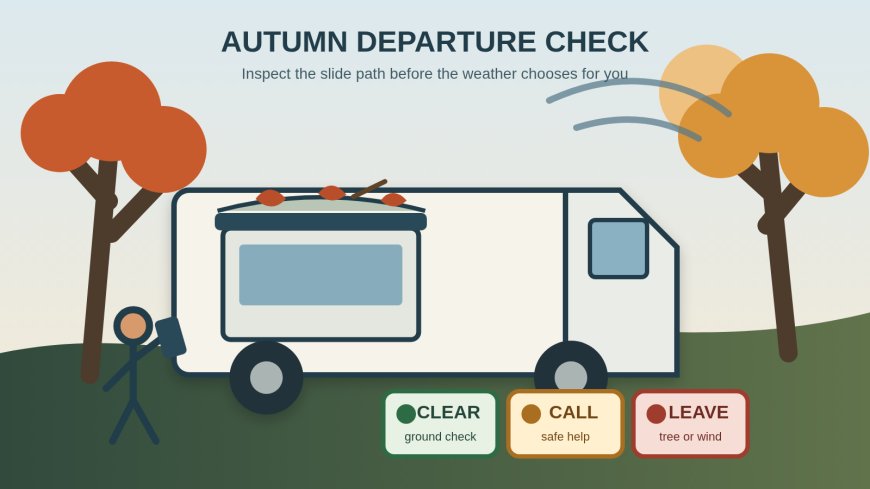

Autumn leaf-drop RV departure plan: clear, inspect, or leave
By Romana
Category: RV Camping (ID 1)
A cold front does not need to freeze the plumbing to wreck a fall campsite exit. Wet leaves, twigs and seeds can collect above a slideout where you cannot see them from the doorway. A gust can add another load overnight. Then checkout arrives, the slide motor starts, and the debris is pulled toward the seals and coach interior.
This plan is for that narrower autumn problem: deciding whether a slideout or topper is clear enough to retract, whether you can inspect it without climbing, and when wind or overhead tree conditions make an early move safer than campsite improvisation. It replaces a requested first-freeze water-system article because RVCamping.info recently covered that subject several times, including an overnight hose-to-tank plan. The useful gap was leaf-drop departure planning.
Start with the site, not the slide switch
Look up before leveling. The National Park Service warns that live and dead trees can shed limbs or fall even in calm conditions. It tells visitors to avoid camping beneath visibly damaged or suspended limbs and near trunks with basal rot or cracked, peeling bark.[1] A camper is not a tree inspector, so treat obvious defects as a reason to ask campground staff for another site, not as a repair project.
Repeat the look-up after a windy day. Note what has changed: a new hanging limb, fresh debris on the roofline, a branch now touching a topper, or cracking sounds. Report hazards to staff. Do not cut, pull or shake campground trees.
The weather trigger should be local and official. The National Weather Service says a High Wind Watch means sustained strong winds are possible and advises securing outdoor items and adjusting plans. A Wind Advisory means strong winds are occurring and outdoor objects should be secured; a High Wind Warning calls for shelter and, if driving, slower travel with both hands on the wheel.[2] Those products use local criteria. They do not give an RV-specific safe wind speed.
That distinction matters. Your RV, slide geometry, topper model, tree exposure and escape route determine the decision. Do not turn a generic gust number from a forum into a universal retract-or-stay rule.
Identify the equipment before making a procedure
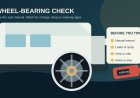
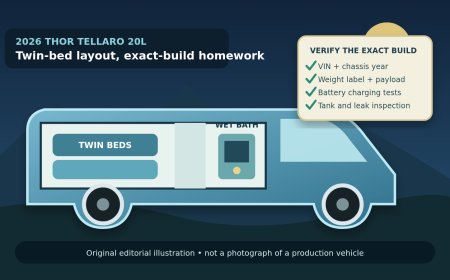
Record the RV make, model, model year and serial number. Then identify each slide mechanism and any slide topper by manufacturer, model or label. Save the coach manual and component manuals offline.
The 2026 Dometic Slide Topper manual applies to the hardware and fabric-roller assemblies listed on its cover. For those products, Dometic warns against closing while the fabric carries leaves, sticks or similar material because the room or topper can be damaged. It also says a topper left open in rain may spill collected water over its sides while closing.[3] That is model-specific guidance, not proof that every topper behaves the same way.
A separate Lippert manual is explicitly for an In-Wall slide-out “Winnebago Version.” It requires a clear travel path, people and pets kept away, and a coach on the most level surface available with the leveling or stabilizing system set before operation.[4] If your label identifies another system, use its manual instead.
Winnebago's broader slideout guidance says debris such as dirt, tree seeds, twigs and leaves should be removed before a slide roof is drawn into the coach. The same article tells owners to verify which hydraulic or other system is installed before troubleshooting.[5] Treat that as a prompt to find exact documentation, not permission to copy a Winnebago routine onto another brand.
Use a ground-based inspection first
Do the departure check in daylight and before the wind arrives.
- Close windows, cabinets and interior doors that the coach manual says to secure.
- Move people, pets, chairs, cords and storage-bin doors out of the slide's path.
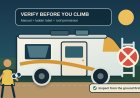
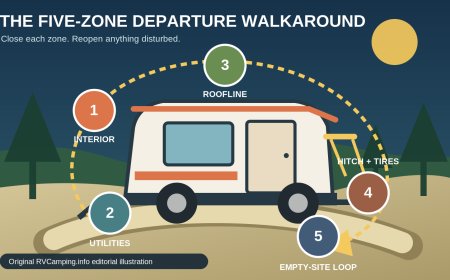
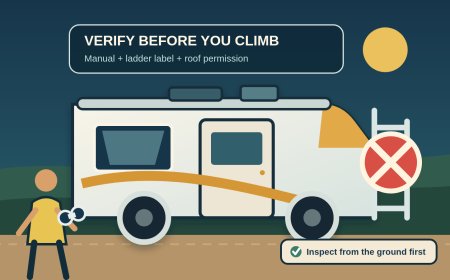
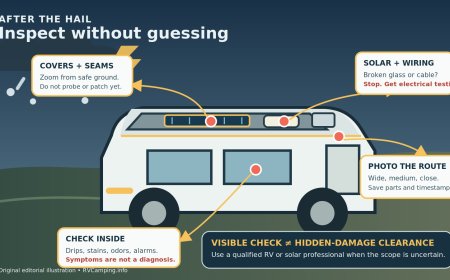
- From the ground, inspect both side edges, the outer rail, topper ends and visible roofline. Binoculars or a phone camera on a purpose-built extension can improve the view without putting weight on the RV.
- Look for leaves, sticks, seed pods, pooled water, snow or ice, fabric sag, a displaced cover, a branch touching the assembly, damaged seals or uneven alignment.
- Compare what you see with the exact manuals before touching a control.
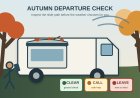
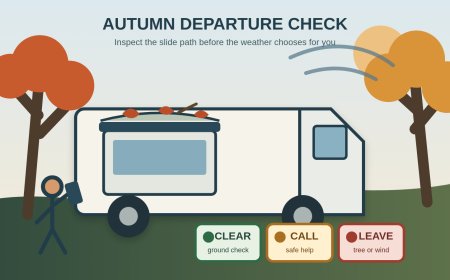
- Inspect early: leaves are falling steadily, rain is forecast, or debris is already appearing on the topper.
- Retract early: the exact manual calls for stowing in expected conditions, staff announces worsening weather, or you can safely close before the wet or windy period.
- Stop and call: debris cannot be removed from the ground by an approved method, the slide does not track normally, the topper is damaged, or the installed system is not identified.
- Leave people first: cracking sounds, falling branches, a closure order, or immediate severe-weather danger develops.
- ☐ NWS alerts and the campground message checked
- ☐ Trees and overhead branches checked from a safe location
- ☐ Coach, slide and topper manuals matched to labels
- ☐ Slide roof/topper viewed from the ground in daylight
- ☐ People, pets and objects clear of the travel path
- ☐ Leaves, sticks, water, ice, sag and alignment checked
- ☐ Clear, hold-for-help or leave-people-first path chosen
- ☐ Retraction stopped at the first abnormal sound or motion
- ☐ No roof climbing, tree work or improvised override
- ☐ Campground staff notified if the site or equipment is unsafe
- [1] National Park Service: Tree Hazards (updated August 10, 2023; accessed October 3, 2026).
- [2] National Weather Service: Wind Warnings, Watches and Advisories (accessed October 3, 2026).
- [3] Dometic Slide Topper Installation and Operation Manual, Revision G (Form 4445105167/3314719.000, dated February 18, 2026).
- [4] Lippert In-Wall Slide-Out (Winnebago Version) Owner's Manual (CCD-0001604, revised July 12, 2018).
- [5] Winnebago: RV Slideout Best Practices & Maintenance (December 2022; accessed October 3, 2026).
Do not climb onto a wet roof or slideout roof to save a checkout deadline. Do not lean an unsecured household ladder against the slide room. The Dometic manual assigns installation and maintenance to a qualified service person and warns about pinch and crush hazards.[3] If safe access requires roof work, stop and call the campground, dealer, mobile RV technician or other qualified service provider.
A slide topper reduces direct debris on the hard roof, but it does not make the inspection disappear. Leaves can sit on the fabric, twigs can catch at the roller, and water can pool. A topper is equipment with its own limits, not a self-cleaning roof.
Choose one of three departure paths
Clear and retract
Use this path only when the area is calm enough to work, the overhead site remains acceptable, the inspection is complete, and the debris can be removed by a method allowed by the exact manuals without climbing or entering a pinch zone.
Keep everyone clear. Remove light debris with the approved ground-based method. Reinspect the full visible path. Then retract exactly as the coach and mechanism manuals direct. Watch both sides from a safe position if the manual and available helpers permit it. Stop immediately for skewing, a new noise, jerking, resistance, fabric bunching, a seal folding abnormally or debris moving toward the wall.
Hold and call for help
Hold when the debris is visible but cannot be reached safely, pooled water or ice changes the load, a topper is sagging, the mechanism identity is unknown, or the slide begins moving differently from normal. Tell campground staff before checkout passes. A short extension arranged with staff is safer than forcing the room closed.
Do not repeatedly cycle a binding slide. Do not invent a lubricant, pry point or manual-override sequence. The location and procedure vary by mechanism, and some service steps expose moving parts or stored spring tension.
Leave the campsite plan, not necessarily the RV
Wind plus suspect trees changes the priority. If you hear cracking, see a branch or tree beginning to fail, or staff orders the area closed, move people to the safe location directed by officials. The NPS advice is blunt: run if you hear cracking or snapping from roots, trunks or branches.[1]
If there is time to depart before hazardous wind arrives, retract and leave while conditions and roads are still manageable. If the slide cannot be made travel-ready without unsafe work, do not drive with it extended. Move occupants to safe shelter, notify campground staff, and arrange qualified assistance or recovery. Protecting the mechanism never outranks avoiding a falling-tree or high-wind hazard.
Set the autumn triggers before bedtime
Write down four triggers:
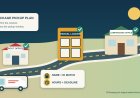
Also keep a departure fallback: campground office number, after-hours contact, mobile service number, roadside-assistance terms, and a place for occupants to shelter. Photograph the normal slide position and labels before the trip. At the site, photograph a problem before attempting anything, provided you can do so without remaining in a hazardous area.
The five-minute leaf-drop card
Autumn departure trouble often starts with something small enough to ignore: a handful of wet maple leaves, one twig at the topper edge, a forecast that worsened after dinner. The answer is not a more forceful button press. Inspect while you still have daylight, use the instructions for the hardware actually installed, and give yourself permission to wait for qualified help or leave the hazard rather than inventing a campsite repair.
Sources
What's Your Reaction?