

Before you book a glamping unit in bear country: the mixed-group checklist
Confirm food and toiletry storage, cooking location, vehicle rules, trash, pets and exact-unit bear procedures before booking a glamping stay.

Before you book a glamping unit in bear country: the mixed-group checklist
A glamping listing can say "private tent," "pet friendly" and "parking included" without answering the bear-country questions that decide whether the stay will work. Where does toothpaste go at night? May guests cook beside the unit? Does the property's "vehicle storage" rule apply to the RV, the tow car, both or neither? Who handles a full trash enclosure after the office closes?
For a group split between RV sites and glamping units, settle those details before the cancellation deadline. The booking goal is not a generic promise that the property is bear aware. It is a written plan for the exact reservable unit, exact RV site and exact dates.
The short answer
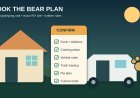
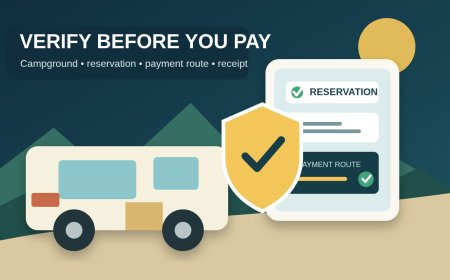
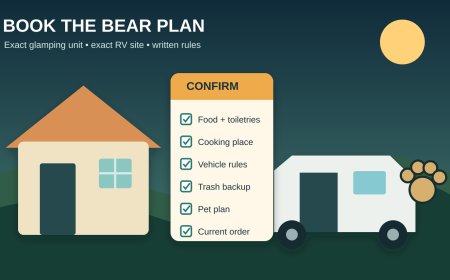
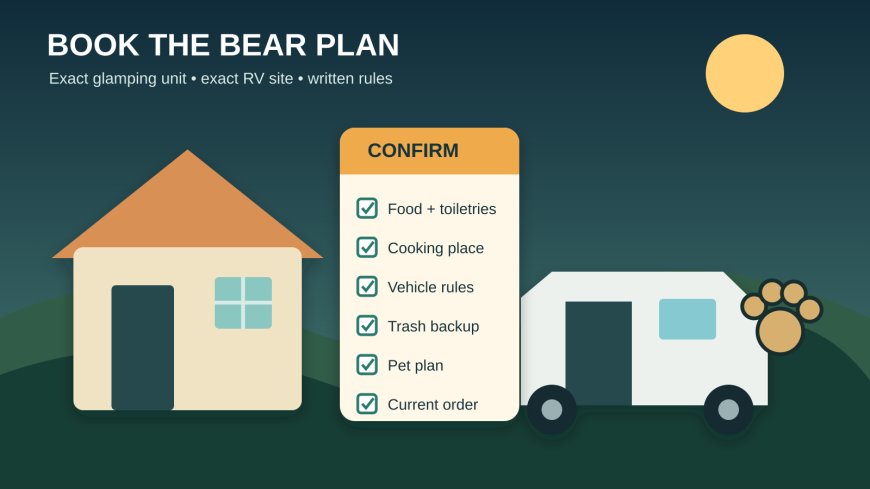
Before paying, ask the property to identify six things in writing:
- the approved overnight location for food, drinks, toiletries, pet supplies and cooking gear;
- the permitted cooking and eating location for the assigned glamping unit;
- which vehicles or hard-sided RVs qualify as storage, at what hours, and with which doors, windows or compartments closed;
- the trash and recycling route, including an after-hours or full-container backup;
- the pet rule for the unit, trails and shared spaces, plus storage of food, bowls and waste; and
- any current wildlife order that changes the advertised amenity or requires a different locker, container or unit.
General bear guidance is useful for building the questions, but it cannot answer them for a private yurt, safari tent or cabin. The National Park Service says food-storage regulations differ among parks and tells visitors to check the destination's rules.[1] The Forest Service likewise tells campers to contact the local office for area requirements.[2] A commercial glamping property may add stricter house rules, and temporary bear activity can change the plan again.
Book the storage volume, not just the bed count
Start with everything that smells, not only groceries. NPS treats drinks, personal-care products, waste, ice chests, camp fuel and kitchen equipment as attractants alongside food.[1] The group's packing list should also include pet food, treats, bowls, medications with an odor, dish supplies, grease, empty cans and wrappers.
Ask what storage is assigned to the glamping unit and request inside dimensions and a current photo of the latch. "Bear box available" does not reveal whether it is beside the unit, shared across several rentals or large enough for two coolers plus dry food and toiletries. Ask whether clean stoves, grills, pans and tableware must fit too. At Rocky Mountain National Park's Moraine Park Campground, the 2026 bulletin requires lockers unless a camper is staying in a hard-sided RV. Even a nominally bear-proof cooler, cooking appliances and reusable dishes belong in the locker there.[5] That is one campground's rule, not a universal exception for every RV.
Do a rough packing test at home. Put the largest cooler, food bins, toiletry bags, pet container and cleaned cooking gear into a rectangle matching the stated locker dimensions. If the load does not fit, ask for another locker, reduce the load or choose a different property. Do not make the RV the unspoken overflow plan.
Ask where cooking is actually allowed
A furnished tent may have a deck, fire ring and picnic table, yet the property may require all cooking at a common shelter or a separate pad. Ask where guests may use a stove, grill, coffee maker and fire ring, whether any appliance is supplied, and whether cooking beside or inside the unit is prohibited.
Cooking-distance advice is not interchangeable across settings. Colorado Parks and Wildlife advises keeping eating, cooking and food storage 100 yards from a sleeping area where possible, then using as much separation as the site allows when that distance is unavailable.[3] The Forest Service says undeveloped campers should cook and store food away from the sleeping area.[2] A compact developed glamping loop may not give guests control over that spacing. The operator needs to name the approved location rather than expecting guests to improvise.
Also ask where dishwashing happens, how food particles are strained or disposed of, and where a cleaned stove or grill goes after dinner. NPS advises washing dishes promptly and warns that partially burned food, tea bags and coffee grounds can still attract wildlife.[1] "We will burn the scraps" is not a trash plan.
Do not assume every vehicle is approved storage
Vehicle rules are the easiest place for an RV group to talk past itself. One person hears "hard-sided vehicle" and thinks the motorhome refrigerator. Another thinks the SUV. A third plans to leave sealed bins in the pickup bed.
NPS notes that some parks allow out-of-sight food in a closed car only during daylight, while others require food to be removed from vehicles and placed in lockers. It also says never to use an open pickup bed or strap food outside a vehicle.[1] Montana FWP lists hard-sided cars, trucks and RVs among possible storage options but still directs campers to follow the local land manager's order.[4]
Send the property a description of the actual equipment: motorhome, travel trailer, pickup with cap, SUV, canvas pop-top, rooftop tent or tow vehicle. Ask:
- Does the RV still count as hard-sided when a lifting roof, expanding bunk or rear section uses flexible fabric?
- May food remain in the RV refrigerator or interior cabinet overnight?
- Is the tow vehicle an approved backup, and does the answer change after dark?
- Must windows, roof vents, cab doors, exterior kitchen doors and basement compartments be closed or locked?
- Is the vehicle parked beside the glamping unit, at the RV site or in a separate lot?
- May glamping guests access the RV site after quiet hours to retrieve stored items?
If the answer depends on "the vehicle," have staff name which one on the reservation. Colorado Parks and Wildlife tells campers using a car or RV for storage to close windows and lock doors.[3] At Moraine Park, vehicles and RVs must stay fully on designated gravel or pavement, while the food rule separately distinguishes hard-sided RV occupants from other campers.[5] Parking permission and food-storage approval are two different checks.
Give trash an after-hours route
Ask where guests take ordinary trash, recycling, grease, food scraps and pet-waste bags. Get the container location, hours if an enclosure is locked, and instructions for a full, damaged or bear-accessed receptacle.
Colorado Parks and Wildlife says to use bear-resistant trash containers where available. If they are full, its guidance says to double-bag trash and lock it in a car or RV rather than leave it outside; it also warns against burying or burning waste.[3] Montana FWP says to use bear-resistant bins or take garbage away for proper disposal, and not to bury or burn it.[4] Those are sound fallbacks only if the property's vehicle rule permits that temporary storage. Ask before relying on it.
The checkout plan matters too. A property may expect guests to carry waste to a central dumpster before departure, while the RV site may have curbside collection. Write down one route for each accommodation. No bag should spend the night on a porch, tied to a tree, in a fire ring or outside the RV door.
"Pet friendly" needs a bear-country addendum
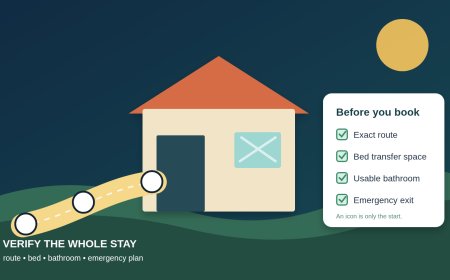
Confirm that the specific glamping unit accepts the species, number and size of pets traveling with the group. Then ask where pets may walk, whether the route to the RV site is allowed, the leash requirement, whether a pet may ever be left in the unit, and what happens if wildlife activity closes a trail or pet area.
Food and waste belong in the same conversation. Ask where kibble, treats, chews, bowls, medications and sealed waste bags go between uses. Moraine Park's bulletin lists pet food and bowls among scented items that must be stored and limits pets to specified developed areas on leashes no longer than six feet.[5] That example shows why the lodging label and the wildlife rule must be checked together.
Assign one person to the pet closeout after every meal and walk. That person picks up leftovers, cleans or stores bowls under the property rule, secures food and treats, and moves waste to the approved receptacle. Do not leave a bag outside because it is "only pet waste."
Send one confirmation request before the cancellation deadline
Use a message that staff can answer line by line:
We are booking glamping unit [number/type] and RV site [number] for [dates]. Please confirm the current bear and wildlife rules for those exact accommodations.
1. Where must glamping guests store food, drinks, coolers, toiletries, medications with an odor, pet supplies, trash and cleaned cooking gear when not in use and overnight? Please provide the locker location, inside dimensions and whether it is private or shared. 2. Where may we cook, eat and wash dishes? Are cooking, coffee appliances, grills or food ever allowed inside or on the deck of the glamping unit? 3. Which of our vehicles or RVs, if any, qualify as approved storage? Are there daylight-only rules, soft-sided exclusions, required closed windows/vents or parking limits? 4. Where are bear-resistant trash and recycling containers? What should we do after hours if a container is full, damaged or unavailable? 5. Is this exact unit pet friendly? Please confirm leash, unattended-pet, trail, pet-food, bowl and pet-waste rules. 6. Are any temporary wildlife orders, recent bear closures or check-in procedures in effect? If the assigned locker or approved cooking area is unavailable, who should we contact and what is the authorized backup?
Please attach these answers to the reservation and tell us if the assigned unit or rules change before arrival.
Save the reply with the reservation. A phone conversation can solve the immediate question, but written details are easier to share with everyone sleeping in the RV and the glamping unit.
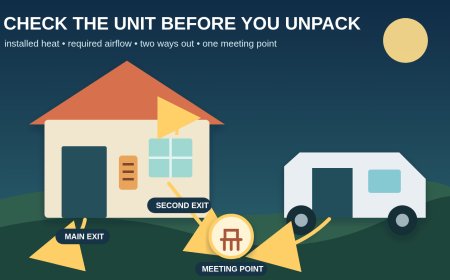
Run the check-in audit before unloading
At arrival, keep coolers and scented bags closed while one person checks the plan:
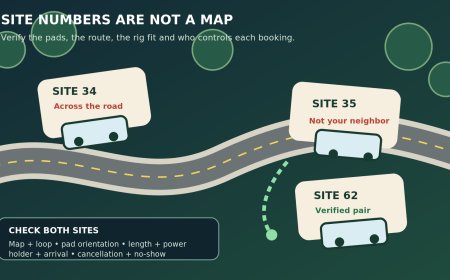
- Match the unit and RV site numbers to the reservation.
- Find the assigned locker, open it, inspect the latch and compare its usable space with the packed load.
- Walk to the approved cooking and dishwashing location. Read posted restrictions.
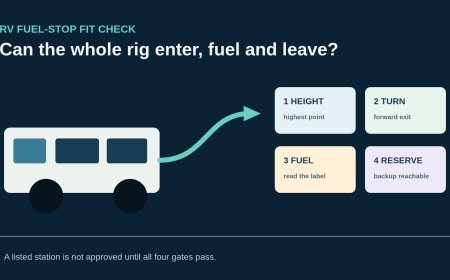
- Confirm where each approved storage vehicle must park and which openings must be secured.
- Locate trash and recycling containers, test the bear-resistant latch without forcing it, and note the backup instructions.
- Read the pet signs between the unit, RV site and relief area.
- Ask staff about any wildlife alert or temporary order issued since booking.
NPS recommends securing food, garbage and scented items as soon as campers arrive.[1] If a locker is missing, full or broken, keep the attractants under direct control and contact staff. Do not distribute the overflow among the glamping unit, porch, truck bed and RV compartments until someone confirms those places are allowed.
The mixed group should finish with a two-column closeout list: one person checks the glamping unit and locker; another checks the RV site, vehicle interiors, outdoor kitchen and trash route. Both report done before the group walks away or goes to sleep.
The booking decision
Book only when the storage capacity, cooking location, vehicle rule, waste route and pet plan all work for the exact party and equipment. If staff cannot identify the approved location for one of those jobs, the listing is incomplete for a bear-country stay. Choose a different unit, reduce the group's gear or select another property rather than arriving with a plan built on assumptions.
Sources
- Storing Food, National Park Service, accessed September 27, 2026.
- Be bear aware, U.S. Forest Service, archived July 8, 2026 for retrieval evidence.
- Protect Your Campsite from Wildlife, Colorado Parks and Wildlife, accessed September 27, 2026.
- Recreating In Bear Country, Montana Fish, Wildlife & Parks, accessed September 27, 2026.
- Moraine Park Campground 2026 site bulletin, Rocky Mountain National Park, National Park Service, accessed September 27, 2026.
What's Your Reaction?