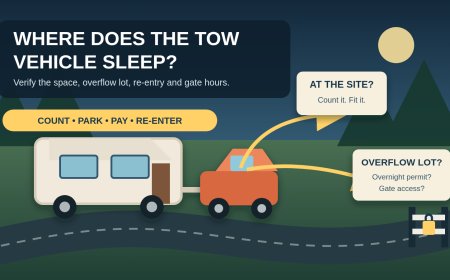





Before you book, find out where the tow vehicle sleeps
Verify how a campground counts the RV, tow vehicle, towed car and visitors, then confirm overnight overflow parking, fees, re-entry and gate access.

By Romana
Category: RV Camping
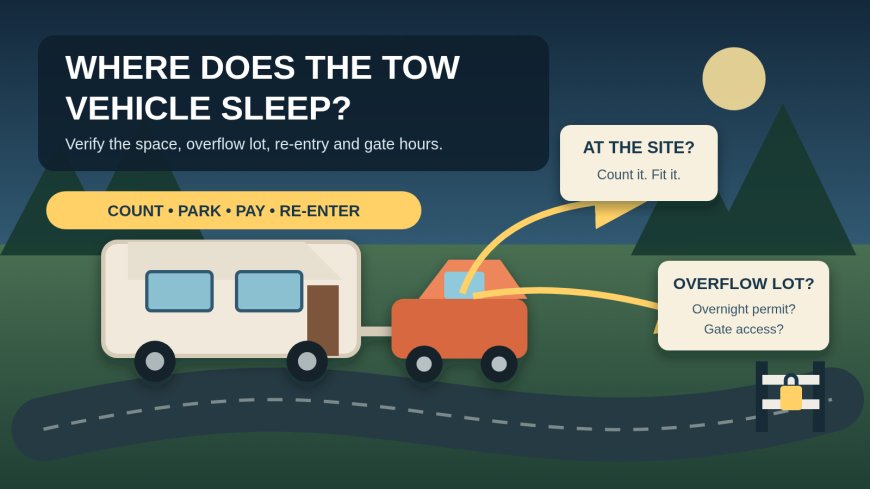
A campsite listing can show a 45-foot pad and still leave one basic question unanswered: where does the truck go after the trailer is unhitched? The same problem turns up with a towed car behind a motorhome, a second family car, or a visitor arriving for dinner.
Do not treat "extra parking available" as a complete answer. You need to know which vehicles the campground counts, how many can stay overnight, whether every vehicle fits on the pad, where overflow parking actually is, and whether the driver can get back through the gate after hours.
Count vehicles the way the campground counts them
Make a vehicle list before opening the reservation screen. Write down the RV, tow vehicle, towed car, utility trailer, motorcycles, and any visitor car. Then ask which of those units count toward the site limit.
Texas State Parks says most sites have a two-vehicle limit, but park managers set the limit for individual sites. Its statewide FAQ also says trailers, RVs, and motorhomes count as vehicles. A travel trailer and the truck pulling it can therefore use both slots before a guest car arrives.[1]
Do not assume a phrase such as "one vehicle included" means one motorized vehicle plus any number of trailers. Ask two separate questions:
- How many licensed vehicles and trailers may be registered to this exact campsite?
- Which vehicle fees are included in the nightly rate?
Those answers can differ. A vehicle may be permitted but charged separately, or it may be excluded because the campsite has reached its vehicle cap.
Separate the campsite limit from the parking-space limit
A campground may allow two vehicles on the reservation while requiring one of them to stay somewhere else. Texas warns that vehicles over a site limit may be assigned to overflow parking that is not near the campsite.[1] At Balmorhea State Park's group campsite, guests with trailers must unhitch and leave their tow vehicles in a parking lot at the camping-area entrance. The same page defines a towing vehicle plus an RV as two vehicles and caps that facility at four.[2]
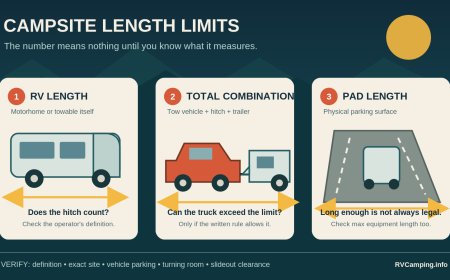
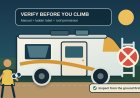
The physical pad matters too. Oregon State Parks tells campers that all vehicles, including towed vehicles, must fit within the paved driveway space.[6] A long listed driveway is not permission to put tires on vegetation, extend into the road, or use an empty neighboring site.
Refugio State Beach states the boundary plainly: keep the roadway clear, place cars and camping equipment inside the site boundary, and move extra cars to the designated lot.[4]
For the exact site, verify:
- whether the RV and tow vehicle may remain coupled;
- whether both fit entirely on the designated surface;
- whether slideouts, steps, the hitch, and rear overhang change the usable parking area;
- whether unhitching is mandatory;
- whether roadside, grass, shoulder, or vacant-site parking is prohibited; and
- whether the "vehicle limit" includes the camping unit itself.
If the site photo does not settle this, give staff the measured length of the trailer and truck separately. Ask where the truck's four tires must be after setup.
Verify what "overflow" means at that campground
Overflow can describe at least three different things: parking for a registered camper's extra vehicle, a day-use lot, or overflow camping for an RV when regular sites are full. Only the first one solves an extra-car problem.
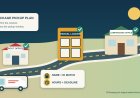
Pinnacles National Park provides a clear example. Its east-side overflow lot allows campground guests to leave extra vehicles overnight, but camping in the lot is prohibited.[5] Silver Strand State Beach uses a day-use lot for campground extra-vehicle parking under separate rules and pricing.[3] The label on the map is not enough; you need the lot's overnight rule and the permit tied to your reservation.
Ask for the lot's name and location, then confirm:
- whether overnight parking is allowed for registered campers;
- whether space is guaranteed, first come, or assigned at check-in;
- whether the driver needs a hangtag, receipt, plate registration, or dashboard permit;
- whether the extra-vehicle fee is nightly, daily, or per entry;
- whether the lot accepts an RV, tow vehicle, trailer, or passenger car;
- whether the lot closes, floods, gets locked, or has seasonal restrictions; and
- how far it is from the campsite by the legal walking route.
Save the answer that applies to your dates. Silver Strand, for example, tells campers to call for the extra lot's detailed rules and warns that operating hours, fees, and conditions can change.[3]
Check exit, re-entry, and after-hours access separately
"Gate closes at 10 p.m." can mean no new check-ins, controlled re-entry for registered campers, or a hard lock with no vehicle movement until morning. These are not interchangeable.
Balmorhea's group-site instructions say the front gate opens automatically for exiting, while re-entry requires the gate code from the confirmation email.[2] Silver Strand's rule is much stricter: when its gates are locked, vehicles cannot enter or leave the campground. Its posted closing time changes by season, and the gate reopens at 7 a.m.[3]
That difference changes ordinary plans. A tow vehicle parked outside the campground might be reachable on foot but unable to re-enter. A car inside may be unable to leave for an early flight. A dinner guest might have to depart before the day-use lot closes even though registered campers can stay.
Before paying, ask all four questions:
- Can a registered camper drive out after the gate closes?
- Can that same vehicle re-enter, and what credential opens the gate?
- Does the overflow lot follow campground hours or day-use hours?
- What should a late driver do if the office is closed?
Do not rely on a gate code from an old review. Record where the current code or access credential will appear: confirmation email, check-in packet, permit, keypad receipt, or text message. If the policy says to call before the office closes, add that deadline to the trip plan.
Visitors need their own parking answer
A campsite's overnight vehicle allowance does not automatically cover a visitor. Ask whether a visitor must buy day use, register at the entrance, move to overflow, or leave by a set time. Also verify whether visitor vehicles count against the campsite cap even if they do not stay overnight.
This is where a loose plan breaks down. A campsite may physically hold the RV, tow vehicle, and a compact car, yet policy may allow only two vehicles. Conversely, a guest might be allowed until evening but barred from overnight parking in the day-use lot. Give visitors the entrance name, parking location, fee method, departure deadline, and gate rule before they start driving.
Make a one-page parking and access record
Use one row for every vehicle. A small table is enough:
| Vehicle | Counted as | Overnight location | Fee or permit | Gate credential | Last entry or exit time |
|---|---|---|---|---|---|
| RV or trailer | Confirm with park | Assigned site | Reservation | As stated by park | As stated by park |
| Tow vehicle or toad | Confirm with park | Site or named lot | Confirm amount | Code, permit, or none | Confirm both directions |
| Extra car | Confirm with park | Named overflow lot | Confirm amount | Confirm | Confirm |
| Visitor vehicle | Day use or overnight | Named visitor lot | Confirm amount | Usually separate | Confirm departure deadline |
Attach the campsite detail page, parking map, current gate-hours page, and the campground's written response. If staff answer by phone, note the date, employee or office, and exact question. Policies can change, so call again when a trip depends on a seasonal gate schedule or limited overflow space.
The booking test
The site is ready to book only when you can finish this sentence for every vehicle: "This unit counts as ___, will be parked at ___ overnight, costs ___, and can enter or leave after ___ by using ___."
If any blank still depends on "probably," the parking plan is not finished. Choose another site, reduce the vehicle count, or get the campground to confirm the missing rule before payment.
Editorial note: Campground rules, fees, lot assignments, and gate hours change. The examples here come from official pages retrieved October 3, 2026. Verify the policy for the exact campground, site, vehicle combination, and travel dates. No firsthand stay or site inspection is claimed.
Sources
What's Your Reaction?