






2026 Roadtrek Zion Slumber review: family-friendly layout, conflicting numbers
A research-based 2026 Roadtrek Zion Slumber buyer guide covering the pop-top floorplan, conflicting official specifications, owner reports, asking prices, and a model-specific inspection checklist.

By Romana | Prepared September 10, 2026
The 2026 Roadtrek Zion Slumber is a 20-foot-9-inch Class B with two genuine sleeping zones: a pop-top above and a convertible twin/king arrangement below. It can carry five belted occupants, sleep four in its standard configuration, and sleep a fifth only with the optional cab mattress. That makes it one of the few vans worth considering for a family that wants an enclosed wet bath and does not want to tow.[1][2]
The layout is easier to recommend than the paperwork. Roadtrek's indexed 2026 page, its current brochure, its now-rolled-over product page, and a dealer's 2026 listing disagree on cargo capacity, combined weight rating, maximum towing capacity, air-conditioner description, and even MSRP. A buyer should treat every generic specification below as a screening number, then verify the exact VIN, Roadtrek build sheet, labels, installed equipment, and buyer's order.
Review method and disclosure: This is a research-based buyer guide, not a hands-on review. RVCamping.info has not driven, owned, rented, slept in, weighed, tested, or physically inspected a Zion Slumber. Manufacturer statements, independent reports, asking-price observations, and RVCamping.info analysis are identified separately.
Review identity
- Manufacturer: Roadtrek
- Model family: Zion Slumber
- Coach model year and floorplan reviewed: 2026 Zion Slumber, base/twin-to-king floorplan with pop-top
- RV class: Class B motorhome
- Chassis: Ram ProMaster 3500, 159-inch extended van, 3.6-liter gasoline V6, nine-speed automatic
- Travel / sleeping capacity: five belted seats; four standard sleepers, five with optional cab mattress
- Review date: September 10, 2026
- Best fit: two adults with children or occasional guests who value separate upper and lower beds, a wet bath, and lithium power more than a fixed bed or simple systems
- Manifest check: no Roadtrek Zion Slumber review appears in the RV review manifest during the prior 365 days
Bottom line
Shortlist the Zion Slumber if a pop-top is a requirement, not a novelty. The van puts two sleepers above the main cabin while the rear sofas convert to twins or a king below. Its long center aisle can carry awkward gear when the rear is in daytime mode, and the galley is unusually complete for a van: a two-burner propane stove, microwave, 5.3-cubic-foot refrigerator, pull-out pantry, and flip-up counter.[1][2]
There are three catches. First, five travel seats do not create five-person living space. Everyone still shares a narrow aisle, one wet bath, 33 gallons of fresh water, 14 gallons of gray capacity, and 8.5 gallons of black capacity.[1] Second, every bedtime and departure involves the pop-top, ladder, bedding, and rear sofa. Third, Roadtrek's published numbers are not clean enough to buy from a web page. Payload and towing need unit-level proof.
This is a better match for a family that camps in mild weather and packs deliberately than for four adults traveling full-time. Couples who rarely use the upper bed should compare the ordinary Zion, because a fabric-sided roof adds setup, inspection, noise, condensation, and weather considerations.
Official 2026 specification record
The figures below come from the search-index capture of Roadtrek's year-specific 2026 page. That URL served a 2027 Zion SL page when retrieved directly on September 10, so the table is a dated 2026 record rather than a claim about the live page today.[1]
| Item | Indexed 2026 Roadtrek figure |
|---|---|
| Base chassis | Ram ProMaster 3500, 159-inch extended van |
| Engine / transmission | 3.6L gasoline V6 / 9-speed automatic |
| Seats / sleeps | 5 / 5 with optional cab mattress |
| Exterior length | 20 ft 9 in |
| Exterior width without mirrors | 6 ft 11 in |
| Exterior height with roof A/C | 9 ft 7 in |
| Interior standing height / aisle width | 6 ft 2 in / 29 in |
| Wheelbase | 159 in |
| GVWR | 9,350 lb |
| OCCC | 1,350 lb |
| GCWR | 10,600 lb |
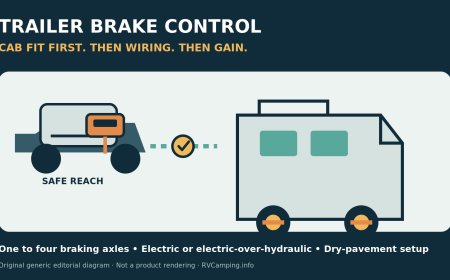
| Hitch / tongue ratings | 3,500 / 300 lb |
| Published maximum towing capacity | 2,150 lb |
| Fresh / gray / black water | 33 / 14 / 8.5 gal |
| Rear king | 70 by 75 in |
| Passenger-side twin | 24 by 75 in |
| Driver-side twin | 39 by 75 in |
| Optional cab mattress | 33 by 70 in |
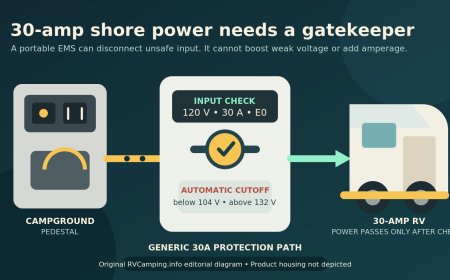
| Solar / shore service | 200W / 30A |
| House battery | 600-amp lithium system |
| Refrigerator | 5.3 cu ft, 12V |
| Furnace / water heater | Truma VarioHeat 11,500 BTU/h / Truma AquaGo Comfort LP on-demand |
| RV warranty shown on product page | 2 years, unlimited mileage; ask dealer for full terms |
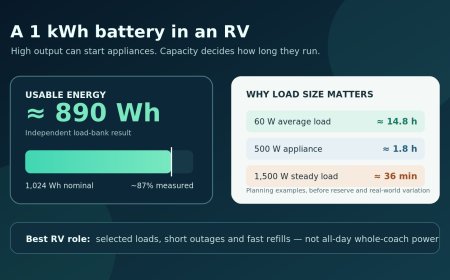
"600 AMP" is Roadtrek's label, not an energy-capacity figure in kilowatt-hours. It does not specify usable kWh, voltage, cell reserve, discharge limits, or cold-weather charging behavior. Ask for the battery model, nominal voltage and amp-hours, usable kWh, warranty, heater logic, and diagnostic access for the exact coach.
Where the official and dealer records conflict
The current Roadtrek brochure lists the Zion Slumber at 1,400 pounds OCCC, 11,500 pounds GCWR, and 1,706 pounds maximum towing. The indexed 2026 page instead showed 1,350 pounds OCCC, 10,600 pounds GCWR, and 2,150 pounds maximum towing.[1][2] A readable dealer page for a new 2026 coach shows 1,250 pounds of "cargo capacity" and 10,600 pounds GCWR.[4] Those labels may use different weight conventions, but the pages do not explain the gap well enough to reconcile it.
The same records disagree on presentation elsewhere. Roadtrek's indexed feature copy called the roof air conditioner 11,500 BTU, while its specification area and the dealer listing say 13,500 BTU.[1][4] The current brochure warns that equipment, specifications, and models may change without notice and that pictured accessories may not be included.[2]
The safe approach is mechanical rather than interpretive. Photograph the completed-vehicle weight label, tire-and-loading label, chassis certification label, appliance model plates, hitch label, and Roadtrek serial plate. Compare them with the window sticker and factory build sheet. Weigh the loaded van by axle. For towing, use the lowest applicable limit after accounting for actual loaded weight, axle ratings, hitch rating, tongue weight, and the chassis maker's instructions.
Floorplan and everyday use
Sleeping and seating
The twin-bed arrangement is the more flexible version of the rear room. One sleeper gets a 24-inch-wide passenger-side bed; the driver-side bed extends to 39 inches. Joined together, Roadtrek lists a 70-by-75-inch king.[1] Those twins are not equal, and 75 inches of length may feel short once pillows and wall contours enter the equation. Every intended sleeper should build the beds and lie down during a showing.
The upper bed separates children or guests from the lower pair, but it comes with a ladder and fabric walls. A 2021 road tester reported that the gas struts made the roof quick to raise and lower.[5] A separate 2021 review described pneumatic struts, a folding ladder, screened openings, and sleeping room for two adults.[6] Those are observations from the first model year, not proof that a 2026 roof has identical hardware or effort. Test the exact roof from fully latched to fully deployed, then close it with bedding removed and fabric safely tucked.
Five belted seats deserve the same scrutiny. Check that the seating configuration shown on the build sheet matches the van, inspect every belt and anchor, and confirm child-restraint compatibility in the Ram and Roadtrek manuals. Sleeping capacity is not a safety rating for child seats.
Bath, kitchen, storage, and utilities
The wet bath combines toilet, sink, and shower in one compartment. An independent 2021 review found the permanent bath directly across from the sliding entry and described the front galley, pull-out pantry, large lower drawer, and 12V refrigerator.[6] The design saves floor area, but the user must manage wet surfaces, towels, ventilation, and the small black tank. During a demonstration, close the door and simulate changing clothes. Run the shower long enough to check drainage and leakage at the threshold.
Roadtrek promotes the exposed center aisle for bicycles and other large equipment.[1] That space only stays useful if the gear can be secured without blocking the bathroom, controls, rear exit, or bed conversion. Bring the actual bikes, bins, stroller, or sports equipment to a showing. A paper floorplan cannot reveal handlebar interference or where four people's bedding goes during the day.
The published 33/14/8.5-gallon tank set favors fresh water over waste storage.[1] For several occupants, gray and black capacity may force a dump stop before fresh water runs out. The LP furnace and water heater also mean propane remains part of the maintenance and safety routine even with a large lithium bank.
Climate expectations should stay modest. A fabric-sided pop-top has more exposure to wind, rain noise, heat, cold, and condensation than the hard-sided lower cabin. Roadtrek lists heating for the coach, but the sources reviewed did not establish a separately ducted upper sleeping area, a winter-use temperature rating, or a wind limit for the deployed roof. Ask Roadtrek in writing, then test the intended bedding and ventilation plan in conditions close to actual use.
Driving, parking, payload, and service
At 20 feet 9 inches long and 9 feet 7 inches high, this is compact by motorhome standards but not a passenger car.[1] A 2021 road tester praised maneuverability and reported a composed drive on secondary roads, rail crossings, roundabouts, and suburban streets.[5] That report involved an older six-speed ProMaster. The 2026 specification calls for a nine-speed transmission and newer driver-assistance equipment, so repeat the test on the exact van.
A published OCCC around 1,350 pounds can disappear quickly with five people, water, food, bedding, dealer accessories, bikes, and trailer tongue weight.[1] Thirty-three gallons of water alone adds roughly 275 pounds before the tank and plumbing are counted. This calculation is RVCamping.info analysis; the label on the completed van controls. Weigh with everyone and everything aboard.
Service divides into at least three channels: Ram for chassis work, Roadtrek for coach construction, and component makers for appliances and batteries. Roadtrek's locator distinguishes dealerships, service centers, and Ram ProMaster service centers.[3] Call nearby facilities before buying. Ask whether they service a pop-top Roadtrek indoors, whether they handle lithium diagnostics, and who owns a problem where coach wiring meets the chassis alternator.
What independent reviewers and owners report
The independent evidence is useful but limited. The two detailed road tests concern 2021 coaches. Both liked the two-level sleeping concept, compact dimensions, storage ideas, and full galley. RV Lifestyle Magazine found the roof easy to operate and liked the magnetic screens and pull-out pantry.[5] Family RVing described the folding ladder, wet bath, flexible rear beds, and lithium/inverter system.[6] Neither account establishes long-term reliability or 2026 build quality.
A first-person RV Insider post is more cautionary. The writer identified the coach as a 2023 Zion Slumber and reported loose trim and screen hardware, a failed power-step support, leaking shower equipment, rapid battery depletion, and a suspected fresh-tank leak.[7] That is one owner's account, not a measured failure rate. It does, however, point to specific demonstrations a buyer can require: inspect step mounts, tug on screen fasteners, pressurize plumbing, load-test the battery system, and keep the delivery contingent on repairs that can be verified.
The fairest reading is not that the design is reliable or unreliable. The sources are too small and too mixed in model year for that conclusion. They show a promising floorplan and several places where a rushed pre-delivery inspection could become expensive or inconvenient.
New purchase paths and asking prices
The indexed official 2026 page showed a starting MSRP of $164,375.[1] Roadtrek's current product content has rolled to the 2027 Zion SL, and no model-year 2026 MSRP exclusion statement was recovered. Freight, destination, dealer preparation, options, taxes, registration, documentation charges, and delivery therefore remain unverified until a seller provides an itemized, VIN-specific buyer's order.
At 00:24 UTC on September 10, 2026, Campers Inn listed new 2026 stock 113691 in Fredericksburg, Virginia, at $119,995, against a dealer-labeled MSRP of $161,953. The page showed 137 miles and VIN 3C6MRVJG7RE126156.[4] A second current index result showed Johnson RV stock 26051 in Sandy, Oregon, at $165,704 with 30 miles, but its detail URL resolved to generic inventory when archived. Treat that as an unconfirmed indexed comparison, not equal evidence.
Purchase paths:
- Use Roadtrek's dealer locator to identify sales and service locations.[3]
- Ask for the factory build sheet, original window sticker, completed-vehicle labels, component serial numbers, warranty start date, and an out-the-door order tied to the VIN.
- Make the deposit refundable if the unit fails an independent RV inspection, chassis scan, fluid check, loaded road test, system demonstration, or document review.
- Compare cash and financed totals. A lower advertised price can be offset by required financing, trade assumptions, add-ons, or fees.
Used asking-price snapshot
These observations were captured or indexed at 00:24 UTC on September 10, 2026. They are asking prices, not sold prices, appraisals, or a representative market sample.
| Model year / listing | Asking price | Mileage | Location | Marketplace / status |
|---|---|---|---|---|
| 2022 Zion Slumber | $92,589 | Not shown | Bristol, Connecticut | RVT, recently indexed; direct retrieval blocked[8] |
| 2023 Zion Slumber, stock 478650 | $119,000 | 22,000 | Tampa, Florida | RVCrazy, live when archived[9] |
| 2023 Zion Slumber Base, stock 473687 | $134,900 | 3,300 | Hesperia, California | RVCrazy, live when archived[10] |
The sample spans two marketplaces, three model years, and a wide mileage range. It does not normalize options, battery configuration, title history, accident repairs, fees, remaining warranty, tire age, recall completion, or condition. The 2022 RVT observation may already be sold or repriced because only the current index result was accessible.
A coach model year and chassis year can differ. Decode the 17-character Ram VIN, then compare its chassis build label with the Roadtrek certification label, title, registration, window sticker, and service records. A dealer's "2023" coach may sit on an earlier chassis, which can change parts, recalls, software, warranty dates, and resale descriptions.
Used 2021-2022 units need special recall attention. NHTSA campaign 22V492 covered certain Zion Slumber and related coaches whose propane-tank outlet connection could leak and increase fire risk.[11] That campaign does not prove that any listing above is affected or unrepaired. Run the exact VIN through NHTSA and Ram recall tools and obtain completion invoices.
Used Zion Slumber inspection checklist
Hire an independent RV inspector who understands lithium systems and pop-tops, plus a Ram ProMaster technician. Do not let a seller substitute a recent state inspection for an RV systems inspection.
Identity, records, and chassis
- Match the VIN at the windshield and door label to the title, registration, lien search, bill of sale, and service history.
- Match the Roadtrek serial number, coach year, floorplan, seating, battery package, paint, and options to the build sheet and window sticker.
- Check both coach and chassis warranty start dates. Confirm whether either warranty transfers.
- Run VIN-specific Roadtrek, NHTSA, and Ram recalls. Get dated proof for every closed campaign.[11]
- Review chassis service, coach claims, water damage, accidents, title brands, long storage periods, battery replacement, tire replacement, and winterization.
- Start the engine cold. Scan all modules and inspect fluids, brakes, steering, suspension, CV boots, underbody damage, warning lights, and both keys.
Pop-top, body, and water intrusion
- Raise and lower the roof several times. Inspect latches, hinges, gas struts, lift alignment, safety interlocks, bed platform, ladder mounts, mattress, lighting, charging ports, and emergency egress.
- Inspect every inch of fabric, stitching, screens, zippers, clear panels, and seals for tears, mildew, staining, repairs, pinching, and daylight.
- Hose-test the closed roof and windows only with the owner's permission. Follow with a moisture-meter survey around the opening, roof perimeter, upper bed, headliner, and adjacent cabinets.
- Inspect the roof air conditioner, solar mounts, vent, awning mounts, wiring entries, sealant, rear doors, sliding door, windows, and body seams from a safe platform.
- Check that the roof closes without trapping fabric and that every travel latch engages positively.
Plumbing, propane, bath, and appliances
- Fill the fresh tank, pressurize the pump, and watch for cycling. Repeat on regulated city water.
- Inspect the tank, pump, low-point drains, water heater, sinks, shower hoses, toilet, exterior shower, valves, macerator, and fittings for leaks.
- Run the wet-bath shower at normal flow. Confirm drainage, threshold containment, fan operation, privacy, and usable standing room.
- Test tank sensors at more than one known level. Operate the waste valves and macerator with proper sanitation precautions.
- Have a qualified technician perform a propane leak and pressure-drop test. Verify regulator age, tank condition, detector dates, cooktop operation, furnace ignition, and hot-water operation.
- Test the refrigerator and microwave in every supported power mode.
Lithium, charging, climate, and controls
- Record battery maker, model, voltage, amp-hours, usable kWh if documented, serial numbers, age, warranty, heater function, and diagnostic history. Do not accept "600 AMP" as a complete specification.
- Start with a partly depleted bank and observe charging from shore power, alternator/under-hood generator, and solar. Check current, voltage, heat, faults, and disconnect behavior.
- Load-test the inverter with the microwave and other approved loads. Test every receptacle, USB port, GFCI, light, fan, alarm, and Firefly function.
- Run the roof air conditioner through a full compressor cycle on shore power and every battery/inverter mode the manuals permit. Record starting and ending state of charge.
- Run the furnace from cold and test the Truma water heater at more than one fixture.
- Confirm smoke, carbon-monoxide, and propane alarms are in date. Check the fire extinguisher and emergency exits.
Furniture, road test, and weight
- Convert both twins and the king. Inspect sofa motors, frames, cushions, supports, table mounts, seat belts, cabinet latches, screens, and power steps.
- Load representative bedding and gear. Confirm that nothing blocks the bathroom, controls, vents, doors, or exits.
- Drive on broken pavement, highway grooves, hills, and a tight parking lot. Listen for the roof, awning, screens, furniture, and cabinetry moving.
- Weigh the travel-ready van by axle. Compare the ticket with GVWR, axle ratings, tire ratings, OCCC label, hitch rating, and tongue load.
- Re-test every promised repair before final payment. Put parts, labor, dates, and responsibility in writing.
Who should buy, who should skip, and alternatives
Best fit: a family of three or four that wants two sleeping levels, five travel seats, an indoor bath, a generous galley for a van, and enough battery/inverter capacity to camp without a conventional onboard generator. It also suits a couple that often brings grandchildren or guests and will use the upper bed enough to justify its upkeep.
Skip it: four adults who expect personal storage and easy movement, tall sleepers unhappy with a 75-inch lower bed, cold-weather campers who need a hard-sided second bedroom, buyers who refuse nightly bed conversion, or anyone far from both Ram and Roadtrek-capable service. It is also the wrong choice when the payload label cannot accommodate the intended people and gear.
Compare it with:
- 2026 Winnebago Solis 59PX. Winnebago's official page lists a 21-foot van with pop-top sleeping, a fold-down rear bed, dedicated rear gear storage, wet bath, and gas generator.[12] It is the closest mainstream layout comparison.
- 2026 Winnebago Solis 59P. RVCamping.info's existing 59P review covers a shorter pop-top ProMaster. It gives up some rear space but is easier to park.
- A conventional no-pop-top Zion or twin-bed Class B. Couples who only need two beds can avoid the upper roof's fabric, ladder, and extra inspection points. Compare exact payload, battery energy, bath access, bed dimensions, and local service rather than brand language.
Methodology, limitations, and commercial disclosure
RVCamping.info checked the RV review manifest, Roadtrek's year-specific URL and current brochure, a live 2026 dealer listing, Roadtrek's dealer locator, two independent 2021 road tests, one 2023 owner report, three used asking-price observations across two marketplaces, an NHTSA recall notice, and an official alternative-model page. Source pages and extracted text were archived on September 10, 2026.
The main limitation is unusually important: Roadtrek's 2026 URL served current 2027 Zion SL content during direct retrieval, while its search-index record still described the 2026 Zion Slumber. No separate manufacturer PDF explicitly labeled "2026 Zion Slumber" was verified. The current brochure and dealer page conflict with the indexed 2026 record on several weight and equipment figures. This review shows those differences instead of choosing one silently.
The independent road tests concern 2021 vans, and the owner report concerns a 2023 coach. They help identify layout and inspection questions but cannot establish 2026 durability. The asking-price sample is small, does not reveal sold prices, and may change without notice. No VIN-specific recall status, loaded fuel economy, noise measurement, battery runtime, pop-top weather rating, or failure rate was verified.
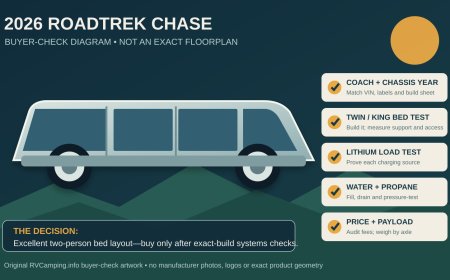
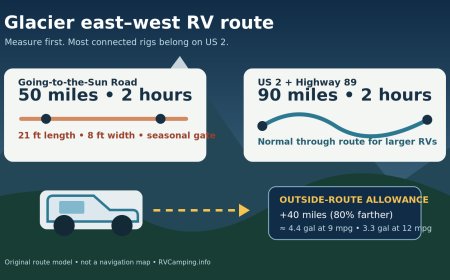
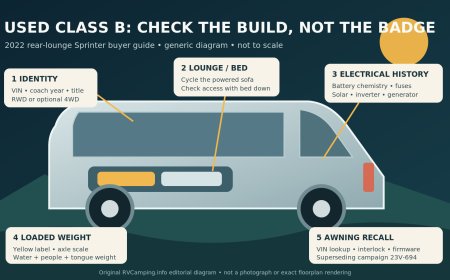
No video is embedded. No YouTube thumbnail, video frame, manufacturer photograph, dealer photograph, or logo is reused. The lead image is an original RVCamping.info editorial illustration, not documentary photography.
Affiliate disclosure: This review contains no affiliate links, paid placement, free product, manufacturer relationship, or dealer relationship. All manufacturer, dealer, marketplace, safety, and comparison links are ordinary editorial links. No Amazon product was relevant, and no RVshare tracking was used.
Sources
- Roadtrek 2026 Zion Slumber year-specific product page — current index evidence and archived direct retrieval; the live content had rolled to 2027.
- Roadtrek Premium Models brochure — current manufacturer brochure, retrieved September 10, 2026.
- Roadtrek dealer locator — purchase and service path.
- Campers Inn new 2026 Zion Slumber stock 113691 — new asking-price and unit snapshot.
- RV Lifestyle Magazine 2021 Zion Slumber road test — independent drive and layout report.
- Family RVing Magazine 2021 Zion Slumber review — independent layout and systems report.
- RV Insider Roadtrek owner reviews — first-person 2023 Zion Slumber report.
- RVT used Zion Slumber listings — recently indexed used asking-price observation; direct retrieval returned 403.
- RVCrazy used 2023 Zion Slumber in Tampa — used asking-price snapshot.
- RVCrazy used 2023 Zion Slumber in Hesperia — used asking-price snapshot.
- NHTSA recall 22V492 owner notice — 2021-2022 propane-system campaign scope and remedy.
- Winnebago Solis 59PX official page — alternative-model reference.
What's Your Reaction?