





Watchman vs. South vs. Lava Point: which Zion campground fits your RV?
Compare Zion’s Watchman, reopened South, and tent-only Lava Point campgrounds by exact RV fit, hookups, booking window, route limits, and fallback plan.

Watchman vs. South vs. Lava Point: which Zion campground fits your RV?
By Romana | Updated September 20, 2026
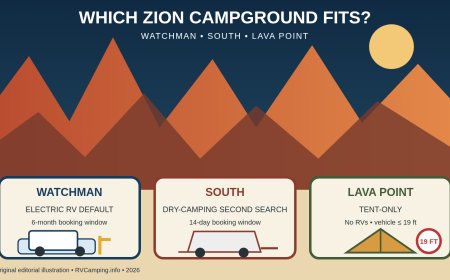
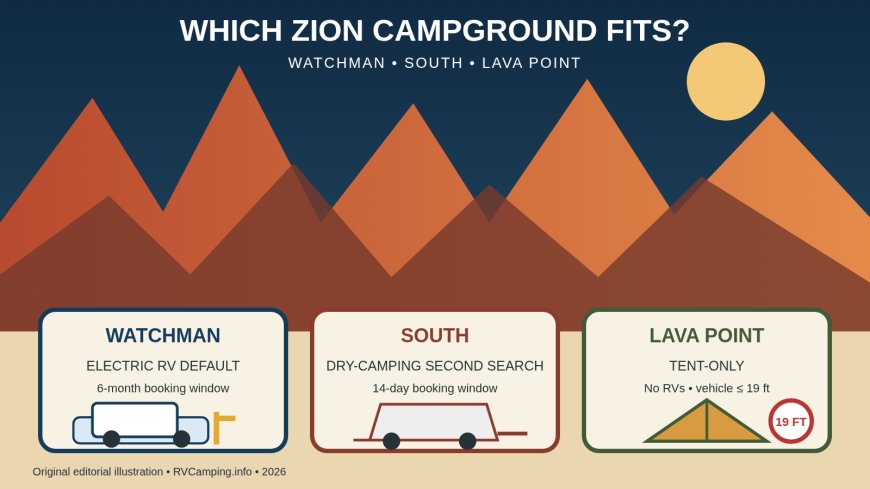
For an RV trip centered on Zion Canyon, start with Watchman. It is open all year, takes standard-site reservations six months ahead, and has electric RV inventory.[1][2][5] South Campground is a real option again in 2026 after its rehabilitation closure, but it is seasonal, has no hookups, and opens reservations only 14 days before arrival.[6][14] Lava Point is not an RV overflow lot: Zion labels it tent-only, bars RVs and trailers, and prohibits vehicles longer than 19 feet on the access road.[4][7]
That last distinction saves a wasted drive. A 19-foot camper van may be short enough for the Lava Point road, but a vehicle with permanently installed camping equipment is still an RV for practical booking purposes; NPS says RVs, campers, and trailers are not allowed there.[4] Use Lava Point only for a genuinely tent-based trip in a qualifying vehicle.
Fast decision: Choose a verified Watchman electric site when shore power matters. Choose South when you can dry camp and work inside its two-week booking window. If neither has an exact site that fits, move the RV base outside the park. Do not use Lava Point as the fallback for an RV.
The comparison at a glance
| Decision factor | Watchman Campground | South Campground | Lava Point Campground |
|---|---|---|---|
| 2026 status checked September 20 | Open year-round; reservations required | Open after the May 2026 reopening; seasonal through fall; reservations required | Open as weather allows, usually May through September; reservations required |
| Booking window | Standard sites up to 6 months ahead | Up to 14 days ahead | Up to 14 days ahead |
| RV eligibility | Yes, but the exact site controls | Yes, but the exact site controls | No RVs, campers, or trailers; tent camping only |
| Published campground maximum | NPS says 40 feet, while individual Recreation.gov records vary | NPS says 40 feet, while individual Recreation.gov records vary | Vehicles over 19 feet prohibited; RVs and trailers prohibited regardless |
| Electric | A and B loops; mostly 30 amp, only a few 50 amp | None | None |
| Water/sewer at site | No full hookups | No hookups | No running or potable water |
| Shared facilities | Toilets, drinking water, dump station with potable water | Flush toilets, drinking water, dump station | Pit toilets and trash cans |
| Generator use | Prohibited | 8–10 a.m. and 6–8 p.m. | 8–10 a.m. and 6–8 p.m. |
| Zion Canyon access | By visitor center and shuttle | By visitor center and shuttle | About 80 minutes from the South Entrance |
| Best fit | RVers who want power and advance certainty | Dry campers chasing a short-notice opening | Tent campers in a vehicle 19 feet or shorter |
Zion's current conditions page lists Watchman as year-round and South and Lava Point as winter-season closures; it also tells campers to check alerts at the top of that page.[9] On September 20, no campground closure alert appeared there. Current alerts can change after this article is archived, so the live page and the Recreation.gov calendar should control your travel day.
South Campground is applicable again in 2026
Old trip reports and stale search results can send the wrong message about South. After a major rehabilitation closure, Zion announced a May 29, 2026 reopening and expected camping to continue through fall before the winter shutdown.[14] Its refreshed NPS page now marks it open, lists 124 sites, and describes a usual mid-March-through-October 31 season.[3] Recreation.gov was taking reservations when checked for this package and showed a season from early March through the end of October.[6]
The useful planning detail is the short booking window. South inventory appears up to 14 days before arrival, while Watchman standard sites open as far as six months out.[1][5][6] That makes South a tactical second search, not a dependable six-month backup. Set a reminder for the date your target stay enters the window and know your complete rig measurements before inventory appears.
South is a dry-camping choice. Recreation.gov lists flush toilets, drinking water, a dump station, picnic tables, and firepits, but no campsite hookups and no onsite shower or laundry facilities.[6] Generators are limited to two morning hours and two evening hours.[6] If a pet, medical device, refrigerator, or air conditioner requires steady power, generator windows are not equivalent to an electric pedestal.
Watchman: the strongest RV default, with a site-level catch
Watchman has 184 sites, including 92 electric spaces, according to NPS.[2] Recreation.gov places standard electric sites in A and B loops and says they are all 30 amp except for a small number with 50 amp service; it also states that the campground has no full-hookup sites.[5] Generators are not allowed.[5]
The campground page's 40-foot RV and trailer maximum is not permission to book any open space.[2] Recreation.gov caps vehicles and connected combinations in nonelectric C and D loop sites below 19 feet.[5] Individual listings then add their own equipment types, pad dimensions, driveway entry, and vehicle count.
Two live records show why filtering by “Watchman” is not enough:
- Electric site A010 lists a 43-foot back-in pad, 30-amp service, no water hookup, and a maximum of two vehicles. Its equipment fields allow RVs and trailers up to 43 feet.[10]
- Nonelectric site D034 has a 19-foot gravel back-in pad. Its permitted-equipment list includes trailers, pickup campers, tents, and cars, but it does not list an RV; the stated maximum is 19 feet.[11]
Those records are examples, not a promise about another site. They also expose a labeling wrinkle: NPS gives a 40-foot campground maximum, while A010's booking record says 43 feet.[2][10] The safest rule is to satisfy both the campground guidance and every field on the exact site page. If your unit exceeds 40 feet, call Zion before treating a larger-looking Recreation.gov number as approval.
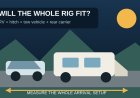
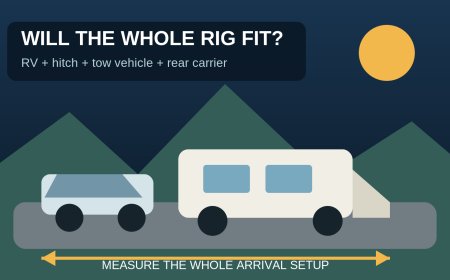
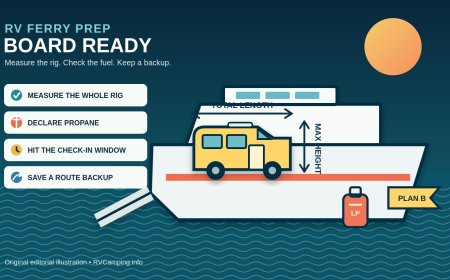
For a trailer, do not enter only the box length and stop. Record the trailer's hitch-to-bumper measurement, tow-vehicle length, connected length, width with slides deployed, and height to the tallest roof attachment. For a motorhome, include racks, ladders, bicycles, rear cargo, mirrors, air conditioners, and any towed car. A 40-foot motorhome and a 40-foot trailer combination do not use a site in the same way.
South: exact records vary there too
South's NPS page also publishes a 40-foot RV and trailer maximum and says each site has its own limit.[3] Yet the sampled booking records span both sides of that shorthand. Site A 52 lists a 44-foot paved back-in pad and allows RVs or trailers up to 44 feet; site B 60 lists a 36-foot paved back-in pad and a 36-foot equipment maximum.[12][13] Both records say two vehicles at most and no water hookup.[12][13]
Again, do not assume the larger record cancels the park's 40-foot guidance. A site page can describe the physical pad while the campground page states a broader operating limit. A rig over 40 feet needs confirmation from the park, even if a 44-foot field appears during checkout.
South may work well for a trailer if the selected record accommodates the camping trailer and associated tow vehicle. Its site notices say a standard site can hold one RV, or one camping trailer plus its tow vehicle, subject to that site's equipment details.[12][13] That wording still does not guarantee that a long connected combination can remain hitched. Review the map and photos, then ask the campground if separation or overflow parking is essential to your plan.
Lava Point: a tent campground, not the small-RV option
Lava Point has six primitive sites at 7,890 feet and operates as weather permits, usually from May through September.[4][7] NPS describes it plainly: tent camping only, no RVs, no campers, no trailers, and no vehicles longer than 19 feet.[4] Recreation.gov repeats the 19-foot road limit and requires an advance reservation because cell service is limited and there is no onsite payment route.[7]
The facility provides waste bins and pit toilets. Campers must bring drinking water, and there are no electrical outlets.[7] The drive is roughly 25 miles up Kolob Terrace Road from Virgin and about 80 minutes from Zion's South Entrance.[4][7] Spring and fall conditions can change fast, and the current conditions page says Kolob Terrace and Lava Point roads commonly close for snow from fall into spring.[4][9]
A short van creates the common misunderstanding. If it is a passenger vehicle carrying removable tent gear, and it is 19 feet or shorter, the road-length test may be met. If the van itself is the camping unit, the NPS “campers” and RV prohibition makes Lava Point the wrong reservation.[4] Get a direct answer from the park if the classification is not obvious; do not arrive at a remote six-site campground hoping staff will reinterpret it.
The 2026 highway rule can decide your approach
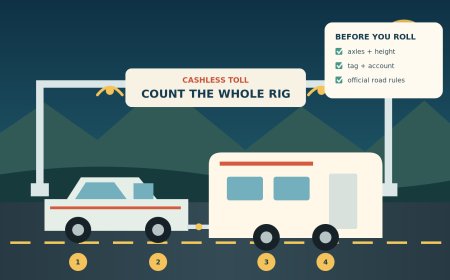
Since June 7, 2026, oversize and overweight vehicles have been restricted on the eastern State Route 9 corridor from Canyon Junction to Zion's East Entrance.[8] A single vehicle is over the limit if it exceeds 35 feet 9 inches long, 7 feet 10 inches wide, 11 feet 4 inches high, or 50,000 pounds. For combined vehicles, the total-length limit is 50 feet, the trailer may not exceed 26 feet from hitch to rear axle, and the same width, height, and weight limits apply.[8]
Measurements include mirrors, tires, roof equipment, bike racks, satellite dishes, and other attachments.[8] A rig that exceeds any one limit cannot use that highway section. NPS allows an over-limit vehicle entering at the South Entrance to reach Watchman or South when it has a campground reservation, but that is not permission to continue east through the restricted corridor.[8]
This changes route planning for arrivals from Bryce Canyon, Kanab, or Lake Powell. Recreation.gov directions may describe an east-entrance approach, but a tall, wide, long, or heavy RV must route to Springdale and enter from the south.[5][6][8] Measure before choosing the navigation route, not at the tunnel.
A fallback ladder that protects the trip
Use this order instead of refreshing random dates and hoping a site fits.
- Search Watchman for the exact equipment type. Start six months ahead when possible. Filter for electric if power is required, then open every candidate's details. Reject any site that misses the equipment type, pad length, driveway style, width, or vehicle count.[2][5]
- Search South when the 14-day window opens. Treat it as dry camping. Confirm that batteries, tanks, solar, and the restricted generator schedule can cover the stay.[3][6]
- Recheck cancellations, but keep the fit rules. An opening is useful only if your complete combination fits. Do not reserve a 19-foot nonelectric Watchman space for a 19-foot trailer plus a truck merely because the trailer field looks close.[5][11]
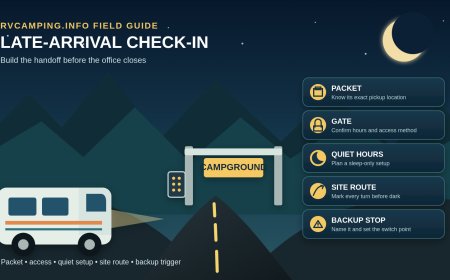
- Move the RV base outside Zion. NPS links travelers to East Zion, the St. George Area Visitor Bureau, the BLM St. George Field Office, and Kane County for local-area campground searches.[1] Ask any outside operator for a written answer covering overall rig length, tow or towed vehicle, site width, electrical amperage, water and sewer, late-arrival procedure, and the route to the campground.
- Match the fallback to your next drive. Springdale or the lower State Route 9 corridor minimizes backtracking for the South Entrance. East-side lodging can make sense only if the complete vehicle is legal on the Zion–Mt. Carmel Highway or you are willing to drive the longer unrestricted route around the park.[8]
- Do not substitute Lava Point for an RV cancellation. It solves a tent-camping problem, not an RV-parking problem.[4][7]
A useful phone script is short: “My motorhome is 31 feet long, 8 feet 5 inches wide with slides in, 12 feet 6 inches high, and I tow a 16-foot car. Can this exact site and the approach road accept the complete combination?” Replace those sample numbers with measured figures. Then ask whether the quoted length means the camping unit alone, the connected combination, or the paved parking area.
Before checkout
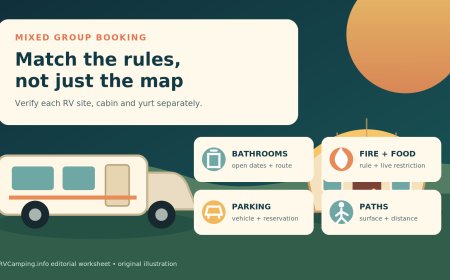
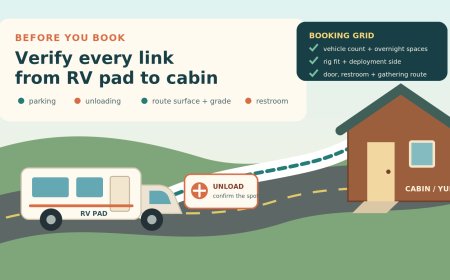
Open the individual site record and save it with the confirmation. Check permitted equipment, maximum equipment length, pad length and width, back-in versus pull-through entry, surface, slope, overhead clearance, number of vehicles, and hookup fields. A campground-level “RV allowed” label cannot answer those questions.
For Watchman, verify the amperage rather than assuming every electric pedestal is 50 amp.[5] For South, plan without shore power or water at the site and within the generator windows.[6] For Lava Point, stop: if the sleeping setup is an RV, camper, or trailer, choose another campground.[4]
Check Zion's current conditions again on departure day. The September 20 page showed fire restrictions that limited campfires to designated rings and carried no campground closure alert, but it also showed changing trail, river, and road notices.[9] Conditions, seasonal closing dates, and fire rules can change after booking.
Bottom line
Watchman is the first choice for most Zion RV trips because it combines canyon access, a long booking horizon, and electric inventory. South is a useful 2026 comeback for rigs that fit a specific site and can dry camp, especially when a trip is too close for Watchman's early reservation rush. Lava Point belongs in the comparison mainly to prevent the wrong booking: its 19-foot road limit does not create a 19-foot RV allowance.
The reliable sequence is simple. Measure the whole setup, screen the route, confirm the exact site, and keep an outside-park reservation as the real fallback. The campground name alone never guarantees fit.
Source credit: RVCamping.info compared National Park Service and Recreation.gov records retrieved September 20, 2026. The fit worksheet, booking sequence, route screen, and fallback ladder are original editorial analysis.
Sources
- Camping in Zion National Park — National Park Service; three-campground status, booking windows, demand warning, and official local-area fallback links. Accessed September 20, 2026.
- Watchman Campground — National Park Service; operating status, inventory, accessibility, reservations, and campground-level RV limits. Accessed September 20, 2026.
- South Campground — National Park Service; 2026 open status, inventory, accessibility, season, and campground-level RV limits. Accessed September 20, 2026.
- Lava Point Campground — National Park Service; tent-only rule, 19-foot vehicle limit, elevation, season, access, and facilities. Accessed September 20, 2026.
- Watchman Campground booking page — Recreation.gov; loop uses, electric service, dump station, generator ban, reservations, and 2026 route notice. Accessed September 20, 2026.
- South Campground booking page — Recreation.gov; season, 14-day window, dry-camping facilities, generator hours, and route notice. Accessed September 20, 2026.
- Lava Point Campground booking page — Recreation.gov; primitive facilities, advance booking, generator hours, distance, and 19-foot road limit. Accessed September 20, 2026.
- Large vehicles — National Park Service; 2026 Zion–Mt. Carmel Highway dimensions, measurement rules, and campground-access exception. Accessed September 20, 2026.
- Current conditions — National Park Service; September 20 campground, road, fire, and alert status. Accessed September 20, 2026.
- Watchman site A010 — Recreation.gov; representative 43-foot, 30-amp electric site record. Accessed September 20, 2026.
- Watchman site D034 — Recreation.gov; representative 19-foot nonelectric site record and equipment restrictions. Accessed September 20, 2026.
- South site A 52 — Recreation.gov; representative 44-foot nonelectric site record. Accessed September 20, 2026.
- South site B 60 — Recreation.gov; representative 36-foot nonelectric site record. Accessed September 20, 2026.
- Zion National Park to reopen South Campground on May 29 — National Park Service; May 27, 2026 reopening announcement and expected fall operating span. Accessed September 20, 2026.
What's Your Reaction?