

Chiricahua is now a national park. Its RV limits did not get bigger
Chiricahua has a new national-park sign, but Bonita Canyon still favors small rigs. Check the 29-foot entrance limit, exact site and scenic road.
By RVCamping.info Research Desk. This report was researched and edited with AI assistance; no named human review is claimed.
The new entrance sign at Chiricahua National Park makes the name change hard to miss.[1] For RV travelers, though, the useful news is what did not change: the road is still narrow, Bonita Canyon is still a small dry campground, and a 29-foot maximum does not mean every 29-foot RV will fit.
Congress redesignated the former national monument in October. The National Park Service says the existing management framework continues, with no new construction tied to the new status.[2][3] A bigger name has not produced bigger campsites, new hookups or a wider scenic drive.
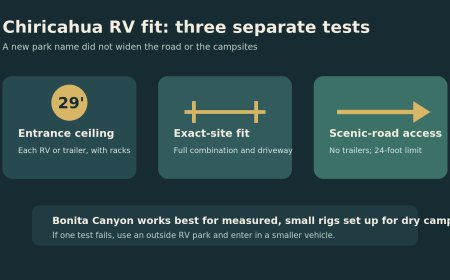
Treat 29 feet as an entrance ceiling, not a campsite promise
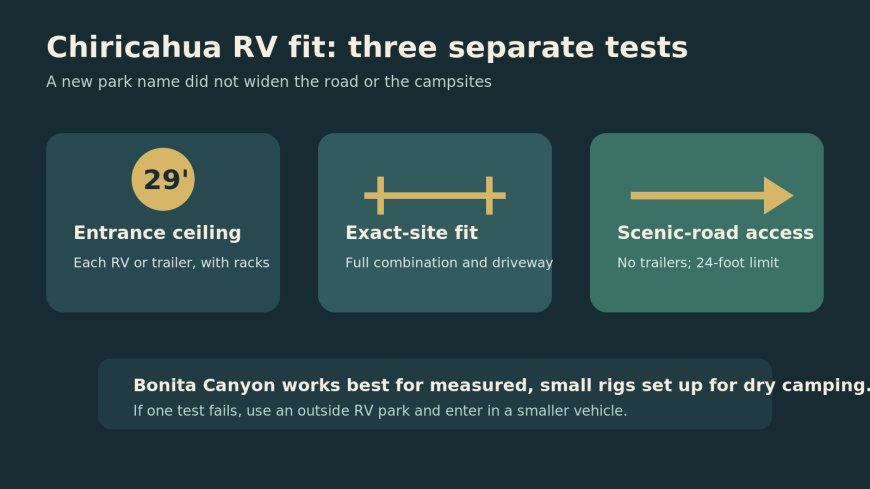
Bonita Canyon Campground is the only campground inside the park. The road crosses a dip on the way in, so each vehicle or trailer must measure less than 29 feet, including a bike rack or other rear-mounted gear. NPS also tells campers to compare the combined tow vehicle and trailer length with the driveway for the exact site.[4]
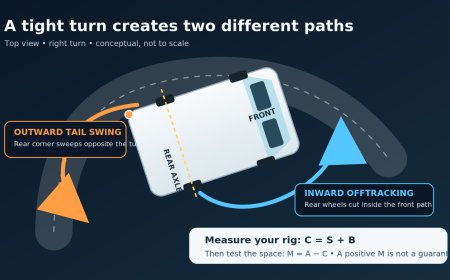
The park illustrates the point with a 20-foot tow vehicle and a 15-foot trailer. Together, they need a driveway around 35 feet long.[4] Both pieces are below the 29-foot entrance limit, yet the combination still will not fit many sites. That distinction is easy to miss when a reservation listing shows a single maximum length.
Recreation.gov is blunter. Only a few sites work for RVs or trailers, backing can be difficult, and some pads are not level.[6] The right booking sequence is therefore:
- Measure the RV or trailer as it will arrive, including racks.
- Measure the full truck-and-trailer combination.
- Read the driveway length and vehicle notes for the exact site.
- Decide whether you can handle a narrow back-in without counting on overflow space.
A site search that stops at "under 29 feet" has only answered the first question.
The campground is dry in the practical sense
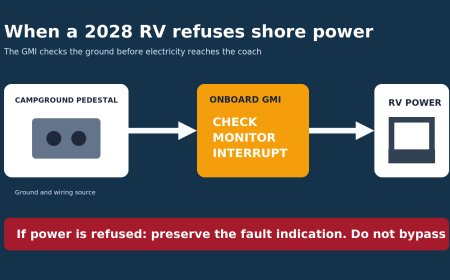
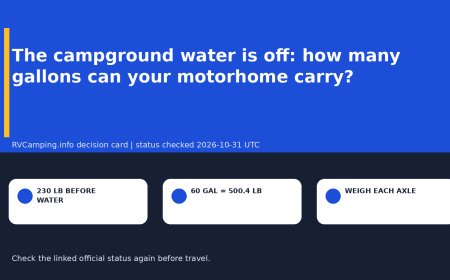
Bonita Canyon has flush toilets and drinking-water access, but it has no electric, sewer or water hookups, no dump station and no showers.[6] That can work well for a van, truck camper or small RV set up for a short dry-camping stay. It is a poor match for a traveler who needs shore power, a pull-through site or an on-site dump before departure.
The park points larger rigs and campers who dislike narrow back-ins toward private campgrounds outside the boundary. Willcox has several options, while Sunizona and Bowie are closer communities with RV parks; those private parks may have hookups, pull-throughs, water and dump facilities that Bonita Canyon lacks.[5]
This creates a clean choice. Camp inside when a specific Bonita Canyon site fits your measured rig and you want the night-sky and trailhead location more than hookups. Base outside when maneuvering room and services matter more than sleeping within the park.
Camping inside does not solve the scenic-drive problem
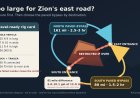
The paved scenic road continues beyond the campground toward Massai Point. That upper section prohibits trailers and vehicles longer than 24 feet.[4] An RV that legally reaches its reserved campsite may still be too long for the drive beyond it.
Plan a second vehicle or a hiking-based visit if the upper scenic drive is part of the trip. Day visitors towing a trailer should not assume the national-park designation created new turnaround space. The rules and road geometry remain the limiting factors.[3][4]
That is the central planning error to avoid: campground entry, campsite fit and scenic-road access are three different tests.
The new name may make reservations harder
NPS says traffic tripled during the first weeks after redesignation, while parking and roads remained unchanged. It expects especially heavy pressure in late December and March.[3] Bonita Canyon already advises advance reservations for larger vehicles, holidays and spring break.[4]
A flexible small-rig traveler still has an advantage, but flexibility should mean choosing among sites that actually fit, not booking first and hoping the 29-foot rule covers the rest. Save the exact site notes with the reservation. Recheck park conditions before leaving, particularly if weather, fire restrictions or road work could affect the drive.
The new sign is worth celebrating. It just is not an infrastructure upgrade. For RV travelers, Chiricahua remains a small-rig park where the exact campsite and the exact route matter more than the label at the entrance.
Sources
- Outdoors: America’s Brand-New National Park Unveils Signage [1]
- NPS: Chiricahua National Monument Becomes America’s Newest National Park [2]
- NPS: Chiricahua National Park FAQs [3]
- NPS: Bonita Canyon Campground [4]
- NPS: Eating and Sleeping at Chiricahua National Park [5]
- Recreation.gov: Bonita Canyon Campground [6]
What's Your Reaction?