



Campground boil-water advisory: choose the right water for each kitchen task
A task-by-task campground kitchen card for drinking, cooking, teeth, ice, hands and dish sanitation during a boil-water advisory.

Campground boil-water advisory: choose the right water for each kitchen task
By Romana | October 21, 2026 | Cooking
A boil-water sign at the campground bathhouse creates more than one decision. Coffee water is obvious. Toothbrushes, ice trays, handwashing and the final dish rinse are where campers start improvising. Do not sort those tasks by whether the water “looks clean.” Sort them by the exact advisory and by whether the water can be swallowed or touch ready-to-eat food.
Quick answer: First confirm that the notice is a boil-water advisory, not a do-not-drink or do-not-use order. During a boil advisory, use commercially bottled water or water prepared exactly as the issuing authority directs for drinking, beverages, food preparation, brushing teeth and ice. Tap water and soap may still be allowed for handwashing, but local instructions control. For dishes, use disposables when practical or follow CDC’s separate wash, rinse, sanitize and air-dry method.[1][2][3]

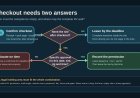
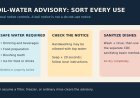
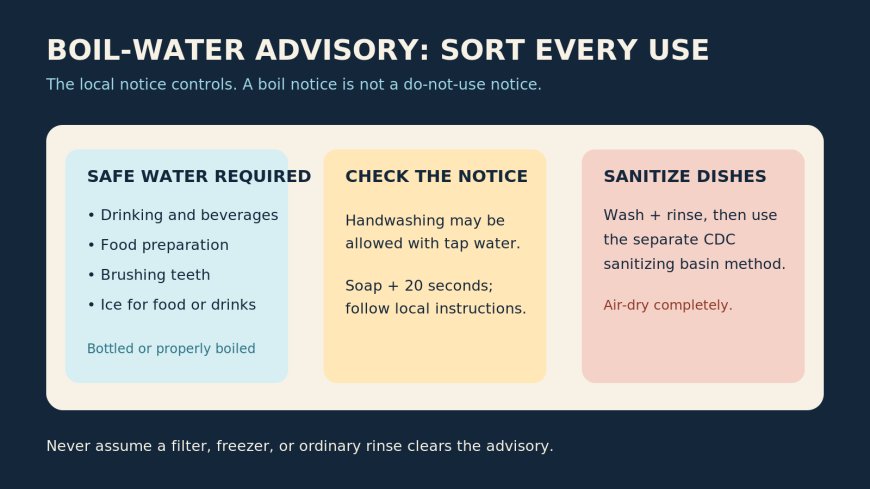
One notice, several uses. Sort each task before opening the faucet. Original RVCamping.info diagram.
Read the title of the notice first
CDC distinguishes three broad instructions: boil water, do not drink, and do not use. A boil-water advisory generally addresses possible germs and allows bottled water or properly boiled tap water. A do-not-drink order can involve contaminants that boiling will not fix. A do-not-use order can prohibit contact altogether.[1]
Never convert a stricter notice into a boil-water routine. EPA warns that heat treatment does not solve contamination by metals, dissolved salts or many chemicals.[2] Follow the issuing water system or health department when its directions differ from general guidance.
Save the notice on your phone. Record the affected campground loop or building, start time, stated boil duration, permitted uses and the official update channel. “The office said it is probably fine now” is not an all-clear.
Drinking and cooking use the safe-water lane
CDC directs people under a boil-water advisory to use commercially bottled water or boiled tap water for drinking and preparing or cooking food.[1] This includes water that disappears into a recipe: coffee, powdered drinks, soup, rice, pasta, oatmeal, gelatin, gravy and reconstituted food.
CDC’s general method is to bring tap water to a rolling boil for one minute, or three minutes at elevations above 6,500 feet, then let it cool before use.[1] The local notice remains the controlling instruction. Use a stable cooking setup approved for the location and appliance, and protect people from burns while the batch cools.
Store prepared water in clean, covered containers. Label it “SAFE WATER” and keep it away from the unboiled supply. Do not dip a used cup or utensil into the storage container.
A filter does not cancel the notice. CDC says tap water must still be boiled during a boil advisory even when it has passed through a household or pitcher filter.[1]
Brushing teeth belongs with drinking water
Use bottled or properly boiled and cooled water to brush teeth. CDC specifically says not to brush with unboiled tap water during a boil advisory.[1] Put a small safe-water bottle beside the sink and cover the faucet handle with tape so a sleepy camper does not use it by habit.
The same logic applies to mouth guards, dentures and anything likely to carry water into the mouth. If the local notice gives more specific instructions, use them.
Ice is ready-to-eat water
Stop using ice from any machine connected to the affected supply. CDC advises against using water or ice from a refrigerator or other appliance connected to the water line during an advisory.[1]
Use sealed commercial ice when the notice permits it, or make ice from water that has been made safe under the notice. Freezing is not a substitute for boiling. Empty suspect cubes rather than topping them with good ice, and keep beverage ice separate from the ice or meltwater used around packaged food.
Do not restart an RV or campground ice maker simply because the sign disappeared. Wait for the official all-clear and follow the authority’s instructions for connected appliances.
Handwashing may stay on the tap-water lane
Handwashing is the category most likely to be overgeneralized. CDC says that in many boil-water situations, people may wash hands with tap water and soap, but they must follow local public-health instructions.[1] Scrub with soap for at least 20 seconds and rinse under running water.[1]
If the notice requires safer water for handwashing, set up a hands-free jug or another clean dispensing method with boiled, bottled or otherwise approved water. If soap and water are unavailable, CDC identifies alcohol hand sanitizer containing at least 60% alcohol as an alternative.[1]
Hand sanitizer does not clean dirty cookware, remove food residue or replace the dish-sanitizing step. It also does not change what the advisory says about food-contact water.
Dishes need cleaning and sanitizing
CDC recommends disposable plates, cups and utensils when possible during a boil-water advisory.[1] That can be the sensible campground choice when safe water, gray-tank capacity or clean basins are limited.
For hand washing, CDC’s general household method is a sequence:
- Wash and rinse dishes normally with hot water.
- In a separate basin, mix one teaspoon of unscented household liquid bleach into each gallon of warm water.
- Keep the rinsed dishes in that sanitizing solution for at least one minute.
- Let everything air-dry completely before reuse.[1]
Measure the bleach and water. Use plain, unscented household liquid bleach, keep it away from children, and never mix bleach with ammonia, acids or other cleaners. The CDC recipe is for the specified sanitizing basin, not for drinking water and not for pouring into an RV fresh-water tank.
Virginia Department of Health gives the same basic separation between ordinary hot-water washing and a bleach sanitizing soak, while telling users to air-dry the items.[3] Its page uses a sink-volume measure; CDC’s per-gallon measure is easier to scale in a small camp basin. Follow the current local notice if it names a different method.
A dishwasher is generally acceptable under CDC guidance only if it has a sanitizing cycle or reaches at least 150°F in the final rinse.[1] Do not assume an RV dishwasher meets that test. Check its manual. If you cannot verify the cycle, use disposables or the approved basin method.
Baby bottles deserve stricter handling. CDC says to sanitize all baby bottles during a boil advisory.[1] Follow current infant-feeding and bottle instructions rather than treating an ordinary camp dish routine as sufficient.
Build two stations so the lanes cannot cross
Set a blue “SAFE WATER” zone for drinking, cooking, teeth and ice. Put the unboiled-water dish station elsewhere and label its wash, rinse and sanitize basins. Keep the safe-water container closed between uses.
Before the next meal, ask five questions:
- Is the notice definitely a boil-water advisory?
- Which exact sites or loops are affected?
- What boil time and altitude instruction does the issuer give?
- Does the notice permit tap-water handwashing and dishwashing?
- Has the same authority issued an all-clear?
If any answer is missing, call the water system or local health department. General federal and state guidance can organize the kitchen, but it cannot rewrite a local order.
Evidence note: CDC supplies the task-by-task household guidance and general boil method. EPA supplies the advisory distinctions and chemical-contaminant limitation. Virginia provides a state-health cross-check for cooking, teeth, ice and dish sanitation. The two-station campground layout is original RVCamping.info guidance.
Sources
- CDC: Drinking Water Advisories—An Overview — boil method and guidance for food, teeth, handwashing, ice, dishes and connected appliances (source archive retained; reviewed October 21, 2026).
- EPA: Emergency Disinfection of Drinking Water — emergency treatment limits and safe-water uses (source archive retained; reviewed October 21, 2026).
- Virginia Department of Health: Boil Water Advisory Guidance — state guidance for cooking, teeth, ice, dishwashing and dishwasher sanitation (retrieved October 21, 2026).
What's Your Reaction?