







Camp leftovers: set the clock before you reach for a deep storage tub
A campground leftover clock and shallow-container routine for getting cooked food into verified cold storage on time.

Camp leftovers: set the clock before you reach for a deep storage tub
By Romana | October 21, 2026 | Cooking
Dinner ends, the lanterns come on, and a stockpot sits beside the picnic table. This is when a simple rule gets muddled. The two-hour limit is not permission to leave food out for two hours and begin cooling afterward. It is the outside deadline for getting perishable leftovers into refrigeration or a freezer. When the food is exposed to air hotter than 90°F, that limit contracts to one hour.[2][3]
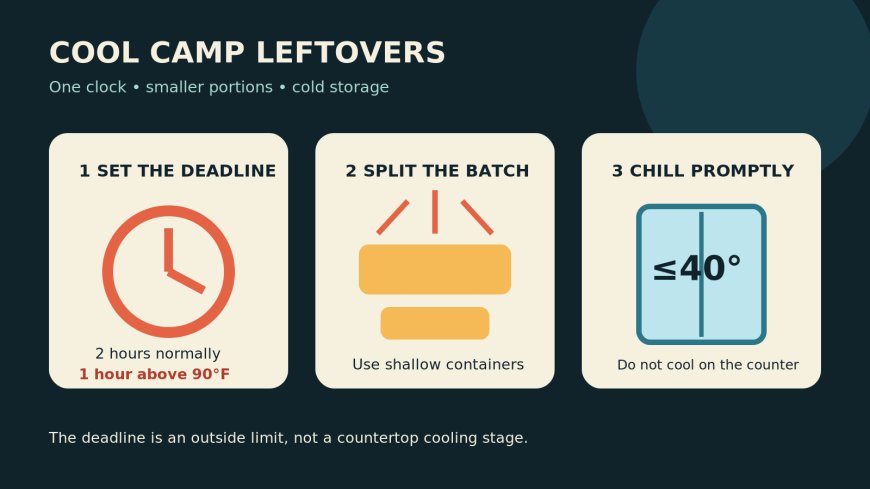
Quick answer: Note when cooked food leaves active cooking or verified hot holding. Refrigerate it within two hours, or within one hour when the surrounding air is above 90°F. Split a large batch into clean, shallow containers before it goes into cold storage. Do not wait for a stockpot to cool to room temperature, and do not reset the clock when food moves from the table to the RV counter.[1][2][3]

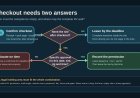
Set the deadline, divide the batch, then chill it. Original RVCamping.info diagram.
The ambient-temperature rule changes the deadline
FDA and CDC state the general timing plainly: foods that require refrigeration should be chilled within two hours. Exposure above 90°F changes that window to one hour.[2][3] “Ambient” in this context means the air around the food, not the internal temperature of the chili, chicken or casserole.
That distinction matters at camp. A shaded picnic table can still be surrounded by air above 90°F. A closed tow vehicle, truck bed, outdoor kitchen or unconditioned screen room may be hotter than the forecast. Use the conditions where the food actually sits. If you cannot establish whether the shorter limit applied, choose the conservative one-hour branch rather than inventing a more favorable history.
The deadline covers the whole uncontrolled stretch. Serving, second helpings, conversation, packing containers and carrying them to the refrigerator all count. Moving the pan indoors does not start a fresh clock.
A dish kept continuously under measured hot holding is a different situation from a pan resting on a switched-off burner. Unless you have suitable equipment and a verified holding temperature, treat the food as out of control once active cooking and service begin. This article does not turn a warm burner or an insulated carrier into hot-holding equipment.
Start with a written time
Camp meals rarely end at a clean, memorable minute. Write the time on masking tape when the food leaves active heat, then put the tape on the serving utensil or leftover container. For a potluck, the cook should supply the time because the last person at the table may not know when the dish arrived.
Use the clock as a stop point, not a goal. Portion and refrigerate well before it expires. A late discovery that “there are eight minutes left” is a discard decision, not a reason to stack a deep, steaming pot into a crowded refrigerator.
Do not use smell, taste or appearance to reconstruct missing time. FDA notes that foodborne pathogens can be present even when food does not look, smell or taste spoiled.[2] Reheating later does not prove that the earlier handling was safe.
Shallow containers solve a geometry problem
A large mass sheds heat slowly. USDA and FDA advise dividing substantial quantities of leftovers into shallow containers so they cool more quickly in the refrigerator.[1][2] At camp, that means doing the container work before everyone wanders off.
Set up the cooling station this way:
- Wash hands and place clean, food-safe containers on a clean surface.
- Keep only the amount that can enter working cold storage before the deadline.
- Divide soup, stew, beans, rice, meat and casseroles into several low, smaller portions rather than one deep tub.
- Use a clean utensil for portioning; do not scrape food from used plates back into the batch.
- Put the containers into a refrigerator, freezer or properly iced cooler promptly.
- Label the food and date after the containers are closed.
“Shallow” is a shape and loading instruction, not a universal inch measurement in the consumer guidance used here. The useful result is less depth and more exposed surface area than the original stockpot. If an exact facility rule or food-service code applies to your operation, follow that rule rather than borrowing a household shortcut.
Hot food can go into the refrigerator
Waiting on the counter for food to reach room temperature spends the safety clock without improving control. FDA says hot food can be refrigerated and recommends smaller containers to speed cooling.[2]
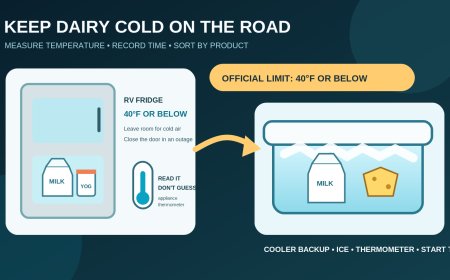
An RV refrigerator still needs room for air to move. Do not create a tight tower of hot containers or block an interior vent. Arrange the shallow portions in one planned loading step, close the door, and check the appliance thermometer. FDA advises keeping the refrigerator at 40°F or below.[2]
If the refrigerator is already above 40°F, has lost power, or cannot accept the batch without crowding, the answer is not a deeper container. Use another verified cold source that can maintain safe temperature, consume the food within the remaining allowed time, or discard it. An un-iced cooler is storage space, not refrigeration.
An ice bath is preparation, not an extension
A clean ice-water bath can help a smaller pan of soup or sauce shed heat before refrigeration. Keep the bath water out of the food and stir with a clean utensil. This step must fit inside the same two-hour or one-hour deadline. It does not pause or restart time.
At a campsite, skip the bath if the available basin is dirty, if the ice comes from an uncertain water source, or if meltwater could reach ready-to-eat food. Move the divided containers straight to verified cold storage instead.
Separate tomorrow’s portion before cleanup
The least confusing workflow has four recorded points:
- OUT: time the dish left active cooking or controlled holding;
- LIMIT: two hours, or one hour when exposed above 90°F;
- SPLIT: time the batch entered shallow containers;
- COLD: time the containers entered verified refrigeration.
Keep that card with the camp kitchen supplies. It prevents the common handoff failure in which one camper assumes another already refrigerated the food.
A large batch also deserves a “no” option. If the group has no working refrigerator, freezer or ice-supported cooler, plan a smaller meal. Food that cannot be cooled and held safely is not a useful leftover.
Do not merge separate food-safety clocks
The outdoor refrigeration deadline answers when leftovers must enter cold storage. It is not the same as a refrigerator power-outage rule, a restaurant cooling schedule or a reheating instruction. Apply the rule that matches the event in front of you.
For this campground task, remember one sentence: count all uncontrolled time, shorten the deadline when the air around the food exceeds 90°F, and divide the batch before it enters cold storage.[1][2][3]
Evidence note: USDA, FDA and CDC provide the time, ambient-temperature, cold-storage and shallow-container guidance. The OUT/LIMIT/SPLIT/COLD handoff card is an original RVCamping.info field control.
Sources
- USDA FSIS: Leftovers and Food Safety — prompt refrigeration and shallow-container guidance (source archive retained; reviewed October 21, 2026).
- FDA: Safe Food Handling — two-hour and one-hour limits, 40°F refrigeration and smaller-container guidance (retrieved October 21, 2026).
- CDC: Preventing Food Poisoning — the two-hour rule and the one-hour branch for exposure above 90°F (source archive retained; reviewed October 21, 2026).
What's Your Reaction?