








Flat-towing a car? Build the tow-bar check from its manual
Build a flat-tow departure card from the exact tow bar, baseplate, braking, cable, and vehicle manuals. Manufacturer lubrication and service rules can conflict.

Flat-towing a car? Build the tow-bar check from its manual
A tow bar can look connected while one lock is not fully engaged, a retaining clip is turned the wrong way, or a safety cable is rubbing the release hardware. The fix is not a longer generic checklist. It is a short card built from the manuals for the tow bar, baseplate, supplemental brake, breakaway system, and the exact vehicle being flat-towed.
Three manufacturer manuals make the point. ROADMASTER, Blue Ox, and Demco all call for inspection, secure connections, and safety cables. Their maintenance and lubrication directions are not interchangeable. Blue Ox specifies grease on the Avail's inner legs while its other joints use self-lubricating washers; Demco says not to lubricate the Commander's pivot points.[2][3]
Gather five identities before the first hookup
Record the manufacturer, model, serial number, and manual revision for:
- tow bar;
- baseplate and any adapter;
- safety cables and attachment hardware;
- supplemental braking and breakaway equipment;
- the towed vehicle, including model year, drivetrain, and transmission.
Add the motorhome receiver and any rise/drop adapter. The working capacity is not the largest number printed on one component. Every part of the connected system has its own rating and installation boundary. ROADMASTER's Nighthawk manual, for example, says the receiver, baseplate, cables, and other towing equipment must be rated for at least the loaded weight of the towed vehicle.[1]
A baseplate listing does not prove that a vehicle may be flat-towed. Both ROADMASTER and Blue Ox direct owners to the vehicle manufacturer's towing instructions.[1][2] Use the exact model-year owner's manual to determine transmission mode, transfer-case position, steering state, ignition sequence, speed or distance limits, fuse or battery steps, and any required start-and-run interval. If the vehicle manual says it cannot be recreationally towed four-down, a tow-bar manual does not overrule it.
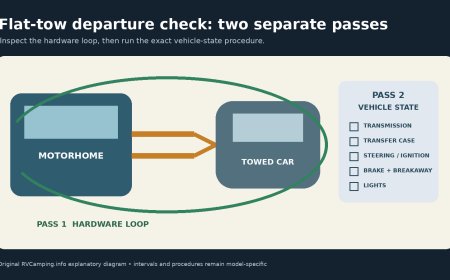
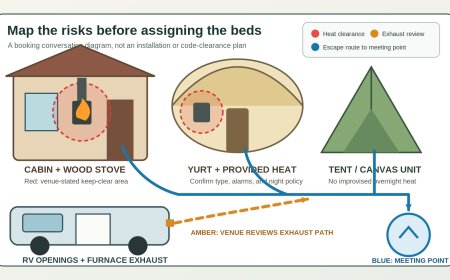
Split the check into hardware and vehicle state
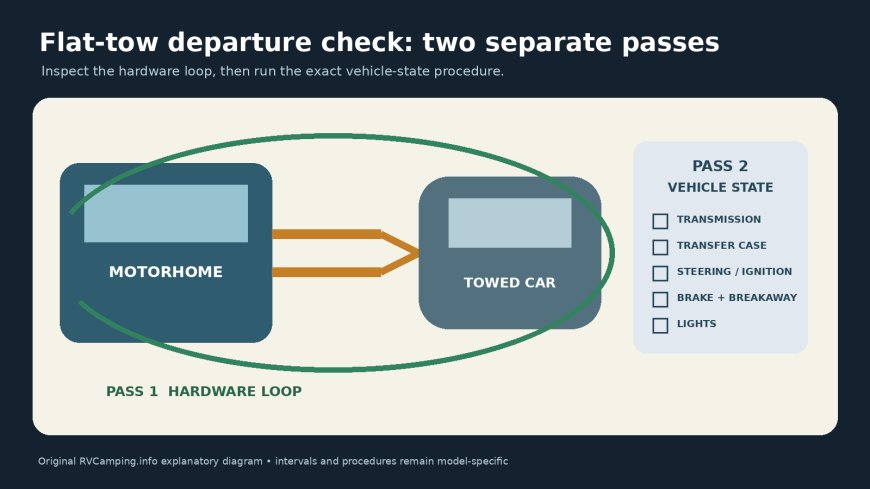
Mixing everything into one mental walk-around makes omissions easy. Use two columns.
Hardware side
Trace a physical loop from the motorhome receiver to the car and back:
- receiver pin and retainer installed as the hitch manual shows;
- tow-bar head, shank, arms, fasteners, boots, welds, and latches free of visible damage;
- both attachment pins present, oriented correctly, and secured with the specified clips;
- both arms extended and locked according to that tow bar's instructions;
- safety cables attached at the approved frame or baseplate points and routed exactly as the cable and tow-bar manuals show;
- electrical cord has turn clearance and cannot drag, pinch, or pull tight;
- breakaway cable has its own approved route and attachment point;
- lighting and supplemental braking pass their manufacturer-directed tests.
ROADMASTER calls for checking mounts, brackets, fasteners, wiring, safety cables, and the rest of the system each time before towing. Its Nighthawk manual also calls for a separate baseplate inspection every 3,000 miles and says not to tow with baseplate damage.[1] Blue Ox tells Avail users to look for failed welds, absent or deteriorated components, and loosened hardware before use. It also calls for a baseplate-movement check before each trip.[2]
Vehicle-state side
Read the towed vehicle's procedure aloud and mark each step in order. Typical fields include transmission, transfer case, parking brake, steering, ignition/accessory state, battery management, and any mileage-dependent procedure. Those are fields, not universal answers.
Finish with a slow roll only if every component manual permits it. Have a spotter confirm both arms are locked, wheels track freely, cables clear the ground and release hardware, the electrical cord has room for a turn, and the supplemental brake behaves as its manual specifies. Stop immediately if a wheel drags, a lock does not hold, a cable catches, or the car does not track normally.
Cable routing is model-specific
"Cross the cables" is not a complete instruction. Connection points, cable type, slack, and clearance still matter.
For the Blue Ox Avail, the manual calls for cables crossing beneath the tow bar, enough slack for turns, and routing that keeps them off the ground, coupler, and locking handles. It warns that contact with a locking handle could unlatch a leg.[2] ROADMASTER's Nighthawk manual specifies a frame-to-frame connection and tells owners to verify cable length under its dedicated cable instructions.[1] The Demco Commander manual calls for crossed cables and, for that model, specifies straight Demco cables rather than coiled cables.[3]
Those examples cannot be blended into one home-made route. Copy the diagram from your own manual onto the card. Then check the setup at straight ahead and at the practical turning limits established by the manufacturer or installer. If a cable must be wrapped around an arm, rests on a latch, drags, or becomes tight before the vehicles reach the allowed turn, the setup needs correction before travel.
Lubrication advice can directly conflict
A can of lubricant is not preventive maintenance unless the manual calls for it at that location.
Blue Ox says the Avail's inner legs receive a light coat of multipurpose grease after the boots are moved and the legs cleaned. The same section says the other tow-bar joints use self-lubricating washers.[2] Demco permits occasional lubricant inside the Commander's latch-trigger area but tells owners not to lubricate its pivot points because those also use self-lubricating washers.[3]
ROADMASTER gives its own cleaning and lubrication procedure for the Nighthawk.[1] Use the named cleaner or lubricant type, location, and sequence in the current manual for the installed bar. Do not spray every pivot, use penetrating oil as a default, or pack dirt under a boot. Stiff movement, excessive play, a torn boot, corrosion, damaged threads, a crack, or a lock that will not hold belongs with the manufacturer or an authorized service facility.
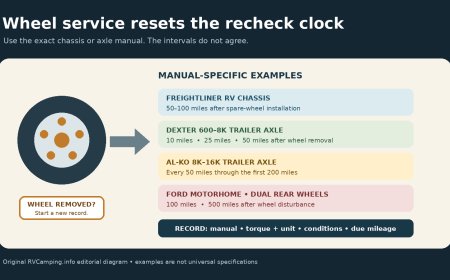
Add the intervals your manual actually names
Keep trip checks separate from periodic maintenance. Blue Ox recommends full Avail service every two years or 10,000 miles and gives additional cleaning and annual inner-leg care instructions.[2] ROADMASTER names a 3,000-mile baseplate check in the Nighthawk manual.[1] Demco tells Commander users to recheck tow-bar hardware every 200 miles as a precaution.[3]
These are examples, not a universal schedule. Record only the intervals that apply to the identified equipment. Use a tow log if the towed vehicle's odometer does not accumulate miles while being towed.
| Record field | Entry |
|---|---|
| Tow-bar manual and revision | ______________________________ |
| Baseplate manual and vehicle application | ______________________________ |
| Loaded towed-vehicle weight record | ______________________________ |
| Before-each-use inspection page | ______________________________ |
| Cable diagram/page | ______________________________ |
| Cleaning/lubrication product and locations | ______________________________ |
| Periodic service interval and next due | ______________________________ |
| Vehicle recreational-towing procedure/page | ______________________________ |
| Supplemental brake and breakaway test page | ______________________________ |
| Last completed / initials | ______________________________ |
Make backing a planned stop
ROADMASTER says not to back a motorhome with the Nighthawk and towed vehicle attached. Blue Ox likewise says to disconnect before backing the Avail setup.[1][2] Do not assume a different bar, adapter, or helpful spotter makes backing acceptable.
Before entering a fuel lane, campground loop, or dead-end parking area, identify the forward exit. If you must reverse, follow the manuals' disconnect procedure on a stable, safe surface. Set both parking brakes as directed, chock if required, and keep people out of the pinch zone. Never stand between vehicles while either one can roll.
After an emergency maneuver, curb strike, collision, jackknife, or unintended backing event, stop and inspect. Blue Ox says an Avail involved in an accident must be replaced and warns that backing stress may cause damage that goes unnoticed.[2] A quick glance is not enough after an abnormal load. Contact the manufacturer or an authorized service center and record what happened.
The departure card should end with two signatures or initials when two people hook up: one for the hardware loop and one for the vehicle-state procedure. Solo travelers can run the same two passes separately. That small pause is more reliable than one rushed walk-around, and it keeps the exact manuals in charge.
Sources
What's Your Reaction?