








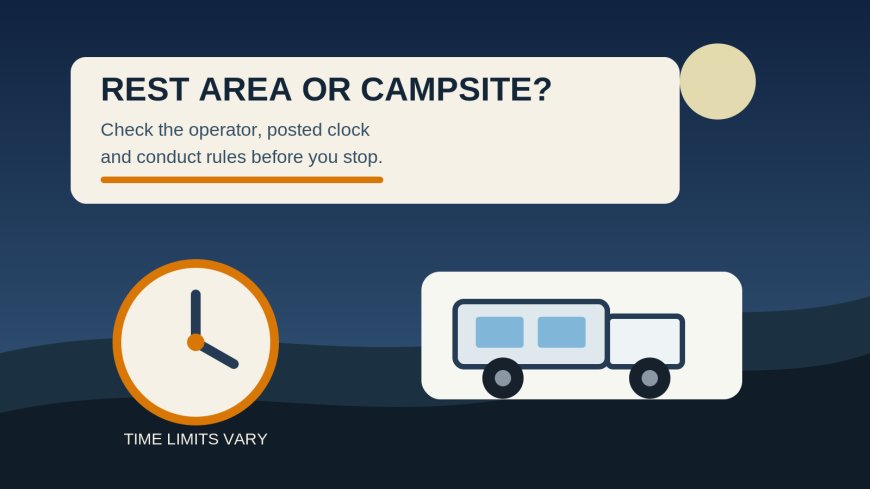
Can you sleep at a highway rest area in an RV? Check the clock, not the folklore
Rest-area hours and camping rules vary by state. Use this five-part check before relying on a highway stop for sleep in an RV.

By Romana | September 9, 2026
A rest area can be the right place for a short safety stop. It is not automatically a legal overnight campsite. The difference matters when an RV travel day runs late.
Caltrans describes roadside rest areas as places to stop, stretch, take a nap, switch drivers, and check a vehicle or load.[3] That is a useful description of purpose, but it does not erase state time limits or posted rules. California's own maintenance manual says camping is prohibited and limits a person or vehicle to eight hours in a 24-hour period at a state safety roadside rest area.[5]
Florida is much tighter. Its Department of Transportation says the general public may stay for three hours, while a ten-hour period applies to commercial motor vehicle operators who are subject to hours-of-service rules.[2] A private motorhome does not become a commercial vehicle because it looks large.
Oregon uses another rule. Its posted regulations ban camping and shelters, while capping each visit at 12 total hours within a 24-hour period.[4]
Those three examples are enough to kill the most common planning shortcut: there is no single national "overnight RV parking" rule.
A sleep stop is not a campsite
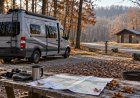
The safest way to read a rest-area rule is literally. If a state allows a limited stop but bans camping, use the space to rest inside the parked vehicle. Do not turn the shoulder-side pause into a campground stay.
That means no awning, chairs, grill, leveling spread, outdoor mat, slide that crosses a marked space, wastewater release, or utility connection. California separately prohibits tents, open fires, and unauthorized use of rest-area water, electricity, or gas.[5] Oregon prohibits dumping or leaking sewage or wastewater and bars washing dishes in the restroom.[4] Florida says its rest areas have no RV hookups or dump stations.[2]
A practical distinction:
- Parking/resting: the RV remains road-ready and inside one legal marked space while occupants rest inside.
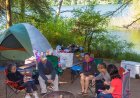
- Camping behavior: the party expands outside the vehicle or uses the property as an RV site.
A state may still prohibit a long stop even if you keep everything inside. The time limit and the behavior rule are separate checks.
Run a five-part check before relying on a stop
1. Identify the operator
Do not search only for the facility name. Identify whether it is run by a state DOT, turnpike authority, toll-road operator, county, tribal government, or private travel plaza. Rules that apply at a state rest area may not apply at a turnpike service plaza ten miles away.
2. Read the current official page
Look for the operator's rest-area page, regulation, facility map, and closure notice. Save the URL and note the retrieval date. Florida's FAQ, for example, says most rest areas are open around the clock but identifies an exception with daytime hours.[2] "Open 24 hours" describes access; it does not mean a visitor may occupy a space for 24 hours.
3. Record both the time limit and the conduct limit
Write down four details in the trip plan:
- maximum stay for a private RV;
- whether sleeping in the vehicle is addressed;
- which activities count as prohibited camping; and
- any facility-specific posted restriction.
If the official page is silent, call the operator or choose a campground or commercial stop with an explicit policy. A forum answer from last year is not a permit.
4. Check the exact facility on travel day
A statewide page cannot guarantee that one building, lane, water source, or parking area is open tonight. Caltrans notes that emergency, seasonal, and economic closures can occur and calls for advance signs when practicable.[5] Check the live facility page or road-conditions system, then obey signs on site.
5. Keep a legal fallback within your remaining drive time
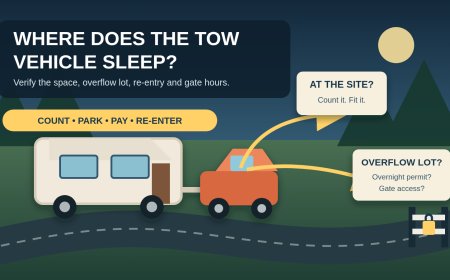
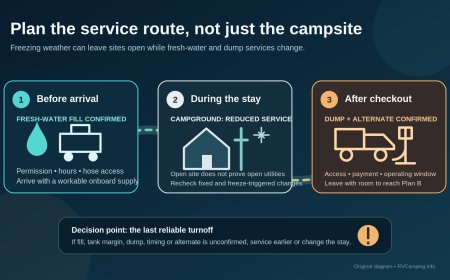
A rest area can fill before the RV arrives. It can also be closed, restricted to a shorter visit, or divided into spaces that do not fit the rig. Put a second stop in the navigation plan before starting the day: a reservable campground, an RV-friendly commercial property with confirmed permission, or another official facility whose current rules you have checked.
The arrival routine
Pull only into a space marked for your vehicle type. Keep access lanes, truck spaces, accessible spaces and curb areas clear. Set a departure alarm based on the posted limit, not on sunrise. Keep slides in unless the RV manufacturer requires access for an essential safety reason and the slide remains wholly within the legal space; if that cannot be done, use another facility.
Lock doors, keep valuables out of sight, and leave if the location feels unsafe. Rest-area lighting or security patrols do not guarantee personal safety. Florida reports overnight security at its rest areas, but that statement should not be read as a promise that an officer is beside every parked vehicle.[2]
Before departure, walk around the RV, check tires visually, confirm compartments and steps are secured, and make sure nothing leaked. The stop should leave no campsite footprint.
A better question than "Is overnight parking allowed?"
Ask: "May a private RV remain at this exact facility for the number of hours I need, while staying inside one marked space and following every posted restriction?"
That wording forces the trip plan to account for the operator, vehicle type, time limit, behavior rules, and local signs. It also makes the backup obvious. If the official answer is incomplete, book a campsite rather than trying to stretch an uncertain rest stop into one.
Source note: This RVCamping.info guide was developed from current public guidance and regulations published by Caltrans, the Florida Department of Transportation, and the Oregon Department of Transportation. The three-state comparison illustrates why travelers must verify the exact jurisdiction and facility; it is not a fifty-state legal directory.
Sources
What's Your Reaction?