





















South Beach in winter: book the RV site, then walk the tsunami route
Plan a winter RV stay at Oregon’s South Beach State Park around open camping loops, the pedestrian tsunami route, and current surf and tide hazards.

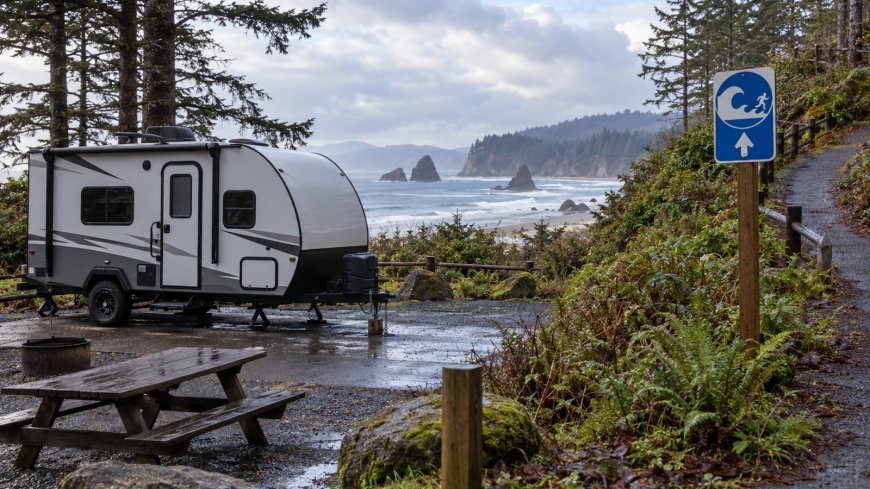
South Beach in winter: book the RV site, then walk the tsunami route
A year-round campsite is only one part of this stay; the evacuation walk and beach forecast deserve equal planning time.
A reservation does not finish the plan
South Beach State Park advertises year-round camping and 227 electrical sites with water, but its winter notes say the tent-only H and I loops close after summer. Tents can still use open RV sites.[1] That distinction matters to mixed groups: the park remains available while the pattern of open inventory changes.
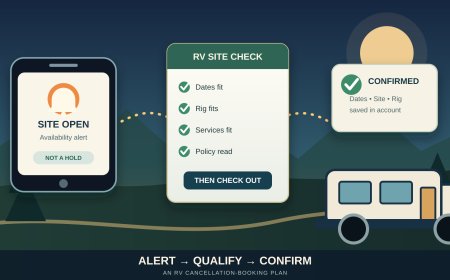
Oregon releases reservable sites on a rolling six-month schedule at 6 a.m. each day. At most parks, any site still open on the arrival date can be reserved that day.[2] A sensible booking screen therefore starts with the exact loop and site, not a general promise that the park is open.
Walk the route before the coast turns urgent
The campground map identifies Safe Haven Hill north of I Loop and Oregon Coast Community College across Highway 101 as evacuation destinations.[3] The state pedestrian map is more direct: after a local Cascadia earthquake, leave immediately, go on foot and do not wait for an official warning.[4] Those are instructions for a real emergency, not a map-reading exercise to postpone until arrival night.
After parking, walk from the assigned site toward the signed route in daylight. Note gates, intersections and anything that would be hard to cross with children, a dog or limited mobility. Keep shoes, lights, medication and warm layers where they can be grabbed without opening an exterior storage bay. The RV is shelter during ordinary weather; it is not the evacuation vehicle after strong local shaking.
The beach needs its own go-or-stay decision
The campground map tells visitors to know the tide, stay off logs and avoid turning their backs on the ocean.[3] The National Weather Service adds that a sneaker wave may arrive after 10 to 20 minutes of smaller waves and can run at least 150 feet into apparently dry beach.[5] A calm stretch is not proof that the next set will behave the same way.
Check the current surf forecast, tide timing and any coastal hazard statement before each beach visit. Choose an escape path before sitting down, keep children close, and stay off driftwood that moving water can roll. If the official forecast or conditions make the margin poor, use the campground, bayfront or another inland activity instead.
A workable winter arrival
The practical sequence is campsite, high ground, then beach. Confirm the electrical site and seasonal facilities before paying. On arrival, locate the pedestrian route before dark. Recheck surf and tide conditions each time anyone heads toward the ocean. These checks answer different questions, and none can substitute for the others.
South Beach can be a useful winter base because camping continues after the tent-only loops close. Its coast-facing location also means the most important preparation may happen on foot, before the first walk to the sand.
Source credit: RVCamping.info reviewed the linked primary and official materials on 2026-10-24. The trip sequencing and reader recommendations are original editorial analysis.
Sources
- South Beach State Park — Oregon State Parks — Accessed 2026-10-24.
- Oregon State Parks reservation information — Accessed 2026-10-24.
- South Beach State Park campground map — Accessed 2026-10-24.
- South Beach pedestrian evacuation map — DOGAMI — Accessed 2026-10-24.
- Sneaker-wave safety — National Weather Service — Accessed 2026-10-24.
What's Your Reaction?