











Before you dig dinner: check the shellfish closure, then light the stove
Treat recreational shellfish as two safety decisions: harvest only from an open beach and species, then control cold storage, contamination, and cooking.

Before you dig dinner: check the shellfish closure, then light the stove
Cooking manages some microbial risk, but it cannot turn shellfish from a biotoxin closure into a safe camp meal.
The first food-safety decision happens on the beach
Washington health officials tell recreational harvesters to check the shellfish safety map on the day of harvest, then separately verify licenses, seasons, limits and emergency rules.[2] A beach that was open last weekend or open for one species is not enough.
FDA explains why the closure check cannot be replaced at the stove: paralytic shellfish toxins are stable and ordinary heat treatment does not completely destroy them.[1] If the exact beach or species is closed or under advisory, stop before digging. Longer boiling is not a remedy.
An open harvest still needs a cold chain
Vibrio lives naturally in coastal water and can build up inside shellfish. CDC’s prevention advice is to cook shellfish and keep raw seafood and its liquid away from food that is ready to serve.[3]
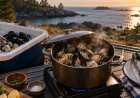
Carry a clean cooler with enough ice, keep the catch separate from drinks and prepared foods, and wash hands and tools after handling. A campsite table makes cross-contamination easy because the cutting board, cooler latch and serving utensils share a small space.
Cook the batch, then reject the stragglers
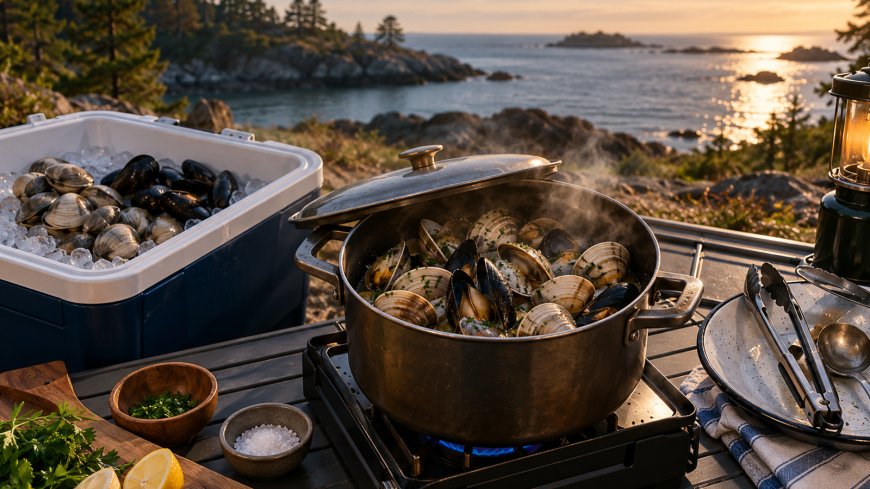
CDC gives two timed routes for shellfish in the shell. After the shells open in boiling water, keep boiling for three to five minutes. In a steamer that is already producing steam, continue for four to nine minutes. Throw away any shell that never opens fully.[3] FDA likewise advises cooking most seafood to 145°F and discarding clams, mussels or oysters that stay closed.[4]
Use the method that matches the food and official guidance. Keep the pot covered as directed, avoid crowding it, and do not return cooked shellfish to the raw container.
Two gates between beach and plate
The first gate is legal and environmental: exact beach, exact species, exact day. The second is kitchen control: cold transport, separation and adequate cooking. Passing the second gate does not erase a failure at the first.
That distinction is the useful campsite rule. Check the closure before packing the shovel. Light the stove only after the harvest is confirmed open.
Source credit: RVCamping.info reviewed the linked primary and official materials on 2026-10-24. The trip sequencing and reader recommendations are original editorial analysis.
Sources
- FDA compliance guide — paralytic shellfish poison — Accessed 2026-10-24.
- Washington recreational shellfish harvest planner — Accessed 2026-10-24.
- CDC Vibrio prevention — Accessed 2026-10-24.
- FDA seafood selection and serving safety — Accessed 2026-10-24.
What's Your Reaction?