










Cooked barley at camp: a safe path from pot to next meal
A container-first RV workflow for hot holding, rapidly cooling, cold-storing and reheating cooked barley and other grain dishes.

Cooked barley at camp: a safe path from pot to next meal
By Romana Category: Cooking
A pot of barley or another cooked grain can stretch one campsite meal into several, but the storage plan has to exist before the extra portions do. Dense cooked grain holds heat, a compact RV refrigerator has limited cooling capacity, and cheese, vegetables, meat or broth can make a simple grain dish more perishable—not less.
The short answer: Keep a cooked grain dish at 140°F or warmer while it is being hot-held, or begin the refrigeration handoff promptly. Divide the food into clean, shallow meal-size containers; refrigerate within two hours, or within one hour when outdoor conditions are above 90°F. Verify that its cold compartment stays no warmer than 40°F. Use refrigerated leftovers within three to four days and reheat the portion you will eat to 165°F.[2][3][4][5]

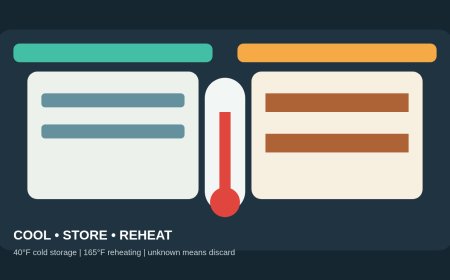
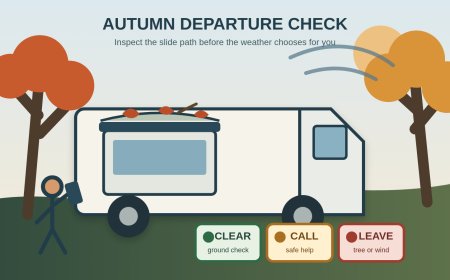
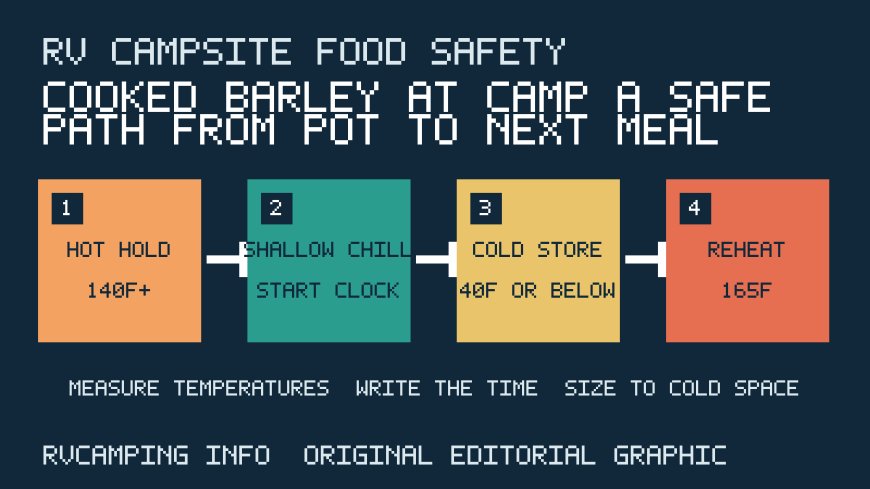
Plan every extra serving before cooking: hot hold, shallow chill, cold store, then reheat one portion. Original RVCamping.info illustration.
A recipe prompted the question, not this guide
Camp And RV Cook’s October 2 post, “Autumn Leaves Me Hungry to Camp,” included a toasted-barley campsite dish. RVCamping.info used that feed item only as the discovery prompt for a different editorial question: what should an RVer do with cooked barley or another grain after the meal?[1] This guide does not reproduce that recipe, ingredient list, method, serving pattern or article structure.
The answer applies to barley bowls, pilafs, grain-and-vegetable mixtures and other cooked grain dishes. It is a handling workflow, not a recipe. When a dish contains meat, poultry, eggs or seafood, use the safe minimum cooking temperature for that ingredient before thinking about leftovers. The leftover plan begins only after the dish was safely cooked.
Build a portion map before turning on the burner
Choose the shallow containers first and fit them into the RV refrigerator while they are empty. A container counts only if it can sit level, the door closes, and warm boxes will not need to be stacked into a solid block. Put an appliance thermometer near the intended shelf and confirm 40°F or below; FDA recommends an appliance thermometer rather than trusting the control setting.[3]
Write a destination for each expected portion:
- Eat now: food plated during the current meal.
- Hot hold: food maintained at a measured 140°F or warmer for later service.
- Chill now: untouched portions that have assigned shallow containers and verified cold space.
- Do not save: food with no safe destination or an uncertain time history.
This map fixes the common RV mismatch between a roomy cooking pot and a small refrigerator. If only two shallow meal containers fit, do not cook six speculative leftover portions. A separate food cooler is useful only when enough ice or frozen packs keep it at 40°F or below and a thermometer verifies that condition.[4]
Start one clock when temperature control ends
USDA says hot food should remain at 140°F or warmer. Once cooking or verified hot holding ends, refrigerate leftovers within two hours; the limit is one hour when the food is exposed to temperatures over 90°F.[2] FDA gives the same outdoor one-hour and two-hour limits.[4]
Write the handoff time on tape before the group starts eating. Time in the serving bowl, on the picnic table, during cleanup and on the RV counter all belongs to the same window. Shade, a lid or a cool evening breeze does not pause it. A thermometer reading below 140°F is not a reason to wait for the food to “cool naturally.” It is a reason to begin the planned cooling handoff while time remains.
Keep serving utensils clean and do not return food from individual plates to the storage batch. If diners will come and go, place a small amount in the service bowl and keep the rest under verified hot holding or move the reserved portion directly toward refrigeration. Smaller service refills reduce the amount repeatedly exposed to hands, utensils and outdoor temperatures.
Change the shape: deep pot to shallow meals
USDA specifically advises dividing large quantities among shallow containers because a big pot of soup or other food cools too slowly. Its guidance permits immediate refrigerator placement; another option is to remove heat in a clean bath made with ice and cold water before shelving the containers.[2] FDA likewise directs consumers to spread a large leftover quantity across low-profile containers so a refrigerator can cool it faster.[3]
For cooked grains, make these six handoffs:
- Set clean, food-safe containers on a stable surface before service ends.
- Spoon the saveable portion into several shallow, meal-size layers instead of one deep tub.
- Leave room around the containers in the refrigerator so they are not hot-stacked.
- If the small refrigerator needs help, place the pot or heat-safe containers in a clean ice-water bath, keep bath water below every rim, and stir with a clean utensil.
- Move everything into refrigeration before the current hot-weather or standard deadline; do not turn the ice bath into extra countertop time.[2][3]
- Once cold, close the containers securely and label them with the cooking date and intended meal.
Do not put the entire hot cooking pot into an RV refrigerator simply because it fits. The center remains insulated by the surrounding food, while the appliance must also protect everything already cold. Do not set the pot outdoors overnight: outdoor air is neither controlled 40°F storage nor protection from animals, dust and insects.
Treat additions as part of the same history
Adding cheese, cooked vegetables, broth or cooked meat does not reset the clock. The completed dish has one history, beginning when cooking or hot holding ended. If a cold topping is intended for tomorrow, store it separately so the grain can be reheated evenly without warming and cooling the topping.
A grain dish that received liquid from raw meat, a dirty spoon, unclean cooler meltwater or an unwashed container has a contamination problem that temperature alone cannot erase. Reheating is not a repair for poor cooling or cross-contamination.
Label each container with the food name, cooking date and intended meal. USDA gives refrigerated leftovers three to four days; FoodSafety.gov also lists three to four refrigerated days for many cooked leftovers at 40°F or below.[2][5] Freeze a portion sooner if the trip schedule will not use it inside that window. The calendar starts with the original cook, not with a move from refrigerator to cooler or a new label.
Reheat the serving, not the whole supply
Take out only the container needed for the next meal. USDA and FDA set 165°F for reheated leftovers.[2][3] Use a clean food thermometer in more than one place, especially in dense clumps. Steam at the lid or a sizzling edge does not establish the temperature at the center.
On an RV stove, add only the liquid needed to prevent scorching, cover the pan, and stir from the bottom so cooler pockets trade places with hotter ones. For microwave reheating, loosely cover the dish so steam can escape; interrupt the cycle to turn and mix the food, observe the specified standing period, and then probe several areas. USDA notes that microwave cold spots require multiple checks.[2]
Serve the reheated portion immediately. Keeping the other containers cold avoids creating a second cooling problem for the entire batch. If a portion missed its refrigeration deadline, spent an unknown period above 40°F, or has no reliable history, discard it rather than testing it with a taste or a harder reheat.
The four-line grain card
Tape this beside the RV stove:
- HOLD: 140°F or warmer, verified with a thermometer.[2][4]
- CHILL: shallow meal portions; refrigerate within two hours, or one hour above 90°F.[2][3][4]
- STORE: measured cold space no warmer than 40°F; use within three to four days.[2][5]
- REHEAT: one portion to 165°F throughout.[2][3]
The card does not make a recipe safer by itself. It makes the handoffs visible. The safest batch is the one your hot-holding equipment, clean containers and measured cold space can actually control.
Evidence note: Camp And RV Cook is credited only as the discovery source. USDA FSIS, FDA and FoodSafety.gov provide the safety temperatures, time limits, shallow-container guidance and storage interval. The portion map and four-line grain card are original RVCamping.info planning tools.
Sources
- Autumn Leaves Me Hungry to Camp — Camp And RV Cook (discovery credit only; recipe not reproduced)
- Leftovers and Food Safety — USDA Food Safety and Inspection Service
- Safe Food Handling — U.S. Food and Drug Administration
- Handling Food Safely While Eating Outdoors — U.S. Food and Drug Administration
- Cold Food Storage Chart — FoodSafety.gov
What's Your Reaction?