











Infant formula at an RV campsite: build the bottle around safe water
A campsite bottle-preparation plan for safe water, clean feeding gear, exact mixing, time limits, higher-risk infants, and days when the RV refrigerator cannot be trusted.

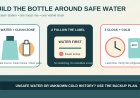
Infant formula at an RV campsite: build the bottle around safe water
By Romana Category: Cooking
An RV gives a caregiver a sink, a refrigerator and a counter, but none of those is automatically ready for an infant bottle. The campground tap may be under an advisory. The galley sink may also handle raw food and utility gear. The refrigerator may drift warm on propane or battery power. A safe bottle starts by checking those systems before the baby is hungry.
This is not a recipe and it does not replace the directions on the formula label or advice from the baby's clinician. Formula type, the baby's age and health, and the safety of the available water all change the right preparation method. The useful campsite habit is to decide which method applies while there is still daylight, water and time.

Choose the lowest-complexity safe option
Ready-to-feed liquid formula removes the water-mixing step. CDC calls ready-to-feed formula the safest option during an emergency because it is sterile and needs no added water.[3] That can be useful during a boil-water advisory, a power interruption, a dry-camping stay with uncertain wash water, or an overnight stop when the galley cannot be cleaned properly.
Ready-to-feed is not maintenance-free. Check the package instructions and use-by date, keep opened product at the specified temperature, prevent the nipple or container opening from touching dirty surfaces, and discard what remains after a feeding rather than saving a partly used bottle. Bring enough clean or single-use feeding equipment for the planned interval.
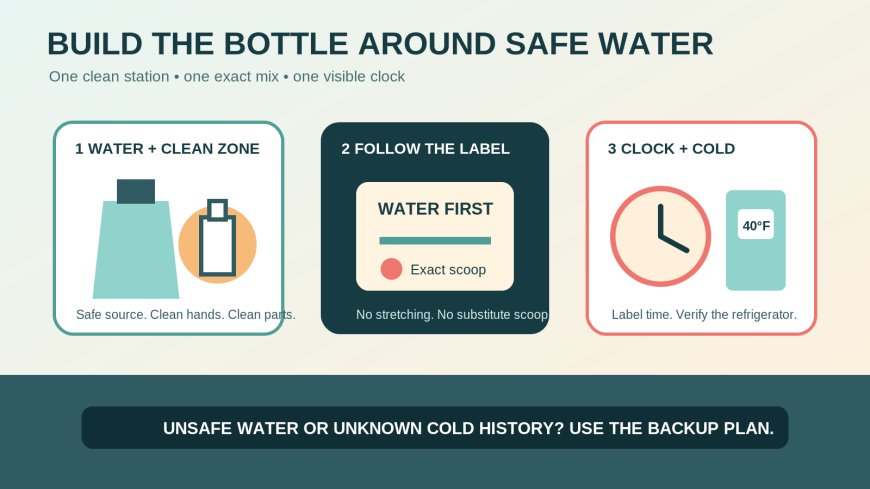
Concentrated liquid and powdered products require exact amounts of water. Never stretch a container to cover an extra feeding. FDA and CDC direct caregivers to put the measured water in first, then add the amount of formula on the label.[1][2] A different scoop, a heaping scoop, an improvised half-scoop or an estimate from an unlabeled cup can change the concentration.
Verify the campsite water before opening the formula
Treat a potable-water symbol as the start of the check, not the end. Read campground notices, ask the host whether an advisory is active, and confirm that the outlet is intended for drinking. Keep the potable hose and bottle-filling container away from dump-station equipment. If there is any doubt about a tap, call the local health department or use the alternative directed by public-health officials.
For most babies under ordinary conditions, CDC says safe tap water may be used while following the manufacturer's directions.[2] Extra precautions apply to babies younger than two months, babies born prematurely, and babies with weakened immune systems. Powder is not sterile; CDC's higher-risk method calls for boiling water, waiting about five minutes, mixing while the water is still very hot, and then cooling the prepared bottle before feeding.[2] Ask the baby's clinician which method to use before travel, particularly if the child falls into one of those groups.
Unsafe water creates a separate decision. During an emergency, CDC advises using bottled water until authorities say tap water is safe.[2][3] If authorities identify chemical or toxin contamination, boiling, filtering and ordinary disinfection do not make that water safe; use the source that public-health officials specify or ready-to-feed formula.[2] Do not assume that the RV's carbon filter solves an advisory.
Pack a written fallback: the formula type, clinician's number, local health-department contact, enough safe water or ready-to-feed product, and one extra feeding cycle beyond the planned travel day. A highway closure or failed pedestal should not force an improvised mix.
Make a bottle-only work zone
Clear one section of the galley counter. Remove raw food, dishcloths, keys, pet bowls and chemical bottles. Wash hands, then clean and sanitize the surface. Keep the formula container, clean feeding items and safe water on this side of the counter. Dirty bottles go directly into a separate tub on the other side.
A tiny RV sink is a poor storage rack. CDC advises taking bottles apart and washing feeding pieces in a clean basin reserved for that job rather than placing them directly in a sink that may carry germs.[4] Pack a basin that is visibly different from the dishpan or utility bucket. Disassemble nipples, rings, valves and caps so wash water reaches hidden surfaces.[4]
Air-dry cleaned parts on a clean, unused towel or drying rack where road dust and insects cannot settle on them. Do not wipe the inside of a bottle or nipple with a used galley towel. Follow CDC's cleaning and sanitizing frequency for the child's age and health, along with the equipment manufacturer's directions.
Mix one feeding without improvisation
Read the exact container every time the brand, product form or package size changes. Use the supplied scoop for that container. Check the use-by date and inspect the seal before opening. FDA says formula should never be used after its use-by date.[1]
Use this order:
- Clean hands, the bottle station and the feeding equipment.
- Confirm the water source and the preparation method for this baby.
- Measure the label's water amount into the bottle first.
- Add the exact level amount of powder or concentrate stated on that label.
- Close and mix as directed without touching the nipple opening.
- Cool a hot-prepared bottle to a safe feeding temperature without letting campsite water enter the bottle.
Formula does not have to be warmed.[2] If warming is preferred, keep the bottle closed and use warm water around it. Do not microwave it; uneven heating can create hot spots.[2] Test the feeding temperature as CDC directs before offering the bottle.
Put every bottle on a visible clock
Write the preparation time on a piece of tape or use a phone timer. Prepared formula has two different clocks: one begins when it is mixed, and the shorter one begins when feeding starts. FDA and CDC say to use a freshly prepared bottle within two hours, but within one hour after feeding begins.[1][2] If feeding has not started and the bottle will not be used inside that first window, refrigerate it immediately and use it within 24 hours.[2]
Do not put a partly consumed bottle back in the refrigerator. Saliva has entered it, so discard the remainder after the feeding.[2] In a shared RV, a simple cap color or tray position can keep a fresh bottle from being confused with one that has touched the baby's mouth, but the time label still matters.
A cooler can serve as transport equipment only if it reliably holds the required cold temperature and you monitor it with an appliance thermometer. Do not bury a bottle beside leaking raw meat, meltwater or dirty beverage cans. Put feeding supplies in their own clean, watertight section. On a long driving day, carry ready-to-feed portions or prepare each feeding as needed rather than gambling on an unmeasured cab temperature.
Treat the RV refrigerator as equipment that must prove itself
Put an appliance thermometer near the stored bottles, not on the door. Check it after switching between shore power, propane and battery operation and after a hot travel leg. Frequent door opening, poor leveling where required by the appliance, weak power and high ambient heat can all undermine the plan even when the light is on.
If power fails and you cannot verify safe refrigeration, do not guess how long a prepared bottle stayed cold. CDC's emergency guidance says to make a fresh feeding each time when a working refrigerator is unavailable.[3] Move unopened shelf-stable product and clean equipment to the backup plan; discard prepared formula when its safe history cannot be established.
Keep unopened powder cool and dry indoors. CDC specifically says not to store it in a vehicle, garage or outdoors.[2] In an RV, that rules out a hot cab, exterior compartment, picnic box and sunlit dashboard. Once opened, close the lid tightly, keep the scoop and lid dry, mark the opening date, and follow the package's disposal interval.
Stop conditions for the campsite bottle station
Pause preparation and switch to the backup method when the water is under an unresolved advisory, the bottle basin was used for raw food or chemicals, cleaned parts fell onto a dirty surface, the formula seal is damaged, the product is expired, or the refrigerator temperature history is unknown.
If the formula package was exposed to floodwater or unsafe water, is rusty, dented, swollen or no longer sealed, discard it as CDC directs for emergency feeding supplies.[3] Do not taste-test questionable formula. For symptoms or concerns after a feeding, contact the child's clinician; urgent symptoms need urgent medical care.
Before bed, reset the station. Refill the safe-water supply, count clean feeding sets, confirm the refrigerator temperature, note the open-container date, and stage the emergency option. In a small RV, that five-minute reset prevents a 2 a.m. feeding from becoming a search for one clean nipple beside yesterday's dishes.
Evidence note: FDA and CDC provide the formula-mixing, storage, higher-risk-infant, emergency-water and feeding-equipment rules. RVCamping.info developed the campsite station, visible-clock, refrigerator-verification and fallback workflow. Caregivers should follow the exact formula label and the baby's clinician.
Sources
- Handling Infant Formula Safely: What You Need to Know — U.S. Food and Drug Administration — mixing order, time limits and date checks.
- Infant Formula Preparation and Storage — Centers for Disease Control and Prevention — routine preparation, higher-risk infants, water emergencies and storage.
- Prepare and Store Powdered Infant Formula in an Emergency — Centers for Disease Control and Prevention — ready-to-feed preference, outage procedure and exact mixing.
- About Hygiene for Infant Feeding Items — Centers for Disease Control and Prevention — disassembly and dedicated-basin cleaning.
What's Your Reaction?