


















Cut melon at camp: a clean knife and a cold clock
A practical RV camp-kitchen plan for washing whole melon, cutting it cleanly, holding it at 40°F or below and timing safe leftovers.

Cut melon at camp: a clean knife and a cold clock
By Romana Category: Cooking
A whole watermelon can ride to camp without taking over the cooler. The rules change as soon as a knife breaks the rind. Cutting can carry surface contamination into the wet flesh, and cut melon then needs refrigeration. In an RV kitchen, that means the wash water, clean work area, cooler space and serving deadline all need to be settled before the first slice.
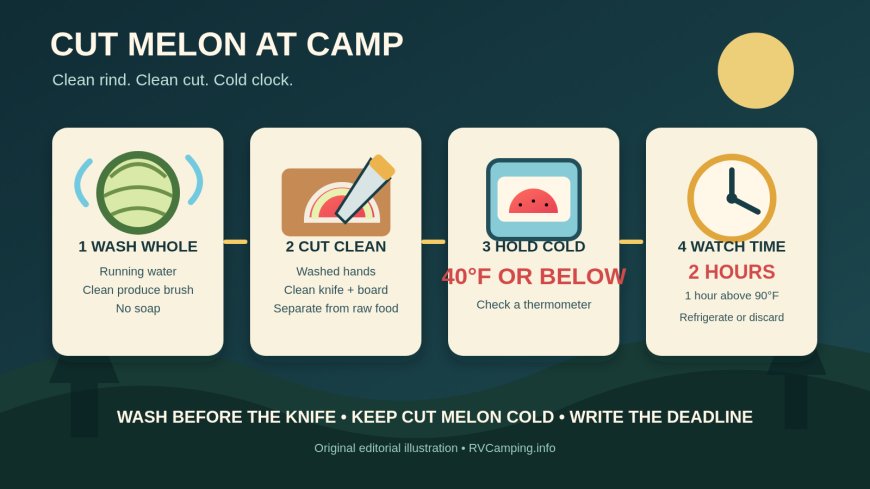
The short answer: Rinse the whole melon under running water before cutting, even though the rind will not be eaten. Scrub firm melons with a clean produce brush, then dry with a clean towel. Do not use soap, detergent or a commercial produce wash.[1] Wash hands and use a clean knife and board. Once cut, hold melon at 40°F or colder. Get it back under refrigeration no later than the two-hour mark; make that one hour after exposure to temperatures above 90°F.[2][4][5] Discard cut melon that misses that deadline. CDC lists freshly cut melon, or refrigerated cut melon kept for seven days or less, as the safer choice.[3]

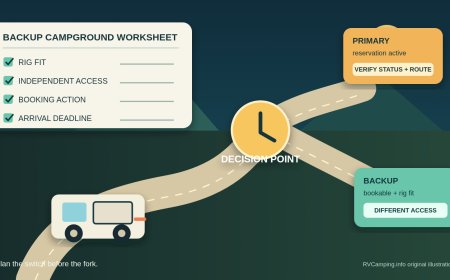
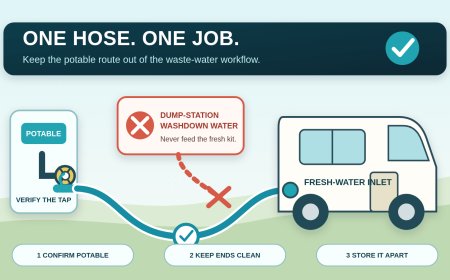
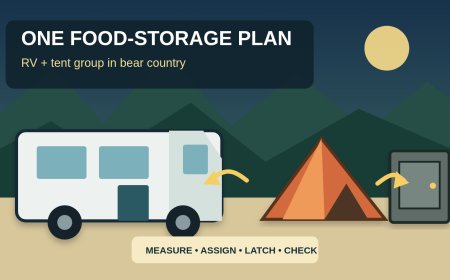
The rind-to-refrigerator route. Original editorial illustration by RVCamping.info.
Make cold space before making cubes
Do not cut a large melon and then discover that its container will not fit in the RV refrigerator. Clear the shelf first. Put an appliance thermometer where it can be read, and confirm the refrigerator or food cooler is holding 40°F or below. CDC and USDA both recommend an appliance thermometer when the unit does not provide a trustworthy built-in reading.[2][5]
A drinks cooler is a poor default home for cut melon. It gets opened repeatedly, warms as ice melts and may collect can grime or raw-food leaks. A dedicated food cooler is easier to manage. Pack it with ice or frozen gel packs, keep the melon in a sealed container, and place the thermometer beside the food rather than assuming cold-looking ice proves the food temperature.
Plan the portion, too. Half a melon left whole is easier to protect than a bowl of cubes that gets handled through lunch. Cut only what the group is likely to eat. Leave the uncut remainder intact until the next meal if storage conditions for that type of whole melon allow it.
Wash the rind before the blade crosses it
FDA says to wash produce under plain running water before peeling or cutting because dirt and bacteria on the outside can move inward on the knife. For a firm rind, including melon, scrub with a clean produce brush. Dry it with a clean cloth or paper towel after rinsing.[1]
Running water matters. Dunking a cantaloupe in a camp basin does not carry loosened material away, and that basin may have just held dishes. Set the melon on a clean surface, rinse all sides, scrub the rind and rinse again. Wash it close enough to cutting time that it does not roll back into a dirty truck bed or picnic-table corner.
Skip dish soap and bleach. Leave bottled produce rinses behind, too. FDA does not recommend any of those products for cleaning fruits or vegetables. Produce is porous, so it can absorb cleaning-product residue; FDA has not evaluated what may remain after a commercial wash.[1] Plain running water, a dedicated brush and a fresh towel are the consumer method.
Inspect while washing. Cut away damaged or bruised areas before preparing the melon, and discard produce that looks rotten.[1] Washing cannot turn a spoiled melon into sound food. Check current FDA and CDC recall notices if the melon brand, type or purchase location appears in an outbreak alert.
Build a clean cutting lane in the RV galley
A washed rind can be contaminated again by the counter, hands or knife. CDC sets a 20-second handwashing minimum with soap and water. It also directs cooks to clean utensils, cutting boards and counters after preparing each food item.[2] At camp, do this work while the water system and gray-water plan are ready, not after raw food has already occupied the sink.
Use this order:
- Move raw meat, poultry, seafood, eggs and their packages away from the produce work area.
- Wash hands, the counter or stable table, the produce brush, cutting board, knife and storage container.
- Rinse, scrub and dry the whole melon.
- Put the melon on the clean board and cut it with the clean knife.
- Move the portion for later into its clean container immediately, close the lid and return it to verified refrigeration.
- Set out only the amount intended for the current serving period.
FDA advises keeping raw produce separate from raw animal foods and from the utensils used for them. It also recommends washing boards, dishes, utensils and counters with soap and hot water between raw animal food and ready-to-eat produce.[1] A reversible cutting board is still one object; flipping a dirty board is not cleaning it.
If potable running water is unavailable, the safest adjustment is to postpone cutting. Do not use lake or stream water to rinse food. Bringing a melon to the picnic table does not create a reason to improvise around the clean-water requirement.
Treat the cooler as equipment, not scenery
Once the melon is cut, the target is 40°F or below under CDC and USDA consumer guidance.[2][5] Read the thermometer after the cooler has been packed and stabilized. Keep the container above any raw-meat packages and away from meltwater. Use a watertight container; a loose layer of plastic wrap is not much defense in a sloshing cooler.
Open the food cooler briefly and only when needed. If the temperature rises above 40°F, start tracking time rather than waiting for the next convenient check. USDA advises against eating perishable food after it spends over two hours warmer than 40°F.[5] CDC applies the same two-hour limit to perishable food and shortens it to one hour when exposure is above 90°F.[2]
A partially shaded cooler can still warm, and a refrigerator display may report a setting rather than the temperature beside the melon. The thermometer settles the argument. Add ice or transfer the food to working refrigeration while it is still within the applicable time window. Cold storage does not reset time already accumulated warm.
Run one serving clock
Put a small amount of melon on the table and write down the time it left refrigeration. Refill with a fresh cold portion instead of adding new cubes to a bowl that has already been handled and warmed. This keeps the reserve batch colder and gives each serving portion a readable history.
CDC specifically identifies cut melon left out longer than two hours as a riskier choice. The limit becomes one hour when the melon is exposed to temperatures over 90°F, such as at a picnic or in a hot vehicle.[3] FDA gives the same outdoor limits for perishable food and advises keeping cold food at 40°F or below until serving.[4]
The short deadline applies to cumulative exposure. Ten minutes on the counter during cutting, forty minutes on the picnic table and another trip in a warm vehicle belong to the same clock if the food did not return to verified cold control between stages. Do not count from the most recent refill and ignore what happened earlier.
Nest a small serving bowl in ice if that setup keeps the melon at 40°F or colder, but verify it. Ice touching the outside of a bowl is not a temperature reading. Keep meltwater from entering the food, and replace the entire serving portion with a clean, cold one rather than topping it off.
At the deadline, either the melon is back under verified cold control or it goes in the trash. Smell, appearance and a taste test cannot establish whether harmful germs multiplied. Refrigerating an overdue bowl saves its temperature, not its safety history.
Label leftovers with two facts
Leftover cut melon needs a cut date and a temperature history. CDC's safer-choice table describes freshly cut melon, or cut melon refrigerated for no more than seven days, as the safer option.[3] Marking the container with the cut date prevents the usual campsite debate over whether it was prepared yesterday or three breakfasts ago.
Seven days is an outer safety boundary from that CDC guidance, not a promise that bruised, leaking or questionable melon should be kept. Discard it earlier if it shows spoilage. Also discard it when the cooler ran warm beyond the time limit, the container sat in meltwater and leaked, raw-food juices may have reached it, or nobody can account for its handling.
Do not mix a table bowl back into the untouched refrigerated supply. Store only melon whose clock and handling remain acceptable. Use a clean utensil each time, close the container promptly and keep checking the appliance thermometer. Freezing may preserve usable melon for a later smoothie, but it does not rescue fruit that has already exceeded a warm-time limit.
The cut-melon lid card
Put this on tape on the storage container:
- Washed whole melon: running water / clean brush / dried.[1]
- Clean cut completed: time ____; hands, knife, board and container cleaned.[1][2]
- Cold reading: ____°F at ____; target 40°F or below.[2][5]
- Serving began: ____; discard-or-refrigerate deadline ____.[2][3][4]
- Hot-weather rule: use one hour when exposure is above 90°F.[2][3][4]
- Cut date: ____; do not keep refrigerated cut melon beyond seven days.[3]
This small record does not make the food safe. It keeps the decision attached to facts that are easy to lose during a busy campsite meal.
Evidence note: The temperature, timing, washing and storage limits above come from the federal sources below. RVCamping.info created the RV shelf check, clean cutting lane, portion-and-refill method and lid card as practical editorial tools. They are not agency forms.
Sources
- FDA, Selecting and Serving Produce Safely (accessed September 22, 2026).
- CDC, Preventing Food Poisoning (accessed September 22, 2026).
- CDC, Safer Food Choices (accessed September 22, 2026).
- FDA, Handling Food Safely While Eating Outdoors (accessed September 22, 2026).
- USDA FSIS, Refrigeration & Food Safety (accessed September 22, 2026).
What's Your Reaction?