











Cooked rice at camp: cool it fast, keep it cold, reheat it once
A single-container campsite rice plan for fast cooling, verified 40°F storage, one 165°F reheat, and clear discard calls.

Cooked rice at camp: cool it fast, keep it cold, reheat it once
By Romana | September 25, 2026 | Cooking
Quick answer: If cooked rice will not be eaten promptly, move it out of the deep pot and into shallow, meal-size containers. Refrigerate it within two hours; cut that deadline to 60 minutes in weather hotter than 90°F. Keep the refrigerator or food cooler at 40°F or below. Reheat one serving to 165°F, then eat it instead of cooling and warming the same batch again.[1][2][3]

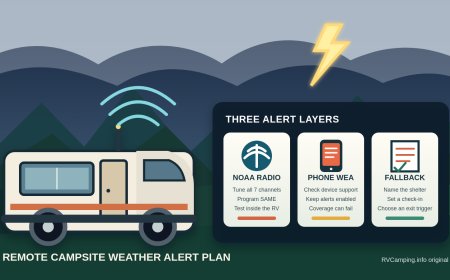
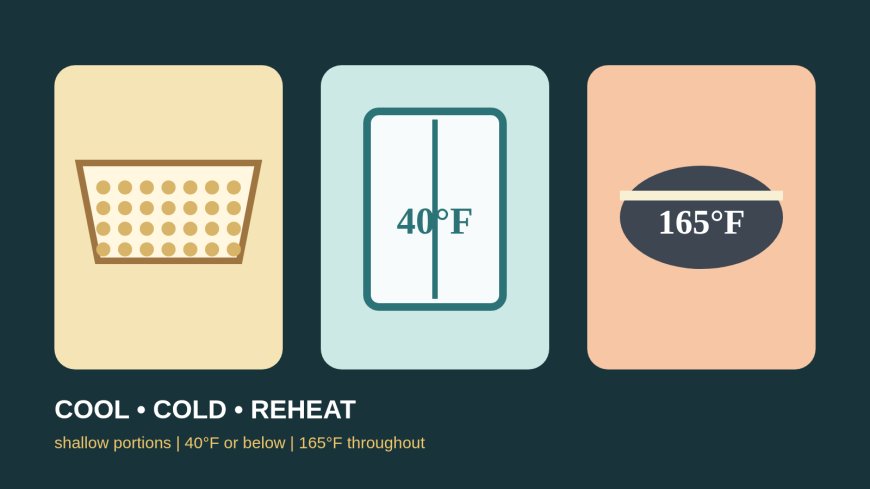
Three handoffs, three checks: shallow container, verified cold storage, then one measured reheat. Original illustration by RVCamping.info.
A replacement brief, not a second generic rice guide
RVCamping.info already published a broad cooked-rice safety guide on September 16, 2026. This package takes a narrower approach: it treats the leftover as a set of single-meal containers and follows each container through one cooling handoff, one cold-storage location, and one reheating event. That distinction is recorded in the package metadata so an editor can decide whether this should replace, update, or remain unpublished beside the earlier page.
The method begins before dinner. If the RV refrigerator has no open shelf, no thermometer, or no room for a shallow container, there is no reliable leftover plan. Cook a smaller batch and finish it. A large pot does not become a safe container merely because its lid fits.
Start the clock when hot holding ends
USDA allows two hours to move leftovers into refrigeration after cooking. If the food is exposed to air hotter than 90°F, the allowance becomes 60 minutes. FDA applies those two limits to foods that need refrigeration too.[1][2]
Count all of the time. Minutes on the stove after the burner is turned off, time in a serving bowl, and time on the picnic table belong to the same window. Moving rice into the shade or back inside the RV does not pause the clock.
There are two clean choices at the end of service:
- Keep the rice at 140°F or hotter under verified hot holding until it is served.[1]
- Begin the cooling and refrigeration handoff while there is still time.
Do not leave the decision until after dishes, a walk, or the campfire. Put a strip of tape on the container and write the time the rice left active hot holding.
Trade the stockpot for shallow portions
USDA advises dividing a large amount of leftovers among shallow containers for faster cooling. FDA also directs cooks to divide large quantities into shallow containers before refrigeration.[1][2] A broad food layer sheds heat more readily than a dense mound in a tall pot.
Set out the containers before cooking. Each should hold one planned meal, not every remaining grain. This is the central campsite move: a single-meal container can stay cold while another serving is reheated, and nobody has to warm the full batch just to scoop out breakfast.
Use this handoff:
- Scoop the rice into clean, shallow containers as soon as service ends.
- Keep the food layer low and leave room around containers for refrigerator air.
- Mark each lid with the cooking date, cooling-start time, and intended meal.
- Put the containers into verified cold storage before the applicable one-hour or two-hour limit ends.[1][2]
- Check the refrigerator or cooler thermometer after loading.
Small portions do not need a countertop wait. USDA permits immediate refrigerator placement; it also offers rapid pre-chilling by setting protected food in clean ice water or cold water.[1] Keep that water out of the rice and use clean utensils. Pre-chilling is an aid, not permission to exceed the service clock.
Make 40°F a reading, not a dial position
FDA says a refrigerator should be at or below 40°F and recommends an appliance thermometer.[2] FoodSafety.gov uses 40°F or below in its federal cold-storage chart.[3] An RV control setting, a blue status light, or cold air at the door does not show the temperature around the rice.
Leave gaps around the containers. Do not stack warm portions into a solid block or bury them behind a wall of drinks. If the refrigerator is already crowded, move shelf-stable cans and unopened shelf-stable beverages to a cabinet. Put frequently opened drinks in another cooler when possible.
A food cooler works only while it holds 40°F or below. Use enough ice or frozen gel packs and keep rice containers closed above meltwater. Position the thermometer display near the lid so a reading does not require emptying the cooler. If the cold-storage temperature cannot be verified, the storage history is incomplete.
Label the container you will actually reheat
USDA gives refrigerated leftovers a three-to-four-day storage window; FoodSafety.gov lists the same refrigerator interval for cooked meat and poultry leftovers.[1][3] For this rice plan, assign every container an intended meal within that federal leftover window. Freeze portions earlier when the schedule changes.
A useful label is specific:
- Cooked: Friday, 6:10 p.m.
- Refrigerated: Friday, 6:55 p.m.
- Stored at: 38°F refrigerator
- Planned meal: Saturday breakfast
- Reheat event: not yet used
The “reheat event” line is an RVCamping.info tracking device, not a separate government label requirement. It stops two people from warming the same container at different times and putting it back without a shared record.
Reheat one container, one time
USDA and FDA set 165°F as the target for reheated leftovers.[1][2] Measure the rice with a clean food thermometer. Steam, a hot lid, or sizzling edges cannot establish the temperature in a cold clump at the center.
In a skillet, loosen the grains with a splash of water, cover the pan, and stir up from the bottom. Break apart dense clumps before taking readings in several areas. In a microwave, use a covered, vented microwave-safe container, pause to stir and rotate, allow brief standing time, and check more than one spot. USDA specifically warns about microwave cold spots and advises checking food in several places.[1]
“Reheat it once” is the operating rule for this package: remove one meal-size container, take the whole serving to 165°F, and eat it. It is not presented as a separate federal prohibition on every possible second reheating. It is a conservative RV workflow that avoids repeated warming, cooling, handling, and uncertainty. If the group needs less rice, portion less before heating.
Do not use 165°F as a repair step. Rice that missed its cooling deadline, sat in an unverified refrigerator, or has an unknown history should be discarded rather than reheated harder.
Know when the record has failed
Discard the container when:
- it missed the two-hour refrigeration deadline, or the 60-minute deadline when conditions were hotter than 90°F;[1][2]
- nobody knows when active hot holding ended;
- refrigerator or cooler temperature was not verified at 40°F or below;[2][3]
- meltwater, dirty utensils, raw-food liquid, or another contamination source reached it;
- its refrigerated age exceeds the federal leftover window of three or four days;[1][3]
- it was partially warmed and returned to cold storage with no reliable time record; or
- it cannot be reheated evenly to 165°F with the available equipment.[1][2]
Do not taste rice to resolve an uncertain history. A normal smell and appearance do not recreate missing time or temperature information.
The three-line galley card
Tape this beside the stove:
- COOL: shallow meal-size containers; refrigerate by the written deadline.
- COLD: thermometer at 40°F or below; keep each portion sealed and labeled.
- REHEAT: take one portion to 165°F throughout, then serve it.
This is deliberately smaller than a full food-safety manual. At camp, the vulnerable points are the handoffs. Give each container a time, a measured cold location, and one clearly recorded reheat.
Evidence note: The three federal sources below provide the numerical time, temperature, storage, cooling, and reheating guidance. The single-meal container system, “reheat event” label, and one-reheat operating rule are RVCamping.info planning devices. The publication manifest was checked and the existing September 16 rice article is disclosed rather than hidden.
Sources
- Leftovers and Food Safety | USDA FSIS — Prompt refrigeration, shallow containers, hot holding, refrigerator duration, microwave handling, and 165°F reheating.
- Safe Food Handling | FDA — Federal consumer guidance for refrigeration temperature, the two-hour and hot-weather one-hour limits, shallow portions, and 165°F leftovers.
- Cold Food Storage Chart | FoodSafety.gov — Federal refrigerator and freezer storage table using a 40°F-or-below refrigerator benchmark.
What's Your Reaction?