










Cape Hatteras RV Campgrounds: Which One Fits Your Trip?
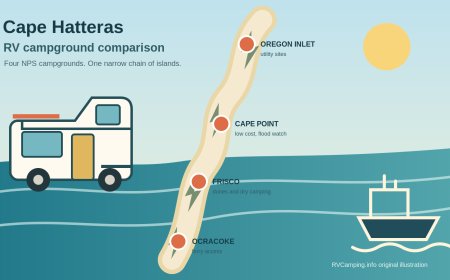
Oregon Inlet is the easiest all-around RV base, Frisco favors private dry camping, Cape Point trades a low rate for flood risk, and Ocracoke requires a ferry plan.

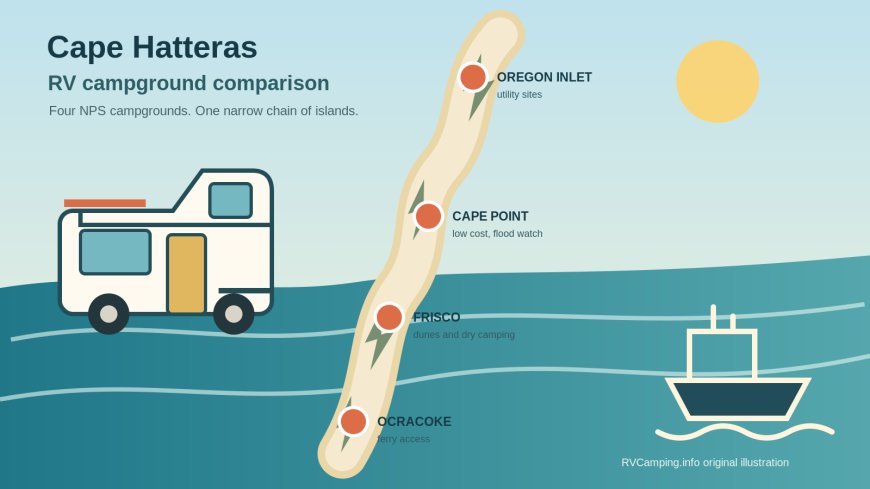
Cape Hatteras RV campgrounds: Oregon Inlet vs. Cape Point vs. Frisco vs. Ocracoke

Updated September 19, 2026
For most RV trips, Oregon Inlet is the easiest first choice. It is the only Cape Hatteras National Seashore campground with utility sites, it stays open year-round, and it is the shortest run to Nags Head services.[1][5]
Frisco is the better dry-camping pick for more separation between sites.[7]
Cape Point is the low-cost base for Buxton and the Point, but flooding and its short booking window add risk.[3][6]
Ocracoke is the destination choice: worthwhile when the island is the point of the trip, not when the ferry is an inconvenience to work around.[8][9]
That ranking has one large-rig warning. The park's current campground page does not publish a campground-wide maximum RV length.[1]
Recreation.gov says all equipment must fit on the reserved pad and warns that rigs over 25 feet may need to move a second vehicle to auxiliary parking or buy another site.[5][6][7]
Ocracoke carries the same warning.[8] The 25-foot figure is a parking warning, not a maximum RV length.
The answer in 30 seconds
| If you need... | Best fit | What can change the answer |
|---|---|---|
| Electric and water at the campsite | Oregon Inlet | Only 47 sites have utilities, and NPS does not list sewer at the pad.[1] |
| The simplest mainland-style arrival | Oregon Inlet | It is still exposed barrier-island camping with no shade.[5] |
| More visual separation and dune terrain | Frisco | No hookups; the campground is seasonal, and the rolling layout deserves a careful site check.[1][7] |
| The lowest published nightly rate | Cape Point | It is seasonal, low-lying, flood-prone, and uses a shortened reservation window.[3][6] |
| A trip centered on Ocracoke Island | Ocracoke | Every RV arrives by vehicle ferry; the campground has no hookups.[8][9] |
| A confidently documented pad length | None of the four | The current site records do not provide a usable positive RV or pad length. Confirm the exact site before taking a near-limit rig. |
Our order for a typical RV: Oregon Inlet, Frisco, Cape Point, Ocracoke. For an Ocracoke-focused vacation, move Ocracoke to first because ferry access is part of that trip rather than a detour.[8][9] For a fishing trip built around Cape Point, Cape Point can beat Frisco as long as the weather and ground conditions cooperate.[6]
Side-by-side RV comparison
| Campground | Sites and season | Hookups and tank service | Restrooms and showers | RV fit caveat |
|---|---|---|---|---|
| Oregon Inlet | 107 sites; open year-round. | Electric and water at 47 sites. Dry sites are also available. A free camper dump and water-fill station is across NC 12 at Oregon Inlet Fishing Center. | Flush toilets and potable water. NPS calls the showers heated, while Recreation.gov calls them outdoor cold showers; do not make a hot shower part of the plan. | No current campground-wide maximum is published. Every vehicle and the camping unit must stay on the pad; rigs over 25 feet may have to move the second vehicle.[1][4][5] |
| Cape Point | 202 sites; spring through fall, with dates controlled through Recreation.gov. | No hookups. Potable water is available; Recreation.gov does not list an on-site dump station. | Flush toilets and outdoor unheated showers. | Rows D, E, and F are tent-only. The campground floods easily after heavy rain, and reservations can be canceled with little notice.[1][6] |
| Frisco | 127 sites; spring through fall, with dates controlled through Recreation.gov. | No hookups. Recreation.gov lists potable water but no dump station. | Flush toilets and outdoor unheated showers. | Dune topography makes this less uniformly level than the other three, which NPS describes as level-ground campgrounds. Check the precise pad and approach.[1][7] |
| Ocracoke | 136 sites; open year-round. | No hookups. Recreation.gov lists drinking water but no dump station. | Flush toilets and outdoor cold showers. | Ferry access is mandatory. Sites are exposed, sandy, and can hold standing water after heavy rain.[1][8] |
The current 2026 nightly rates are $28 for dry sites at Oregon Inlet, Frisco, and Ocracoke, $35 for an Oregon Inlet utility site, and $20 at Cape Point. Eligible Senior and Access pass holders receive the published camping discount, but NPS says the discount does not apply to Oregon Inlet utilities.[1][3]
The length question: what Recreation.gov does not tell you
Older search results may repeat a single maximum for all four campgrounds. The current NPS campground page, updated June 22, 2026, does not make that promise.[1]
We checked every campsite record linked from the four current Recreation.gov facility pages on September 19.[5][6][7]
Across 701 linked records, the RV max_length field was either zero or absent, and the records did not supply a driveway or pad length.[8] Several generic equipment fields also conflict with the visible site labels. Cape Point, for example, explicitly reserves rows D, E, and F for tents even though its underlying records can show a generic RV equipment option.[6]
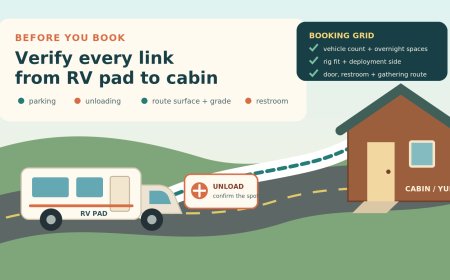
Treat those missing dimensions as unknown, not unlimited. The enforceable rule is that the RV, tow vehicle, and other permitted vehicle must fit on the paved parking pad without touching grass or extending into the road.[4] A travel trailer and tow vehicle count as two vehicles.[4]
If that combination does not fit, the Recreation.gov pages say an RV over 25 feet may need to leave the second vehicle in auxiliary parking or reserve another site.[5][6][7]
Ocracoke gives the same instruction.[8]
Before booking a long motorhome or trailer combination:
- Open the exact site card, not just the campground overview.
- Confirm that its displayed type permits an RV; do not rely on a generic equipment checkbox.
- Ask the facility at 252-475-9054 to confirm pad fit, turning room, grade, and any current obstructions. Recreation.gov publishes that number for campground-specific questions.[5]
- Give the complete measured length. For a trailer, include the tow vehicle when asking whether everything will stay on the pad.[4]
- Keep a second-site or auxiliary-parking plan if the RV itself is longer than 25 feet. Again, 25 feet is not the published ceiling; it is where the parking warning begins.[5]
Oregon Inlet: best for power and an easy supply run
Oregon Inlet is the practical choice when electricity matters. NPS lists 47 utility sites with electricity and water, while the other three campgrounds have no utility connections.[1] The campsite is not a full-hookup RV site: NPS does not list sewer at the pad, and Recreation.gov directs campers to the dump and fill station across NC 12.[5]
This is also the northernmost campground, close to Nags Head and about four miles south of Bodie Island Lighthouse.[5] That location trims the supply run and avoids putting a ferry between the RV and the mainland.
The service descriptions conflict on showers. NPS says Oregon Inlet has heated showers; Recreation.gov describes outdoor unheated or cold showers.[1][5] Pack as if the shower will be cold. That is safer than choosing a campground on a disputed amenity.
Choose Oregon Inlet for air-conditioning without generator dependence, year-round dates, or quick access to northern Outer Banks services. Skip it if the goal is privacy or shelter. Recreation.gov says every campsite is exposed and none is shaded.[5]
Cape Point: cheap, central, and weather-sensitive
Cape Point puts an RV in Buxton near the lighthouse grounds, beach access, fishing, and surfing. Its $20 rate is the lowest of the four.[3][6] It has paved pads, potable-water spigots, flush toilets, and outdoor showers, but no RV hookups.[6]
The reservation deserves a weather check before payment. Recreation.gov calls the campground low-lying, warns that it floods easily after heavy rain, and says reservations may be canceled with limited notice. The page also says Cape Point uses a shortened reservation window.[6] That makes it a poor anchor for a rigid itinerary and a good opportunistic choice when the forecast and current ground report are favorable.
Rows D, E, and F are tent-only.[6] RV travelers should remove those rows from consideration even if a search filter or underlying equipment field suggests otherwise.
Choose Cape Point when price and Buxton access lead the decision. Choose Frisco instead when a slightly higher, more vegetated setting matters more than being close to the Point.
Frisco: the dry-camping choice for more separation
Frisco has no hookups, but its dunes and vegetation create more separation than the open grids at Oregon Inlet, Cape Point, and Ocracoke.[7] Some sites have ocean views, and boardwalks cross the dunes to the beach.[7]
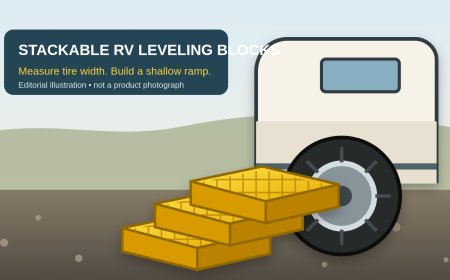
The terrain is the tradeoff. NPS says Frisco sits among sand dunes while the other three campgrounds are on level ground.[1] That does not mean every Frisco pad is badly sloped; it means campground-level descriptions cannot settle the leveling question for a particular RV. Bring blocks and ask about the precise site.
Recreation.gov lists flush toilets, potable water, and cold outdoor showers. It does not list RV hookups or a dump station.[7] Arrive with tanks planned for a dry stay rather than assuming a service point will be waiting inside the campground.
Frisco is seasonal. NPS directs travelers to Recreation.gov for opening and closing dates rather than publishing fixed annual dates.[1] Do not carry a prior year's calendar into a spring or late-fall trip.
Ocracoke: choose the island, then solve the ferry
Ocracoke Campground lies about three road miles from the village and about ten from the Hatteras ferry landing.[8] It is open year-round, but it has no hookups and no mainland road connection.[1][8]
The Hatteras-Ocracoke vehicle ferry is free and first come, first served. NCDOT does not accept reservations for that route.[9] The official 2026 schedule gives the crossing as about 70 minutes, then warns that tides, wind, rain, and operating conditions can change service.[11] Waiting and loading time sit on top of the crossing time, so a campsite check-in should not be planned around the last plausible boat.
The two Pamlico Sound routes to Ocracoke, from Cedar Island and Swan Quarter, take reservations up to 90 days ahead. NCDOT recommends reserving, especially in summer, and cancels an unclaimed reservation if the motorist is not there at least 30 minutes before departure.[9] The 2026 schedule lists nominal crossings of 2 hours 15 minutes from Cedar Island and 2 hours 40 minutes from Swan Quarter.[11]
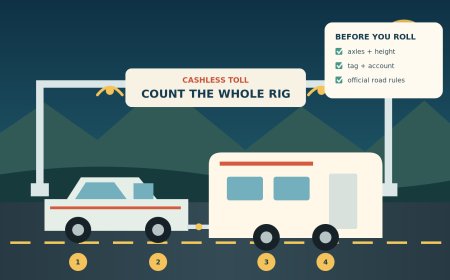
For those toll routes, the vehicle charge is based on the combined length: $15 under 20 feet, $30 from 20 through 40 feet, and $45 over 40 through 65 feet.[10] Measure the motorhome or the entire tow-vehicle-and-trailer combination. NCDOT says its ferries accept highway-operable RVs and trailers; vehicles longer than 65 feet need a special permit.[12]
At the campground, plan for cold showers, drinking water, no hookups, no shade, and possible standing water after heavy rain.[8] Generators are allowed in 2026 but must be off during quiet hours from 10 p.m. to 6 a.m.[8] A separate change begins January 1, 2027, when D Loop becomes generator-free; it does not apply to a 2026 stay.[8]
Booking and arrival checklist
- Reserve and pay through Recreation.gov. Rangers do not take campground payments, although same-day online or phone reservations are allowed when a site remains.[1]
- Match the displayed site type to the actual equipment. All four reservations are site-specific.[1]
- Photograph or save the site card. The current database does not give a useful length field, so preserve any notes and images used in the fit decision.[5][6][7]
-
Put every wheel on the pad. Park rules prohibit grass and roadway parking and allow no more than two vehicles per site.[4]
-
For Cape Point, recheck rain and flood conditions before paying and before driving in.[6]
- For Ocracoke, check the live NCDOT schedule and route status on departure day. A campground reservation does not reserve ferry space.[9][11]
- Check the NPS Alerts & Conditions page on the same day. Its beach-access report was updated September 18 when this comparison was researched, but conditions on the barrier islands can change after the article date.[2]
Bottom line
Pick Oregon Inlet for the least complicated RV stay and the park's only electric-and-water sites. Pick Frisco for dry camping with more separation and a dune setting. Pick Cape Point for a lower-cost Buxton base when the ground is dry. Pick Ocracoke because you want to camp on Ocracoke and have built ferry time into both ends of the reservation.
None of the four currently gives a dependable campground-wide or exact-site length number online. The safest reservation pairs a site-type check with a direct facility call, a measured rig, and a plan that keeps every vehicle fully on the pad.
Sources
- Campgrounds - Cape Hatteras National Seashore
- Alerts & Conditions - Cape Hatteras National Seashore
- Fees & Passes - Cape Hatteras National Seashore
- Laws & Policies - Cape Hatteras National Seashore
- Oregon Inlet Campground - Recreation.gov
- Cape Point Campground - Recreation.gov
- Frisco Campground - Recreation.gov
- Ocracoke Campground - Recreation.gov
- NCDOT Ferry Reservations
- NCDOT Ferry Ticket Prices
- North Carolina Ferry System 2026 Schedule
- NCDOT Ride with Us
What's Your Reaction?