


Could your RV handle a Habitat build? A first-trip fit test
Habitat's RV Care-A-Vanner program needs more than free dates. Check your rig's utilities, the work rhythm, campsite costs and confirmation steps.
RVCamping.info Research Desk | AI-assisted research and editorial review; no named human reviewer
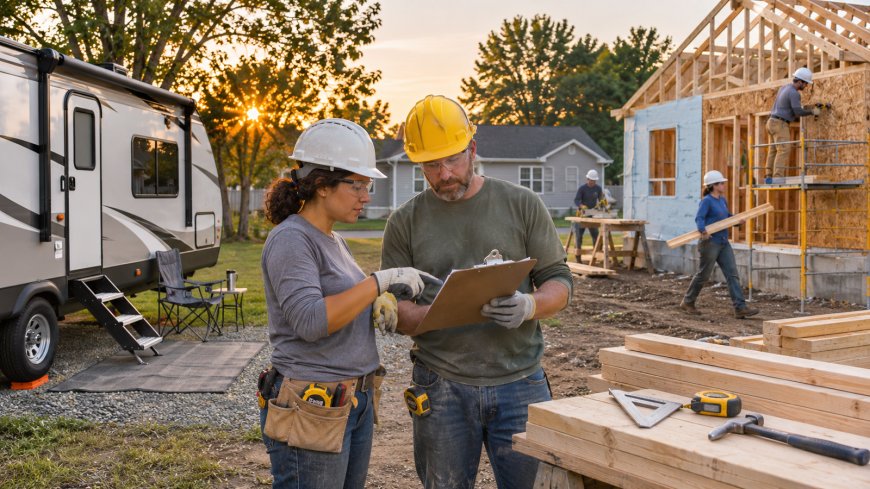
Winnebago's support for Habitat for Humanity's RV Care-A-Vanner program put a useful kind of RV travel back in view this week: park the rig near a construction project and spend part of the trip helping a local Habitat affiliate. RV News reported 173 projects, 1,006 participants and 52,464 volunteer hours in the program's 2026 fiscal year.[1]
The appealing part is easy to picture. The less obvious part is that this is neither an ordinary campground stay nor a casual drop-in workday. A first build has to fit three things at once: your RV's ability to operate with limited services, your capacity for a run of construction days, and a trip budget that includes the campsite.
That three-part fit test is more useful than asking whether you already know how to build a house. Habitat explicitly says RVers do not need prior experience.[2]
Start with the campsite, not the job title
A "self-contained RV" is a real eligibility boundary here, not loose marketing language. Habitat says many build parking areas lack a bathroom or shower house. Participants need an RV with holding tanks and a legal way to dump them.[3]
Habitat's FAQ says the host affiliate arranges parking and volunteers can expect at least minimal electric service, water access and a nearby dump station. Full hookups sometimes exist, but they are not the baseline.[3] That makes the first planning question concrete: can your particular rig support the stay described in the build packet without assuming a sewer connection, bathhouse or 50-amp pedestal?
For a prospective volunteer, the useful pre-registration inventory is short:
- the RV's actual electrical requirement and whether its adapters are suitable for the service offered;
- fresh-water and waste capacity between the stated fill and dump opportunities;
- a workable shower and toilet plan inside the rig;
- any medical equipment, climate-control load or mobility need that depends on a specific hookup or site surface.
Do not infer those details from the word "parking." Habitat says the team leader normally sends directions, parking arrangements and other build details four to six weeks before the start date.[3] If a utility or access detail would make the trip impossible, ask the Care-A-Vanner desk before committing rather than waiting for that letter.
Treat the workweek as part of the camping plan
A typical build lasts about two weeks and has eight to 20 volunteers. A workday usually includes a morning devotional, safety talk and assignments, followed by six to seven hours of building with breaks.[3] That is enough structure to change how the RV trip feels. Meals, laundry, tank management and sightseeing have to fit around the work rather than the other way around.
The program is more flexible about skill than it is about attendance and safety. New volunteers can learn on site, choose familiar work, or sometimes help in a Habitat office or ReStore if the construction site is not a good fit.[3] That distinction matters. "No experience needed" does not mean every task fits every person.
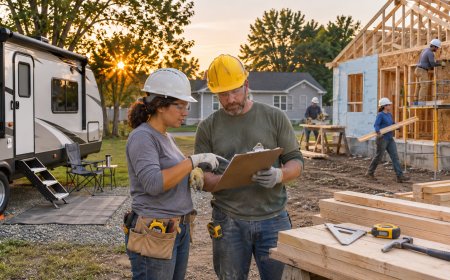
Habitat's safety guidance tells volunteers to avoid rushing, ask when they are unsure, inspect tools before using them and choose tasks they can safely accomplish.[5] Habitat's suggested kit includes a hard hat and safety glasses, sturdy closed-toe shoes, gloves, a tool belt and basic layout tools such as a tape, pencil and square. A host may supply protective equipment, but Habitat recommends bringing your own.[3]
Before selecting a build, compare that routine with what you can sustain for the whole trip. A shorter drive to the project, an easier parking setup or a build with an office role may be more important than choosing the most interesting destination.
Availability is specific, and it moves
The live schedule is not a list of interchangeable vacations. It shows dates, location, trip type and remaining spaces for each project. In a November 26 snapshot, the schedule listed a three-week Kerrville, Texas, project running November 30 through December 20 with two of six spaces available. It also listed a Dade City, Florida, project from November 29 through December 13 with six of ten spaces available.[4]
Those examples reveal two useful things. Build length can differ from the usual two weeks, and an open listing may have only a few spaces. Habitat registers participants first come, first served, and a volunteer should not arrive without confirmation from the Care-A-Vanner desk and build information from the team leader.[3]
Use the schedule as a live inventory, not a promise that today's opening will remain. Read the individual build page, register the RV that will attend, and wait for confirmation before making a nonrefundable travel purchase.
Budget the campsite before calling it a volunteer trip
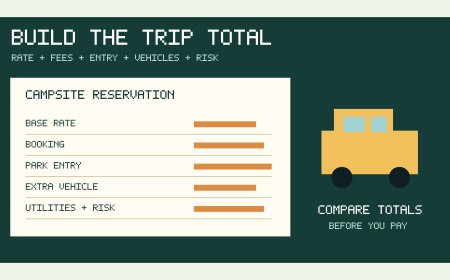
The host affiliate finds the RV parking, but the volunteer pays the camping fee. Habitat says affiliates can sometimes negotiate a discounted rate.[3] Fuel, meals, route stops and any extra nights before or after the project remain part of the travel budget too.
That changes the comparison. The right question is not simply, "Is there a build near somewhere I want to visit?" Compare the total trip with an ordinary stay in the same region:
1. confirmed camping fee for the build dates; 2. fuel and transit nights in both directions; 3. utility constraints that could add dump, propane or generator costs; 4. the number of free days left for personal travel.
This is not an argument against going. It prevents the volunteer purpose from hiding ordinary RV costs. It also helps distinguish a build that genuinely fits the route from one that would strain the budget or the rig.
A sensible first-build sequence
Choose the region and dates first, then open the individual listing rather than registering from a headline or social post. Check the parking service against your RV, compare the work rhythm with your capacity, and confirm what the camping fee covers. Only then register.
After confirmation, keep the build dates flexible enough for the instructions that follow. Habitat asks volunteers who must cancel to notify the Care-A-Vanner desk promptly so the place can go to someone else.[3] About three weeks before departure, the absence of a welcome packet is itself a reason to contact the desk.[3]
The strongest first choice may be the least dramatic one: a confirmed project on a route you already understand, with utilities your RV can manage and a work role you can sustain. That leaves more attention for the reason the program exists: helping the local affiliate move a housing project forward.
Sources
What's Your Reaction?