





Canvas walls are not storm shelter: a glamping thunderstorm plan for mixed camping groups
A practical storm plan for groups sharing RV and glamping sites, including shelter questions, warning triggers, accessible routes and what canvas tents cannot do.

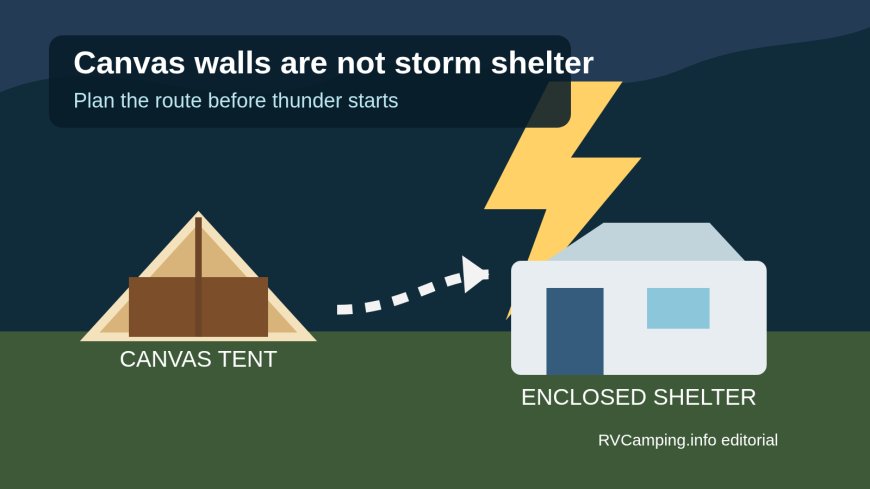
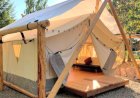
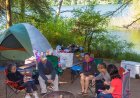
A safari tent may have a bed, lighting and a proper deck, but its canvas walls do not make it a lightning shelter. The National Weather Service tells campers to leave both tents and open picnic shelters for a safe building or vehicle when thunder is heard.[1] The National Park Service is just as direct: tents do not protect people from lightning, and open-sided shelters, porches and sheds are not substitutes for an enclosed building.[3]
That matters when one booking includes an RV household and relatives in a glamping tent. The group needs one storm plan, worked out before anyone unpacks. The RV may be part of that plan, but nobody should casually assume every RV is the right answer for every hazard. Lightning, high wind, falling trees, flash flooding and campground evacuation each call for a different decision.
Source note: this planning guide was developed from current National Weather Service, FEMA Ready.gov and National Park Service safety guidance rather than from a campground marketing page.
Ask where everyone goes before paying
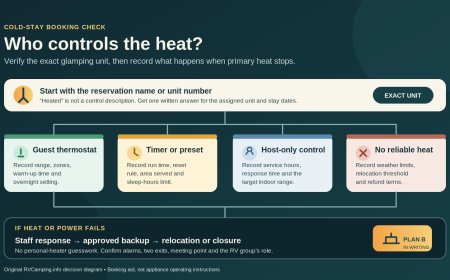
Call the property with the unit name or number in front of you. Ask for the designated severe-weather location, whether it stays unlocked overnight, how far it is from the tent, and how staff notify guests after quiet hours. The NPS advises visitors to ask about designated safe locations and check park-specific guidance.[3]
Do not settle for "there is a pavilion." NPS guidance says pavilions and picnic shelters are not safe from lightning.[3] You need to know whether the property means a substantial enclosed building, a bathhouse built as a storm shelter, or simply a roof over tables.
Get separate answers for four situations:
- lightning without a severe-wind warning;
- a severe thunderstorm or tornado warning;
- flash flooding or rapidly rising water;
- an order to evacuate the campground.
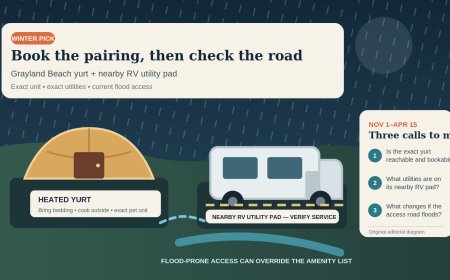
Those answers may point to different places. A vehicle can provide lightning shelter, while a campground may direct guests to a sturdy building for destructive wind. A low road to the shelter may become unusable during a flood. Ready.gov warns against driving into flooded roads and tells people under a thunderstorm warning to move into a building or roofed car while continuing to follow alerts.[2]
Decide whether the RV belongs in the plan
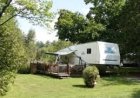
For lightning, official guidance favors a substantial enclosed building first and an enclosed hard-top vehicle when a building is unavailable.[1][3] A tow vehicle or passenger vehicle with a metal roof is an easier match for that description than a canvas-sided pop-up, screen room, roof-top tent or open golf cart.
Do not promise the glamping party that "the RV is safe" without checking the rig and the campground plan. Motorhomes and travel trailers vary in construction. The NWS lightning page speaks about safe buildings and vehicles; it does not certify a particular recreation vehicle.[1] Treat the owner's manual and manufacturer guidance for the exact RV as the tie-breaker.
Capacity matters too. Count belted seating positions in a motorhome and legal passenger positions in the tow vehicle. A parked trailer may have plenty of floor space but no approved travel seats if the group has to evacuate. Keep keys, shoes, rain layers, medications, mobility aids and pet leashes together so nobody has to search a dark tent after an alert.
Use a two-trigger departure rule
Waiting for heavy rain wastes the time needed to move children, older adults, pets or anyone with limited mobility. Use an early planning trigger and a firm action trigger.
The planning trigger might be a forecast that puts thunderstorms in the overnight window. At that point, confirm the shelter route in daylight, park vehicles facing out if allowed, charge phones and move loose chairs or cooking gear under cover. Ready.gov recommends making an emergency plan and identifying nearby sturdy buildings before a storm.[2]
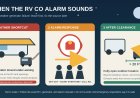
The action trigger is simpler: thunder heard, lightning seen, or an official warning received. Stop cooking and move. The NWS camping example says to go to the vehicle rather than remain in a tent or open shelter.[1] Do not make the walk longer by packing bedding, folding chairs or coolers first.
Remain sheltered long enough. NWS and NPS guidance says to wait at least 30 minutes after the last thunder or observed lightning before resuming outdoor activity.[1][3]
Give the group more than one way to receive warnings
Cell service and campground Wi-Fi can both fail. Enable emergency alerts on phones, save the local NWS forecast office page, and consider a battery-powered NOAA Weather Radio for remote or storm-prone trips. NOAA says its radio network carries official warnings, watches and forecasts continuously, but reception requires a compatible receiver.[4]
Assign one adult to monitor alerts without making that person solely responsible for everyone. Each household should know the unit number, shelter location and meeting point. Write the campground's after-hours number on paper as well as saving it in a phone.
Ask how accessible the shelter route is. A gravel slope that feels manageable in daylight may not work for a wheelchair in heavy rain. If the property's answer depends on staff transport, ask what happens after the office closes.
Walk the route before the weather arrives
A five-minute daylight walk can expose a bad plan. Note steps, gates, standing-water areas, low crossings and branches over the path. Time the slowest travel pace in the group. Check whether the vehicle can leave without backing around tent stakes, awnings or another guest's parked car.
Keep the campsite itself ready for a quick move:
- retract awnings when storms threaten and follow the RV and awning manuals;
- keep the fire and stove fully extinguished before leaving;
- secure light furniture without delaying shelter;
- never touch a plugged-in electrical connection during active lightning to "save" equipment;
- keep people away from downed lines and report them to the campground or emergency services.
The point is not to storm-proof a glamping tent. It is to spend less time outside once conditions turn.
A booking script that gets useful answers
Use questions the property can answer precisely:
1. "For unit 14, what enclosed building do guests use when there is lightning?" 2. "Where does the campground direct us during a severe thunderstorm or tornado warning?" 3. "How will overnight guests receive a warning if phones have no signal?" 4. "Is the shelter route step-free, lit and open all night?" 5. "Can our tow vehicle remain beside the glamping unit, and can it leave without moving the RV?" 6. "Does the access road cross a drainage or flood-prone low point?" 7. "What is the evacuation route and after-hours contact number?"
If staff cannot identify a real shelter or give a workable after-hours procedure, the limitation belongs in the booking decision. Choose another unit, keep a hard-top vehicle close if rules allow, or choose a property with a clearer plan.
Pack a small storm pouch
Keep the pouch by the exit, not buried in the RV basement. Include a flashlight or headlamp, charged power bank, weather radio if carried, printed site map, medications needed during a delay, basic first aid supplies, spare glasses, hearing-device batteries and a leash or carrier for each pet. Add the exact shelter address and campground phone number.
This is a movement kit, not a full evacuation loadout. It should be light enough that the slowest person can leave immediately.
The booking test
A glamping stay works for an RV-and-tent group when everyone can name the same shelter, reach it quickly, receive warnings and wait there comfortably. Canvas comfort is still canvas. Confirm the building, route and alert method before the forecast forces the question.
Sources
[1] When a Safe Building or Vehicle is Nearby
What's Your Reaction?